
Tamper evident seals sit at the intersection of simple mechanics and serious business risk. A small piece of plastic or metal, properly applied, can mean the difference between a clean delivery and a costly dispute. These seals don’t stop determined thieves—nothing does, really—but they create accountability. When something goes wrong, you know exactly where it happened. That visibility changes how people behave throughout the supply chain, from warehouse workers to long-haul drivers to receiving clerks.
The Business Case for Visible Security
Supply chain losses add up faster than most executives realize. The numbers are staggering—billions lost annually to theft, fraud, and unexplained shrinkage. Most of this happens not through dramatic heists but through small, repeated incidents that slip through the cracks. A missing case here, a tampered pallet there. Without clear evidence of when and where interference occurred, these losses become write-offs rather than actionable problems.
Tamper evident seals change that equation. They create a binary condition: either the seal is intact, or it isn’t. This simplicity is their strength. When a driver accepts a container with an intact seal, they’re accepting responsibility for its condition. When they deliver it with a broken seal, the problem happened on their watch. This accountability ripples through every handoff in the logistics chain.
The deterrent effect matters too. Over 70% of cargo theft happens during transit—those long stretches where goods sit unattended in trucks or railyards. A visible seal won’t stop a professional crew with bolt cutters, but it eliminates crimes of opportunity. The casual thief, the dishonest handler, the warehouse worker who might otherwise help themselves—these actors move on to easier targets when seals are present.
How Physical Mechanisms Create Accountability
The engineering behind tamper evident seals varies, but the principle stays constant: any attempt to access the secured item must leave visible evidence. Some seals simply break when forced. Others deposit adhesive residue that can’t be removed cleanly. Certain designs change color when heated or chemically treated—a response to common tampering techniques.
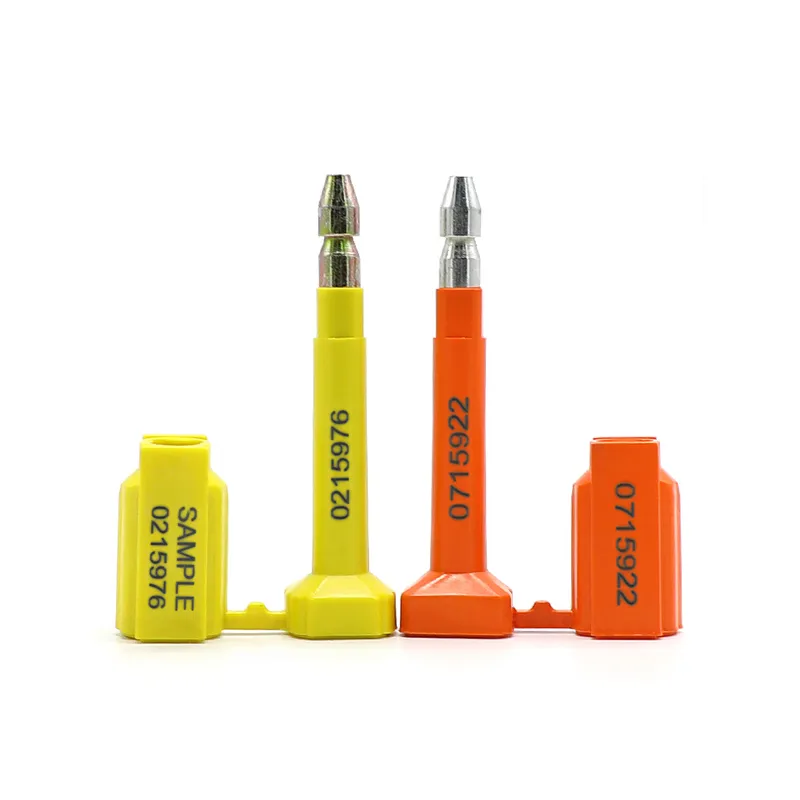
High security bolt seals used on shipping containers represent the robust end of this spectrum. These aren’t just indicators; they’re genuine barriers. A quality bolt seal requires significant force or specialized tools to remove. The combination of physical resistance and tamper evidence makes them standard equipment for international freight.
Each seal carries unique identification—serial numbers, barcodes, sometimes RFID chips. This traceability transforms a simple security device into a documentation tool. When seal number 47829 was applied in Shanghai and verified intact in Rotterdam, you have a verifiable record of that container’s integrity across thousands of miles and multiple handling points.
Meeting Compliance Requirements Without the Headaches
International shipping regulations have teeth. Programs like C-TPAT in the United States and ISO 17712 standards globally aren’t suggestions—they’re requirements with real consequences for non-compliance. Fines, delays, increased inspections, and loss of trusted shipper status can devastate logistics operations.
ISO 17712 High Security Seal certification matters because it establishes a baseline that customs authorities worldwide recognize. When your seals meet this standard, you’re speaking a common language with border agents from Long Beach to Le Havre. The certification process tests breaking strength, tamper resistance, and identification permanence. Seals that pass these tests give you documentation that satisfies auditors and regulators.
Beyond compliance, these seals protect something harder to quantify: brand reputation. In pharmaceuticals, a tampered package isn’t just a loss—it’s a potential safety crisis. In food service, seal integrity separates a minor incident from a recall. Counterfeiters target successful brands precisely because their reputation has value. Tamper evident seals make counterfeiting harder and detection easier.
Matching Seal Types to Real-World Applications
Different security challenges call for different solutions. The seal that works perfectly for airline catering carts would be overkill for utility meters, and vice versa. Understanding the options helps you deploy resources where they matter most.
| Seal Type | Primary Material | Key Features | Common Applications |
|---|---|---|---|
| Plastic Seals | Polypropylene | Lightweight, customizable, various lengths | Retail, cash bags, airline catering, utility meters |
| Cable Seals | Steel cable | High strength, adjustable length, ISO 17712 | Shipping containers, truck doors, railcars, valves |
| Meter Seal | Polycarbonate | Transparent, wire insertion, small size | Water, gas, electric meters, drums |
| Metal Strap Seal | Tinplate | Strong, single-use, numbered | Drums, railway wagons, utility boxes |
| Bolt Seals | Steel, ABS | High security, ISO 17712, robust locking | Shipping containers, cross-border shipments |
Plastic Seals dominate high-volume, lower-risk applications. Their low cost per unit makes them practical for situations where you might use dozens daily—securing individual totes, marking inspected equipment, or controlling access to service panels. Customization options let companies add logos and color coding that serve both security and organizational purposes.
Cable Seals bridge the gap between indicator seals and high-security devices. The steel cable provides genuine resistance to casual tampering while remaining flexible enough to secure irregular shapes. Adjustable length means one seal type can work across multiple applications, simplifying inventory management.
Meter Seal designs address the specific challenges utilities face. These seals must survive outdoor exposure for years while remaining easy to inspect. The transparent body lets readers verify the meter without removing the seal—a small detail that saves thousands of service calls annually.
Bolt Seals represent maximum security for maximum risk. A Cargo Container Bolt Seal on an international shipment signals serious intent. These seals require tools to remove and leave unmistakable evidence of any tampering attempt. For cross-border freight carrying high-value goods, they’re essentially mandatory.
Practical Selection Criteria
Choosing the right tamper evident seal starts with honest assessment of your actual risks. Over-specifying wastes money; under-specifying invites problems. A few key questions guide the decision.
What’s the value at risk? High-value cargo justifies high-security seals. For lower-value goods, the seal’s primary function is documentation rather than physical barrier. Match your investment to your exposure.
What environment will the seal face? Outdoor applications need UV-resistant materials. Cold chain logistics require seals that remain functional at freezing temperatures. Chemical exposure, humidity, and physical abrasion all affect seal performance over time.
What evidence do you need? Some situations require only proof that a seal was broken. Others need detailed forensic evidence—residue patterns, color changes, or physical deformation that indicates the tampering method. Your documentation requirements should drive seal selection.
How does the seal fit your workflow? A seal that requires special tools to apply creates bottlenecks. One that’s too easy to apply might get skipped when workers are rushed. The best seal is one that integrates smoothly into existing processes.
Calculating Return on Security Investment
Security spending often gets treated as pure cost, but tamper evident seals generate measurable returns. The math isn’t complicated once you identify the right variables.
Start with loss history. What have you actually lost to theft, tampering, or unexplained shrinkage over the past year? Even rough estimates work. If you’re losing $50,000 annually and seals reduce that by half, you’ve found $25,000 in savings.
Add dispute resolution costs. Without clear evidence of when tampering occurred, disputes become expensive negotiations. Legal fees, investigation time, and relationship damage all carry costs. Seals that establish clear responsibility eliminate most of these expenses.
Factor in compliance benefits. Avoiding a single customs delay or regulatory fine often exceeds a year’s worth of seal purchases. The trusted shipper status that proper sealing helps maintain translates directly to faster clearances and lower inspection rates.
Consider the operational improvements. Seal verification creates natural checkpoints in your logistics flow. These checkpoints catch problems early, when they’re cheapest to fix. A seal broken at the warehouse door is a minor incident; the same problem discovered at the customer’s facility becomes a major service failure.
The initial investment in tamper evident seals is genuinely modest compared to these potential savings. Preventing even one significant incident typically covers years of seal costs.
Frequently Asked Questions About Tamper Evident Seals
What is the primary purpose of a tamper evident seal?
A tamper evident seal provides visible proof that someone accessed or interfered with a secured item. The seal doesn’t necessarily prevent access—it documents it. This documentation supports chain of custody verification, loss investigation, and accountability throughout handling processes. Industries from logistics to healthcare rely on this evidence to maintain product integrity and identify where problems originate.
How do high security bolt seals differ from other tamper evident seals?
High security bolt seals combine physical resistance with tamper evidence. While a plastic seal might break with hand pressure, an ISO 17712 High Security Seal requires bolt cutters or similar tools to defeat. This added barrier stops opportunistic theft and significantly slows even determined attackers. The robust construction also survives the rough handling that shipping containers experience—impacts, vibration, and weather exposure that would destroy lighter seals. For international freight and high-value cargo, this combination of strength and evidence makes bolt seals the standard choice.
Can tamper evident seals be customized for specific business needs?
Customization is standard practice for most seal applications. A Customized Plastic Seal can include your company logo, specific color schemes, sequential serial numbers, barcodes, or QR codes. This customization serves multiple purposes: it makes counterfeiting more difficult, improves internal tracking, and reinforces brand presence throughout the supply chain. Custom seals also help distinguish your shipments from others in shared facilities, reducing confusion and mishandling.
Secure Your Assets with Junchuang Lock Industry
Protect your operations and supply chain integrity with tamper evident solutions from Junchuang Lock Industry. Contact Shandong Junchuang Lock Industrial Co., Ltd at +86 13853189290 or [email protected] for consultation on security seal strategies tailored to your specific requirements.