
Steel seal factory direct purchase offers a reliable path to lower unit costs and tighter control over seal specifications, provided you work with a manufacturer that operates with genuine transparency. Over fifteen years of overseeing production lines at Shandong Qingyun Junchuang Lock Industrial Co., Ltd., I have seen how factory-direct relationships eliminate costly intermediary markups while giving buyers direct access to engineering teams for custom print requests and material selections. This guide distills that experience into a practical framework for importers and procurement managers who need consistent tamper-evident steel seals for cargo, logistics, or utility security.
What Are Steel Seals and Where Are They Used?
Steel seals, often called metal strap seals, consist of a heavy-duty steel band that locks into a sealed housing. Once engaged, the seal cannot be reopened without visible damage to the strap or locking mechanism. This tamper-evident characteristic makes them a preferred choice for high-value cargo, rail freight, tanker valves, and utility meter enclosures.
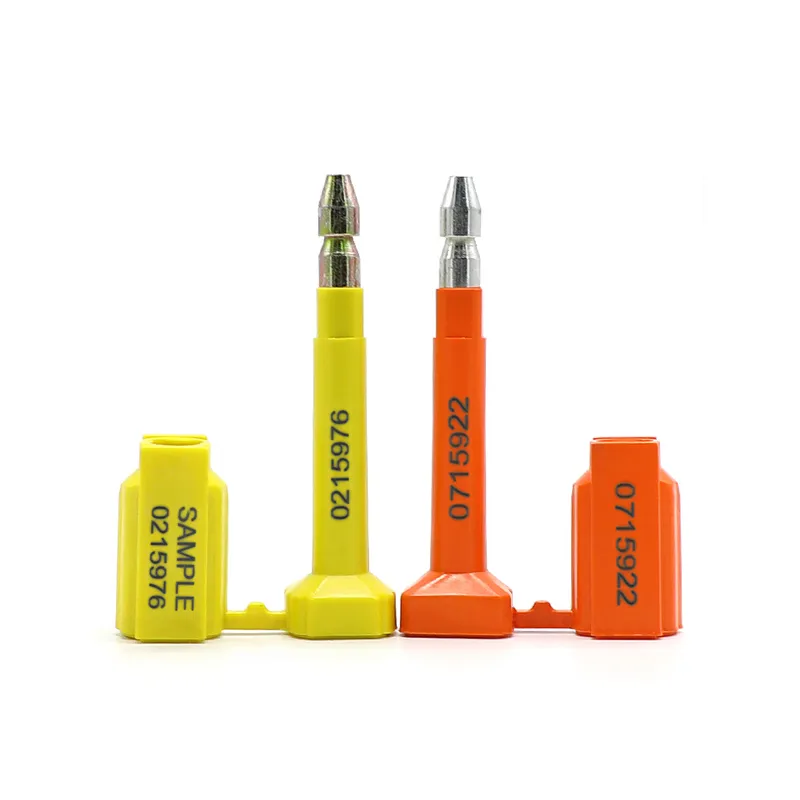
Unlike plastic pull-tight seals, steel strap seals resist cutting with standard hand tools and tolerate extreme temperatures and rough handling. The steel body maintains its integrity during transport across long distances and multiple transfer points, which is why many international shipping lines and logistics contractors specify them for containerized cargo. Our factory produces these seals in multiple widths and locking strengths, with tensile ratings typically ranging from 300 kg to over 1,000 kg depending on the model and strap thickness.
For utility companies, a different profile applies. Meter seals made from steel wire or a narrow steel strap are used on electricity, gas, and water meters to provide a clear visual indication of unauthorized access. These seals carry unique serial numbers and often incorporate barcodes for field scanning and inventory tracking.
Why Source Steel Seals Directly from a Factory?
The most immediate advantage of steel seal factory direct purchase is cost control. Intermediaries add layers of margin that can inflate unit prices by 15 to 30 percent on standard seals, and more on custom orders. When you deal directly with the production floor, you negotiate on real material and labor costs rather than on a distributor’s markup schedule.
Beyond price, factory-direct supply creates a shorter communication line for technical requirements. If your application demands a specific strap width, an unusual breaking strength tolerance, or sequential numbering that integrates with your warehouse management system, a direct conversation with the production engineer resolves these details faster than routing requests through a third party. I recall a procurement manager for a South American mining logistics firm who needed steel seals with a narrower strap profile than our standard 16 mm model. Because she was able to send the specification directly to our tooling team, we adjusted the stamping die and produced samples within two weeks of her initial inquiry. A trading company would have struggled to pull that adjustment into a tight production schedule.
Another factor is transparency around raw materials. Steel seals depend on the grade of cold-rolled steel used for the strap. Some low-cost suppliers substitute lower-grade steel that passes a visual check but fails under load during transit. A factory that discloses its material procurement sources and can show batch-testing records gives you verifiable assurance that the seal will hold.
How to Evaluate a Steel Seal Manufacturer in China
The evaluation of a steel seal supplier should center on three pillars: production capability, quality system, and communication reliability.
Production capability goes beyond machine count. Ask to see the stamping line, the welding or lock-forming stations, and the printing department. During our own factory upgrades, we transitioned to automated strap-cutting and deburring systems that reduce edge sharpness variability, a detail that matters when line handlers are pulling seals daily. A manufacturer that can walk you through each production stage on a video call and explain how variations are controlled demonstrates a level of operational maturity that typical catalog-only suppliers lack.
Key Questions for a Factory Visit or Virtual Audit
A factory audit, whether in-person or remote, should answer a few essential questions that reveal the supplier’s actual manufacturing depth. First, where does the steel strip originate? Domestic Chinese mills produce a wide quality range; a supplier that sources from a named mill and maintains mill test certificates for each batch is preferable to one that buys from spot markets. Second, what locking mechanism design is used, and how many cycle tests has it undergone? The locking chamber must grip the strap with consistent force across the full production run. Third, how are serial numbers applied? Laser marking yields better durability than ink printing, especially when seals are exposed to weather and chemicals. A supplier that can show you its own laser-engraving line rather than outsourcing marking to a third party has tighter quality control.
The quality system must show more than an ISO 9001 certificate on the wall. For steel seals used in international shipping, ISO 17712 compliance is the baseline. This standard tests tensile strength, tamper evidence, and the overall security level of the seal. High-security seals classified under the “H” clause of ISO 17712 must pass additional testing, and the manufacturer should provide an accredited lab report, not just a self-claim. I keep our own test equipment calibrated on a regular schedule and share the logs when buyers request them.
How Does the Factory Direct Purchasing Process Work?
The purchasing flow moves through several defined stages, and understanding them early prevents delays. The first stage is specification confirmation. You define the strap width, length, locking force, printing layout, serial number range, and packaging format. If you are unsure which specifications your application requires, share your use case: I often recommend prospective buyers send me a photo of the door or latch the seal will secure, because the physical dimensions of the anchor point determine the viable strap width and length more reliably than a written description.
Once the specification is locked, the factory prepares a formal proforma invoice that includes tooling costs if a custom stamping die is needed, unit price at your projected order quantity, and the production lead time. For standard steel seal models without custom printing, lead time from our factory typically runs 7 to 15 days for quantities under 50,000 pieces. Custom printing and special strap dimensions add 3 to 5 days to the schedule.
The third stage is pre-production sampling. A reliable factory will send sample seals before starting the full batch. This sample run uses the actual production tooling so that strap dimensions, locking force, and print placement match the final output. Approve the sample in writing, and the factory proceeds to mass production. After production, pack-out and quality inspection precede shipment. Most orders ship by air courier for sample quantities and by sea freight or air freight for bulk orders, with the factory handling export documentation including the commercial invoice, packing list, and bill of lading.
What About MOQ and Pricing Structure?
Factory-direct MOQs for steel seals tend to start around 1,000 to 5,000 pieces per model, with volume price breaks at 10,000, 50,000, and 100,000 pieces. The unit cost drops significantly when the stamping die setup cost amortizes over a larger run. For custom-printed seals, a one-time die fee applies, usually under USD 200 depending on the complexity of the logo and the number of colors. Pricing also shifts with steel strip thickness and width, so holding those variables constant across orders yields the most predictable cost.
What Are the Common Pitfalls in Steel Seal Sourcing?
A common mistake we see from new buyers is ordering the lowest priced steel seal without examining the locking chamber design. An inferior lock body may grip the strap unevenly, allowing the seal to slide or be manipulated without clear evidence of tampering. I recall a shipment of containerized coffee beans where a batch of imported steel seals failed at several transfer points because the locking mechanism had not been hardened. The cargo was held at a port for reinspection while the seal manufacturer in another country refused to accept responsibility, citing “improper installation” by the carrier. That dispute dragged on for months and could have been avoided if the buyer had tested the seal under realistic torque and pull conditions during the sampling phase.
Another pitfall involves mixing seal types from different suppliers without checking color and numbering compatibility. If your receiving warehouse uses barcode scanners tied to an inventory system, mismatched serial number formats create reconciliation errors. Standardizing on a single factory that can laser-print sequential numbers in your required format eliminates this complexity.
Failing to agree on a clear quality acceptance standard upfront is perhaps the most expensive oversight. I recommend buyers attach a simple acceptance checklist to the purchase order: a minimum tensile strength value, a maximum allowable burr on the strap edge, a visual standard for print alignment, and a sample-sized destructive test count. This puts an objective yardstick in place before production begins and removes ambiguity from the receiving inspection.
Common Questions About Steel Seal Sourcing
Are steel seals reusable?
Steel seals are designed as single-use security devices. Once the strap is cut to open, the seal is destroyed, providing a clear record that entry occurred. Reusable security mechanisms exist in the form of padlock-type seals, but for cargo security where one-time tamper evidence is the goal, a steel strap seal remains the standard. If your operation needs to re-seal the same container multiple times on a single trip, discuss a plan with your manufacturer: a steel seal for the initial leg and a secondary numbered plastic seal for subsequent checkpoints can cover both tamper evidence and convenience.
How do I know if a steel seal meets ISO 17712?
A supplier that claims ISO 17712 compliance should provide a test report from an accredited independent laboratory, not an internal inspection note. The report must state whether the seal achieves “indicative,” “security,” or “high security” classification, and the high-security category requires specific tamper-evidence and tensile testing. I always advise buyers to ask for the lab name and report number, then verify that the lab is listed in the ISO accreditation database. Legitimate manufacturers welcome this verification step because it protects their credibility.
What’s the difference between a steel strap seal and a bolt seal?
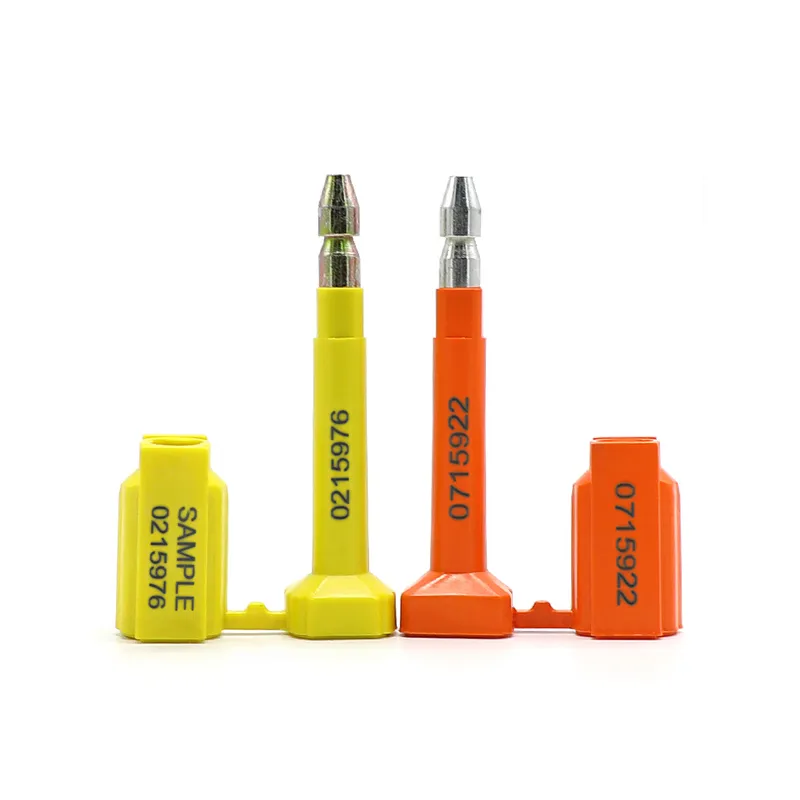
Both are high-security metal seals, but the use case differs. A bolt seal inserts a metal pin into a locking body and is most common on container door handles where the hasp accepts a rigid pin. A steel strap seal wraps around irregular or fixed anchor points that a bolt cannot accommodate, such as tanker valves, railcar hatches, and certain utility enclosures. The strap provides flexibility in the length of the secured object, while the bolt provides fixed dimensional security. If your application allows either type, the choice often comes down to the anchor point geometry and whether a strap can be threaded through it.
How long does a steel seal order take from a Chinese factory?
Standard production, including printing and serial numbering, typically takes 7 to 15 days from order confirmation, with an additional 3 to 5 days for custom die work when a new logo is introduced. Shipping time adds to this depending on the mode: air freight to most international destinations takes 5 to 8 days door-to-door, while sea freight can range from 20 to 45 days. I recommend planning a 30-day total cycle for sea shipment and keeping a safety stock at your destination to cover supply interruptions. A direct conversation with the factory’s logistics coordinator will align on shipping dates and documentation requirements. If your order involves a custom strap dimension or a new locking mechanism, send your specification early so the engineering review can happen before the order window opens. Share your requirements and we’ll confirm the production and shipping timeline that fits your program.
If you’re interested, check out these related articles:
Mastering Seal Strength: Metrics for Industrial Security – Junchuang Lock
Plastic vs Metal Seals: Security, Durability, Cost Analysis – Junchuang Lock
Custom Security Seal Manufacturing: A Comprehensive Industry Guide – Junchuang Lock
Weather Resistant Seal Selection: Mastering Environmental Durability – Junchuang Lock