
Plastic seal installation is not simply a matter of threading a strap through a hasp and pulling tight. The difference between a seal that deters tampering and one that merely gives the appearance of security comes down to precise tension, correct alignment, and an understanding of how the internal locking mechanism engages. I have seen too many shipments where a plastic security seal was defeated not by a sophisticated attack, but by a basic installation oversight, including under tensioning, misalignment, or using the wrong seal for the application. This guide explains the steps and, more importantly, the why behind each step, so your seals deliver the tamper evidence they are designed to provide.
Plastic Seal Locking Mechanisms: What Happens When You Pull
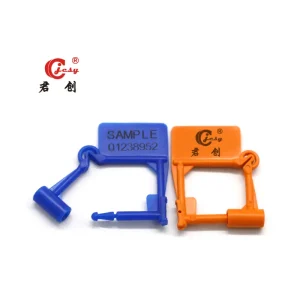
When you pull the tail of a plastic security seal, you are compressing a one way locking insert against the strap. In most pull tight designs, a small metal or plastic tab inside the body slides along the strap as you tighten, then digs in when you try to pull it back. Fixed length seals use a similar principle but the strap cannot be adjusted; you simply insert the locking end into the body until you hear or feel a click. Understanding this mechanism matters because incomplete engagement, where the strap is not seated past the locking tab, leaves the seal vulnerable to being slipped open without visible damage.
The table below compares the two most common plastic seal types.
| Seal Type | Installation Method | Security Level | Typical Use |
|---|---|---|---|
| Pull Tight Plastic Seal | Insert tail into body and pull until tight | Low to Medium | Truck doors, bags, small containers |
| Fixed Length Plastic Seal | Insert locking end into hasp until it clicks | Low | Meter boxes, fire extinguishers |
Step-by-Step: Installing a Plastic Security Seal Correctly
Aligning the Seal with the Hasp or Closure
Before inserting the strap, align the seal body with the hasp so that the strap runs straight through without twisting. A twisted strap distributes tension unevenly and can prevent the locking insert from gripping fully.
Inserting the Strap
For pull tight seals, feed the pointed tail through the hasp and then into the opening on the seal body. For fixed length seals, push the locking end into the body until you hear a distinct click. Do not force it sideways; the locking mechanism expects a straight entry.
Applying Proper Tension Until the Lock Engages
Grasp the tail and pull firmly, but not violently. You are looking for a sudden resistance that tells you the locking insert has bottomed out. If you continue pulling with excessive force, you risk deforming the strap or stripping the locking teeth inside, which can make the seal appear engaged when it actually is not. A good rule of thumb: on a pull tight seal, pull until you feel a hard stop, then give a light tug to confirm.
Verifying the Seal Is Engaged
After installation, attempt to slide the strap in reverse. It should not move. Visually check that the tail is fully inserted and that the body shows no cracks or stress marks. On some seals, a colored indicator appears when properly engaged.
If your operation involves multiple staff with varying training levels, standardizing on a single seal type and providing a clear installation routine can dramatically reduce errors. Our team can help you select a plastic seal that matches both your security requirements and the practical demands of your work environment. Reach out at [email protected] to discuss your application.
Why Installation Mistakes Undermine Seal Security
Under Tensioning: The Most Overlooked Risk
The most common failure I have observed in shipped seals is under tensioning. When a pull tight seal is not pulled until the locking tab fully engages, the strap can be worked loose by vibration during transit. A determined thief can then slide the seal off and reinstall it without leaving visible marks. In our factory testing, we have found that a gap of even 2 to 3 millimeters between the lock body and the strap’s locked position is enough to compromise the seal.
Misalignment of the Strap
If the strap enters the lock body at an angle, the locking insert may grip only one side. This creates an asymmetric hold that can be defeated by twisting the seal. We have seen cases where a seal that passed a straight pull test failed when the lock was rotated, because the internal tab was engaged only partially.
Using the Wrong Seal Type for the Application
A fixed length seal on a truck door that flexes during driving will often pop open, not because the seal failed, but because the rigid plastic could not accommodate movement. Similarly, using a lightweight pull tight seal on a heavy container latch can cause the strap to break during installation. Matching the seal’s tensile strength and design to the actual use case is as important as the installation itself.
How to Verify a Plastic Seal Is Properly Installed
Visual inspection after installation takes only a few seconds but catches most errors. Check for the following:
- The strap is fully inserted and there is no visible gap between the lock body and the strap’s locked point.
- The seal body is free of cracks or stress whitening.
- The strap is straight, not twisted or kinked.
- For numbered seals, confirm that the serial number matches the shipment record.
Give the seal a moderate tug in both directions. A properly installed plastic seal will not budge. If it slips, even slightly, the installation was incomplete and the seal must be replaced. In cold weather, plastic becomes more brittle, so a seal that was perfectly installed at room temperature may develop microcracks if forced in freezing conditions. Check seals installed in cold environments for hairline fractures around the entry point.
Securing Your Supply Chain with the Right Manufacturer
Even the best installation procedure cannot compensate for a poorly designed seal. At Shandong Junchuang Lock Industry, we manufacture plastic security seals with locking mechanisms that are engineered to engage positively and consistently, reducing the chance of user error. Our quality control includes pull tests and engagement checks on every production batch, so you receive seals that perform reliably on the job.
Whether you need pull tight seals, fixed length seals, or custom numbering, we can match the seal to your operation. Send your part number and quantity requirements to [email protected] or call +86 13853189290 to discuss how we can support your security goals.
Frequently Asked Questions About Plastic Seal Installation
Can plastic seals be reused after installation?
No. Plastic security seals are designed for single use. The locking mechanism permanently deforms the strap or insert on the first pull, so any attempt to remove and reinstall will leave visible damage. Reusing a seal defeats its tamper evident purpose.
What is the ideal temperature range for installing plastic seals?
Most polypropylene seals perform best at temperatures between -10°C and 60°C. Below freezing, the plastic stiffens and may crack if forced. Above 60°C, it becomes soft and the locking insert can slip. If your installation environment is outside this range, contact us for material options tailored to extreme conditions.
How can I tell if a plastic seal has been tampered with?
Look for signs of prying at the locking entry, stretched or whitened plastic, or misaligned serial numbers. If the seal appears intact but the strap can be slid even a fraction of an inch in the non locking direction, tampering or incomplete installation has occurred.
What is the difference between a pull tight seal and a fixed length plastic seal?
A pull tight seal allows you to cinch the strap tight around the hasp, while a fixed length seal has a preset locking distance and simply clicks into place. Pull tight seals offer better adjustability for irregular closures, but they require proper tension to engage fully. Fixed length seals are simpler but demand exact alignment. If your application requires traceability or high tensile strength, discuss your requirements with us—we can recommend a seal that meets your specifications and provide samples for testing.
If you’re interested, check out these related articles:
Choosing a Security Seal Manufacturer: Strategic Vetting for Supply Chain Integrity – Junchuang Lock
Bulk Cable Seal Purchase Guide: Strategic Procurement & Security – Junchuang Lock