
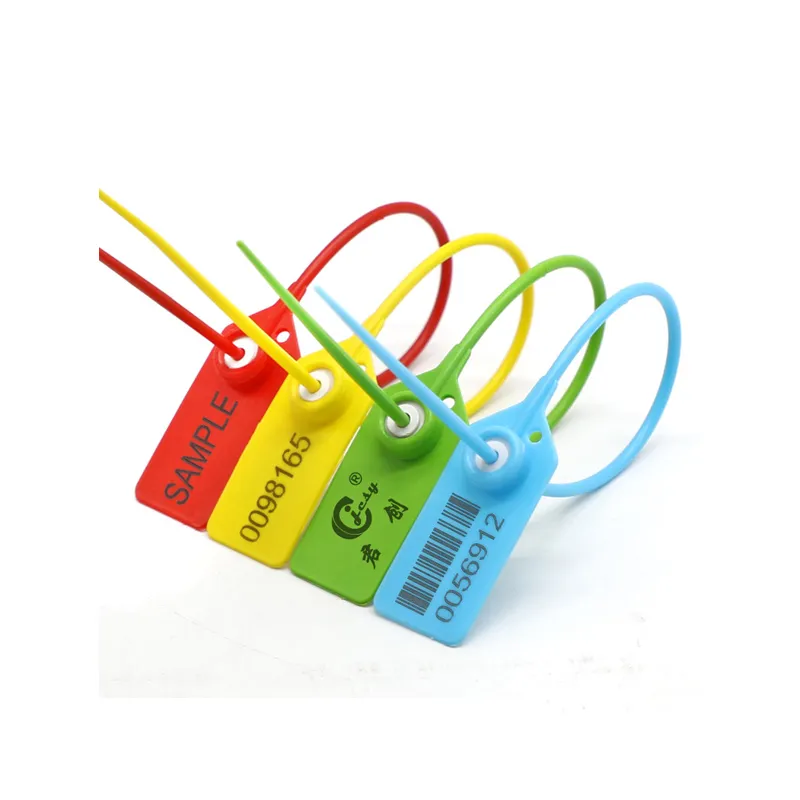
An import manager receives a container and finds the plastic seal intact, but later discovers cargo missing. The seal showed no visible break. That gap between “looks fine” and “was actually tampered with” is where most supply chain losses happen. Tamper evidence in plastic seals is not about whether a seal breaks — it is about whether the seal reveals the attempt. This article explains what genuine tamper evidence looks like in plastic security seals, how to inspect seals under real logistics conditions, and the manufacturing factors that determine whether a seal will actually do its job, based on fifteen years of producing these seals for global shipping and utility clients.
What Makes a Plastic Seal Truly Tamper Evident
Not every plastic seal provides meaningful tamper evidence. The distinction matters when cargo value runs high, or when a seal is the primary deterrent between a theft attempt and a successful claim. Two mechanical principles drive tamper evidence in pull-tight plastic seals: locking mechanism irreversibility and material stress visibility.
The locking mechanism inside a plastic seal body relies on a spring-loaded jaw or a one-way collet. When the tail is inserted, the jaw grips the strap and cannot release without destroying the housing. In low-quality copies, the jaw is a simple metal clip that can be shimmed open with a thin tool and reclosed without leaving a mark. We have tested many imports over the years, and the difference is immediate: a properly hardened stainless steel jaw leaves distinct scoring on the strap when removal is attempted, while a soft steel clip leaves no visible trace.
Material stress visibility is the second layer. High-density polyethylene or polypropylene blends that we use in our factory will whiten and show stress marks when bent or stretched beyond normal limits. A tamperer trying to pull the strap partially out and reinsert it will always leave stretch marks at the entry point, visible as lighter colored bands or necking. Acetal components in the locking body will crack if pried. If a plastic seal shows no deformation of any kind after a suspected tamper event, the seal either was not genuinely locked, or the materials are too flexible to provide evidence — both are failures.
How to Spot Material Stress and Color Change
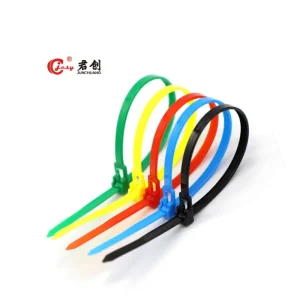
Visual inspection under good light is not optional. Look specifically at the point where the strap enters the seal body. Any whitening, micro-cracks, or surface irregularity there is a red flag. Run a fingertip along the strap edges — a tampered pull often creates tiny burrs or abrasions. The internal locking jaw, if visible through the housing, should sit evenly. A tilted jaw indicates someone tried to insert a release tool.
For numbered seals, verify that the serial number on the strap matches the number on the body if both are printed. Mismatched numbers are the most obvious sign of seal swapping, a common tactic where a cutter replaces a cut seal with an identical looking counterfeit. That is why we print matching numbers on both parts on request — it makes swapping nearly impossible without leaving evidence.
Plastic Seal Tamper Evidence Mechanisms vs. Metal and Cable Seals
Each seal category has a different evidence profile. Understanding the strengths of plastic seals in context helps procurement teams decide where they fit and where they do not.
| Evidence Type | Plastic Pull-tight Seal | Metal Strap Seal | Cable Seal |
|---|---|---|---|
| Visual stress marks | High — material whitens | None — metal yields without color change | Low — cable deformation is subtle |
| Locking irreversibility | Medium — varies by jaw material | High — metal crimp cannot be undone | High — locking body must be cut |
| Counterfeit resistance | Medium — mold complexity deters | Low — simple stampings easy to copy | High — cable construction harder to fake |
| Inspection speed | Fast — visual and tactile | Slower — needs tool check | Moderate — check for cut strands |
| Cost per unit | Low | Medium | High |
Plastic seals are not weaker evidence; they are different evidence. For truck doors and warehouse totes, the immediate visual and tactile feedback of stress whitening often provides faster tamper detection than a metal seal that looks perfect but was crimped with a counterfeit tool. The right choice depends on the theft profile, not on a generic ranking of “strength”.
When Plastic Seals Outperform Other Types
In cold chain logistics, metal seals can freeze solid and become impossible to remove cleanly. Plastic seals retain flexibility down to temperatures that make steel brittle. In pharmaceutical distribution, the smooth surface of a plastic seal body reduces the risk of tearing sterile packaging, a real concern where a metal strap seal’s sharp edges have caused contamination events. We have supplied plastic seals to vaccine distributors for exactly that reason — the evidence must not create a new hazard.
Manufacturing Factors That Determine Tamper Evidence Quality
A seal design on paper is not what you receive in the container. Three production variables control whether the seal will actually perform the way the specification claims. These are the points our factory quality system checks on every batch.
First, jaw insertion torque and alignment. The internal jaw must be seated perpendicular to the strap path, under consistent spring tension. In automated assembly lines, jaw orientation can drift over thousands of units if not checked hourly. A jaw tilted by even a few degrees will grip unevenly, creating a false lock that passes a pull test but fails tamper evidence — the strap can be worked free without visible damage. Our production line includes a calibrated alignment jig and a sample pull test from every shift.
Second, polymer blend consistency. Recycled content or incorrect additive ratios change how the plastic responds to stress. A strap with too much filler will snap cleanly instead of stretching and whitening, eliminating the visual evidence entirely. Too little UV stabilizer, and the strap becomes brittle after a few months in sunlight, failing during normal handling and triggering false tamper alarms. We compound our own material to a fixed specification; many trading companies that resell seals cannot verify this because they do not control the injection molding.
Third, mold surface finish on the strap. The strap exterior should have a slightly textured or matte finish, not a high gloss. Glossy straps show fewer stress marks because reflected light hides the whitening. A textured surface also makes it harder to apply adhesive or heat-shrink a repair over a cut. This is a small detail, but in our factory, we learned it from customer feedback — a European utility company found that their previous supplier’s glossy seals were being heat-gunned and reattached at the cut point without detection. The matte finish we now use immediately reveals any heat application as a localized gloss spot.
How to Inspect Plastic Seals Arriving at Your Warehouse
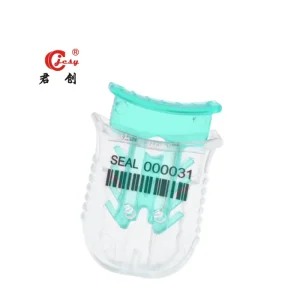
Receiving inspection is the most neglected step in tamper evidence programs. The seals are visually checked against a purchase order, then stored. That misses the failure modes that will appear only under use.
The first check is destructive: take ten seals from each carton and close them. Then attempt to open each one using common tools — a thin metal shim, a heated paperclip, a small hook. If any seal opens without leaving unmistakable evidence, the entire batch is compromised. This test takes five minutes and costs ten seals. In our factory, we do this daily with a standardized tool set and reject any batch where more than zero seals fail the evidence standard.
The second check is environmental. Place five closed seals in a freezer at the expected transport temperature for two hours, then attempt to open them. Cold plastic becomes more brittle, but the locking jaw must not lose grip. Some plastic formulations contract at different rates than the metal jaw, loosening the lock. We test our standard polypropylene seals at -25°C to ensure that does not happen. If your supplier cannot provide cold-temperature test data, test it yourself before the shipment season.
Inspecting Serial Numbers and Barcodes
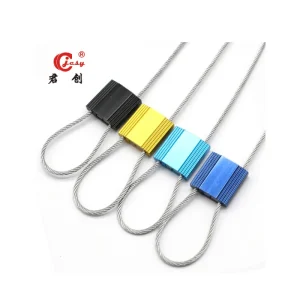
Sequential numbering is not just for tracking — it is a tamper evidence feature. A missing number in a sequence of seals on a container means a seal was removed and replaced. Barcoded seals allow handheld scanners to verify the seal identity instantly against the shipping manifest, catching number swaps at the point of loading. We print both sequential numbers and barcodes using thermal transfer onto the strap itself, not on a sticker that can be peeled and reapplied. Sticker-based markings are a known vulnerability; insist on direct print or laser etching.
If your program involves temperature extremes or sterile environments, it is worth confirming the print durability for your specific conditions before finalizing your BOM — reach out at [email protected].
Matching Plastic Seal Design to the Threat Model
A plastic seal on a high-value container crossing a known theft corridor is the wrong tool — but a plastic seal on an internal warehouse tote where the threat is employee pilferage is exactly right. The mismatch between seal type and threat model is the single biggest reason tamper evidence programs fail, and it is almost always a procurement decision, not a manufacturing defect.
For external container doors exposed to public access, we recommend a combination: an ISO 17712 bolt seal as the primary barrier, and a numbered plastic seal on the secondary latch. The bolt seal prevents stealth entry; the plastic seal provides immediate visual verification at every checkpoint that the door has not been opened. If a thief cuts the bolt seal and replaces it, the plastic seal will still show disturbance if it was also cut. This layered approach is standard practice among the freight forwarders we supply in Southeast Asia.
For truck trailer doors that are opened multiple times per route, a single breakaway plastic seal is not suitable because it must be destroyed each time. Instead, use a seal with a removable locking pin or a padlock-type plastic seal that allows authorized access and resealing without losing the audit trail. Resealability does not reduce tamper evidence if the seal body has a unique number and the open event is logged.
The opposite mistake is over-specifying. A heavy metal seal on a lightweight plastic tote is overkill and can damage the container itself. The seal must match both the security requirement and the physical characteristics of what it secures.
Common Misunderstandings About Plastic Seal Evidence
Many inspection failures happen because the user expects the wrong thing. A plastic seal that does not break does not mean it worked — it means the tamperer may have bypassed it entirely or used a method that leaves no trace on that particular design. Similarly, a seal found on the ground next to a closed container does not prove a breach occurred after the seal was applied; it could be a discarded seal from a previous loading. Context matters more than the seal itself.
Can plastic seals be reused without detection?
With a properly designed one-way jaw, no. The locking mechanism physically deforms the strap ridges. Any attempt to straighten and reinsert causes visible abrasion and white stress marks. However, this depends on jaw hardness. We have encountered counterfeit seals where the jaw was simply a piece of stamped brass that flexed without gripping — those can be reused dozens of times. A simple field test is to pull a closed seal to its rated tensile strength; if the strap slips back even a millimeter, the jaw is substandard.
What temperature causes plastic seals to lose effectiveness?
Standard polypropylene seals maintain tamper evidence properties from -25°C to +80°C, but the locking jaw tension can shift at extremes. At high temperatures, some polymers soften enough that the jaw can be forced open with less effort. We provide a heat-stabilized grade for Middle East and African routes that holds evidence characteristics to 110°C. If your shipments cross desert regions, request the heat-stabilized compound — it costs about 8% more but prevents the softening problem entirely.
How can I tell if a seal was cut and glued back?
A clean transverse cut, even if expertly glued, always leaves a surface irregularity. Run a fingernail perpendicular across the strap — a cut line will catch. Under UV light, many adhesives fluoresce differently than the base plastic. We also offer seals with a colored core layer that becomes visible if the outer surface is cut, making a concealed repair impossible. For critical applications, this layered extrusion approach eliminates the glue concealment risk entirely. Share your tamper method concerns and we can recommend the right seal construction for your route profile.
If you’re interested, check out these related articles:
Finding Reliable Bolt Seal Exporters: A Strategic Procurement Guide – Junchuang Lock
How to Identify Tampered Security Seals: A Professional Guide – Junchuang Lock