
Meter seal supplier quality standards matter before a single seal ships. A utility buyer can approve a supplier on samples alone, then face field failures, weak serialization, or inconsistent tamper evidence after installation. From fifteen years in security seal manufacturing, I look for three controls first: verified material traceability, laboratory-confirmed tamper evidence, and serial number records that survive rough handling. A supplier that cannot show these controls in a factory audit is not yet a dependable meter seal source. The checks that follow show what to run before committing to bulk meter seal orders.
What Should Meter Seal Supplier Quality Standards Cover?
Most buyers think of quality as a surface check. That misses the point. A meter seal only works if three systems stay consistent: the locking mechanism, the tamper evidence, and the printed or laser marked identity. When I review a supplier, I expect documented control over all three, not just a clean sample bag. The locking mechanism must hold under normal meter installation and removal attempts. Tamper evidence must show clear, permanent separation or breakage. The marking must stay readable after UV exposure, moisture, and rough handling. If any one part of that chain is weak, the seal gives a false sense of security without protecting revenue.
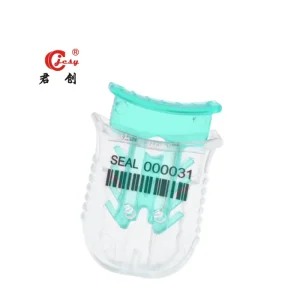
A supplier quality standard should also define inspection gates: incoming resin or metal lot records, in-process checks for dimension and locking force, and outgoing lot sampling for serial range and color consistency. Without those gates, a factory can ship a good pilot batch and then shift materials or tooling on the repeat order without telling you.
Which Materials and Tamper Evidence Features Matter?
Meter seal bodies usually use polypropylene or polycarbonate, each with tradeoffs. Polypropylene bends without cracking during installation. Polycarbonate holds more rigid dimensional detail and can carry sharper marking contrast. The wire or strap matters just as much. Stainless steel wire resists rust, while galvanized or brass wire can fail faster in humid utility environments. A buyer should ask which material lot the supplier used for the quoted seal and request a material certificate before production. The certificate is not a guarantee by itself, but it shows whether the factory can trace the batch.
| Quality check | What to verify | Why it matters |
|---|---|---|
| Material certificate | Resin or wire grade records match the quotation | Prevents substitution that weakens strength or UV life |
| Tamper evidence | Destructive break or visible damage on removal | Confirms removal cannot be hidden and reclosed |
| Locking strength | Pull-out force within the specified range | Keeps the seal fixed during meter handling |
| Weathering | UV and moisture test results | Prevents discoloration and embrittlement after months outdoors |
| Serialization | Sequential numbers without duplication | Allows field audits and theft tracing |
| Packaging | Lot code and production date on each carton | Enables recall by specific batch if a defect appears |
One failure I watch for is brittle material that passes an initial pull test but cracks after a few months under sunlight. That is why we run UV and temperature cycling checks before approving a new material source. A cheaper compound can look identical on the bench, then fail in the field.
How Do You Verify Marking and Traceability Controls?
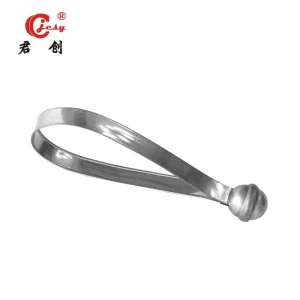
Serialization is where many suppliers fall short. A meter seal without a clean, sequential identifier gives the utility no way to connect a removed seal to a specific meter, technician, or inspection event. The marking format should be approved before production, and the supplier should send a numbering report after the run. I ask for confirmation of start and end serial numbers for each production lot, and I reject lots with duplicate or missing numbers. For utility programs, color coding can also carry meaning: one color for electric meters, another for water, another for gas. If the supplier cannot hold those colors consistent across batches, field identification becomes unreliable.
Laser marking generally holds up better than ink printing on polycarbonate bodies, especially when seals sit outdoors for years. The key is not the marking method alone. It is whether the supplier verifies readability on finished parts rather than on a flat sample plate.
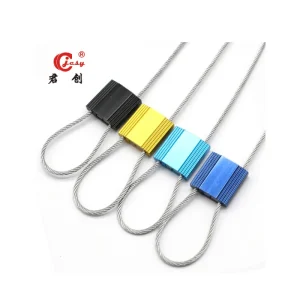
If your program uses custom serial ranges, mixed wire lengths, or utility color codes, confirm those variables with the factory before the bill of materials is final. Send your exact marking requirement to [email protected] and we can check whether current tooling covers it without added cost.
What Should a Factory Audit Check for Meter Seals?
An audit should not stop at a conference room presentation. Walk the production floor and check four things. First, confirm that raw material storage is labeled by lot and separated from recycled or unapproved material. Second, look at the injection molding records: cycle time, temperature, and pressure should be logged and retrievable by production date. Third, ask how the factory samples each lot. A stable supplier samples during the run, not only at the end when defects can be hidden. Fourth, check that test equipment is calibrated and that failed samples are recorded alongside the pass result. If the factory cannot show a reject record, quality control is not really being measured.
A useful audit also examines tooling maintenance. Worn molds produce burrs, short shots, and inconsistent locking geometry. Ask when the mold was last serviced and whether the supplier keeps a maintenance log. A factory that treats tooling as an afterthought will eventually deliver seals that look right but do not perform the same.
How Should You Confirm Quality Before a Bulk Meter Seal Order?
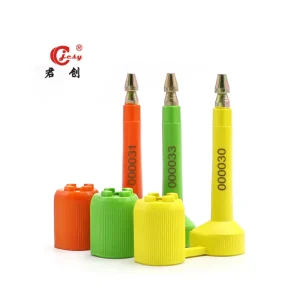
The risk shows up after installation, when a utility finds seals failing in bright sunlight or a serial range with missing numbers. At that point, the unit price saved disappears in replacement labor and audit time. A better step is to qualify the supplier before the bulk order: request a material certificate, a pre-production marking sample, and a written lot inspection plan. If those documents look thin, walk away. If the supplier can produce them, move forward with a pilot order and check the same criteria on delivery.
If you are sourcing meter seals for a utility or service program, send your current drawing, color, serial format, and annual quantity to [email protected] or WhatsApp +86 13853189290. We will confirm whether our production records match your specification before you commit.
What Questions Do Buyers Ask About Meter Seal Quality?
Do meter seals need to break on removal?
Yes. A meter seal is expected to show clear breakage, cutting, or separation when removed. If a seal can be opened and closed without visible damage, the tamper evidence has failed. Some designs use frangible locking teeth that snap on first insertion. Others require a wire cutter for removal. In both cases, the removed seal should never reseat cleanly. Buyers should test this by installing a sample, removing it, and checking whether the damage is obvious from arm’s length. Substituting softer material without validation is the most common reason seals begin to fail this check.
Can a supplier match our utility’s existing color and serial format?
It depends on the existing seal design and whether the factory already has the matching mold and marking fixture. A custom color is usually easier when the base resin can be compounded or purchased in that shade. Serial format matching requires the right laser or hot stamp setup as well as the same character spacing. Before quoting, send a physical sample or a dimensioned drawing. The supplier should confirm the material, wire length, color code, and serial range point by point. If the reply is only a price without a specification review, treat that as a warning signal.
What is the usual lead time for a bulk meter seal order?
In our production planning, standard meter seal bodies move faster than fully custom designs because common molds and numbering fixtures are already in place. A repeat order with approved artwork can often be scheduled once materials are confirmed. A new custom shape, new color match, or special wire length adds tooling and sampling time. Buyers should separate the product approval stage from the production stage in any schedule. Confirming the final marking file early removes the most common delay.
How do I confirm batch-to-batch consistency before ordering?
A common mistake is judging consistency from one sample bag. A single bag can be hand-picked. Ask instead for three production lots, or request a retained-sample record from the previous run. Compare the locking force, breakage pattern, color, and serial spacing across those lots. If the supplier cannot produce retained samples, that is a gap in its quality system. We recommend ordering a small pilot lot before a full annual contract, then checking the same characteristics on delivery. Share your current sample or drawing to [email protected] and we will confirm whether it can be matched against our production records before you order.
If you’re interested, check out these related articles:
Finding Trusted Cable Seal Exporters: A Strategic Procurement Guide – Junchuang Lock
Plastic Seal Supplier Evaluation: A Strategic Checklist – Junchuang Lock
Plastic Seal Factory Quality Control: Ensuring Supply Chain Integrity – Junchuang Lock
Ear Tag Installation: Precision Techniques for Animal Identification – Junchuang Lock
Selecting Ear Tag Size and Color: A Strategic Guide for Livestock – Junchuang Lock