
Sourcing cable seals from China sounds straightforward until you’re three months into a contract with a supplier who can’t deliver consistent quality. The global market for industrial security solutions has plenty of capable manufacturers, but finding the right one takes more than a quick Alibaba search. What follows covers the practical considerations for procurement professionals who need tamper-evident devices that actually work, from vetting factories to calculating whether that bulk discount makes sense over a five-year horizon.
Finding Chinese Cable Seal Manufacturers That Won’t Waste Your Time
The difference between a reliable cable seal supplier and a problematic one often becomes apparent only after the first shipment arrives. By then, you’ve already committed resources and timeline. Better to front-load the evaluation work.
Start with the basics that many buyers skip. Check legal registration and business licenses through official Chinese government databases, not just the documents the factory provides. Client testimonials matter, but testimonials from companies in your industry matter more. A manufacturer with fifteen years of experience making seals for retail packaging may struggle with the specifications required for container security.
Operational history tells part of the story. How a factory handles social responsibility and environmental regulations tells another. Manufacturers cutting corners on labor conditions or waste disposal tend to cut corners elsewhere too.
Supplier Evaluation Criteria Worth Tracking
| Criterion | Description | Importance |
|---|---|---|
| Certifications | ISO 9001, C-TPAT, ISO/PAS 17712 | High |
| Experience | Years in operation, specialized in security seals | High |
| Production Scale | Capacity to meet demand, modern equipment | Medium |
| Quality Control | In-house testing, defect rates, return policies | High |
| Communication | Responsiveness, English proficiency, clear documentation | Medium |
| Ethical Practices | Labor conditions, environmental compliance | High |
Certifications That Actually Mean Something
Not all certifications carry equal weight, and some manufacturers display logos they haven’t earned. Verification matters.
ISO 9001 confirms a factory maintains consistent quality management systems. It’s table stakes, not a differentiator. C-TPAT compliance indicates the manufacturer meets U.S. Customs and Border Protection standards for supply chain security, which matters if your seals will touch anything entering American ports.
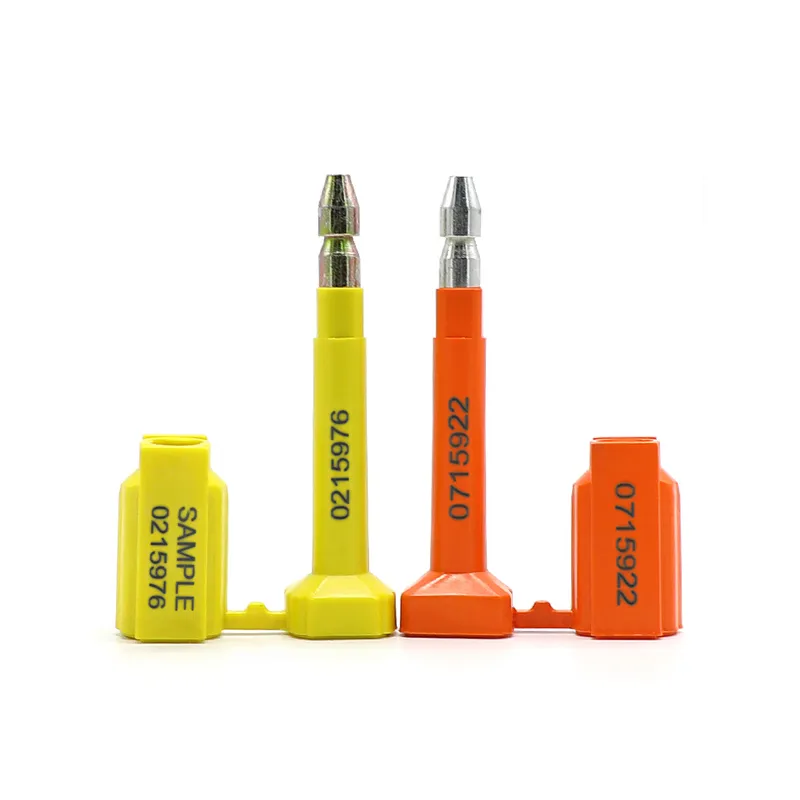
For high-security applications, particularly container seals, ISO/PAS 17712 certification isn’t optional. This standard defines specific mechanical resistance thresholds and tamper-evident requirements. A seal rated “indicative” under this standard serves different purposes than one rated “high security.” Know which you need before conversations with suppliers begin.
Shandong Junchuang Lock Industry Co., Ltd integrates these standards into production processes, which means the compliance work happens during manufacturing rather than as an afterthought during audits.
How Quality Control Should Flow
graph TD
    A[Raw Material Inspection] --> B{Production Phase};
    B --> C{In-process Quality Checks};
    C --> D[Final Product Testing];
    D --> E{Certification & Compliance Review};
    E --> F[Packaging & Dispatch];
For related security applications, the considerations around 《Meter Lead Seals: Essential Security for Utility and Measurement Devices》 follow similar evaluation logic.
Production Capacity and What Lead Times Really Look Like
Asking a factory about their production capacity gets you a number. Understanding what that number means in practice requires more specific questions.
Daily output volumes vary by seal type. A facility producing 50,000 simple indicative seals daily might manage only 15,000 high-security cable seals with the same workforce. Custom specifications add time. Seasonal demand fluctuations, particularly around Chinese New Year, can extend lead times by weeks.
Request historical data on actual delivery performance, not just promised timelines. A factory claiming two-week lead times but averaging three weeks tells you something useful. Raw material availability, especially for specialized steel cables or particular ABS compounds, can create bottlenecks that aren’t visible until you’re waiting on an order.
Transparent manufacturers share these metrics openly. Opaque ones change the subject.
Making Cable Seals Work for Your Specific Application
Standard cable seals work for standard applications. Most applications aren’t standard.
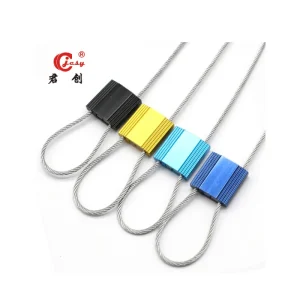
Cable length requirements range from 150mm for small equipment to 5000mm for oversized cargo. Diameter affects both security level and flexibility, with options typically running from 1.0mm to 5.0mm. The thicker the cable, the harder it is to cut without specialized tools, but also the harder it is to thread through tight spaces.
Marking capabilities have improved significantly. Laser printing handles company logos, serial numbers, barcodes, and QR codes with precision that stamping methods can’t match. QR codes linking to verification databases add a layer of anti-counterfeiting protection that simple serial numbers don’t provide.
Material selection depends on environment. Seals exposed to saltwater, extreme temperatures, or chemical exposure need different compositions than those used in climate-controlled warehouses.
Available Customization Parameters
| Feature | Description | Benefits |
|---|---|---|
| Cable Length | Adjustable from 150mm to 5000mm | Versatility for diverse applications |
| Cable Diameter | Available from 1.0mm to 5.0mm | Enhanced security levels and application suitability |
| Marking | Laser printing of logos, serial numbers, barcodes, QR codes | Improved traceability, brand recognition, anti-counterfeit |
| Color | Wide range of colors available | Visual identification, inventory management |
| Material | Steel cable with aluminum or ABS body | Durability, weather resistance |
Getting Seals From China to Your Facility
International shipping introduces variables that domestic procurement doesn’t face. Some are predictable. Others aren’t.
Incoterms matter more than many buyers realize. The difference between FOB and DDP affects who bears risk at each stage of transit, who handles customs paperwork, and ultimately who pays when something goes wrong. Clarify these terms before placing orders, not after containers are floating somewhere in the Pacific.
Consolidating shipments reduces per-unit shipping costs but increases exposure if a single shipment encounters problems. Splitting orders across multiple shipments costs more but spreads risk. The right balance depends on your inventory buffer and tolerance for supply disruption.
Freight forwarders with experience in Chinese exports can navigate customs documentation more efficiently than generalists. Import regulations vary by destination country, and getting paperwork wrong creates delays that no amount of expedited shipping can fix.
Calculating Whether the Price Actually Makes Sense
Unit price comparisons miss most of what matters in cable seal procurement economics.
Shipping costs per unit drop with volume, but only to a point. Customs duties vary by seal classification and destination. Insurance adds cost but prevents catastrophic loss scenarios. All of these belong in the calculation.
Quality failures create costs that don’t appear on invoices. A seal that fails to indicate tampering defeats its purpose. A seal that breaks during installation wastes labor time. A seal that can’t be verified creates compliance problems. Inferior products generate replacement costs, investigation costs, and occasionally liability costs.
Bulk discounts look attractive until you calculate storage costs and the risk of specification changes making inventory obsolete. Long-term contracts lock in pricing but reduce flexibility if better options emerge.
The manufacturers worth working with understand these tradeoffs and price accordingly. Shandong Junchuang Lock Industry Co., Ltd positions pricing against total cost of ownership rather than just unit cost, which tends to favor buyers thinking beyond the current purchase order.
Frequently Asked Questions
What are the essential quality certifications for cable seal manufacturers?
Reputable cable seal manufacturers, especially in China, should possess ISO 9001 for quality management and often C-TPAT compliance for supply chain security. Additional certifications like ISO/PAS 17712 for high-security bolt seals are crucial for container seals, indicating robust tamper-evident solutions.
How do I assess a Chinese cable seal factory’s production capacity and lead times?
To assess production capacity, inquire about daily output, factory size, and machinery. For lead times, request typical schedules for various order sizes, including customizable cable seals. A factory tour or third-party audit is recommended to verify claims and ensure they can meet your industrial security needs.
What customization options are available for industrial cable seals?
Leading cable seal factories, like Shandong Junchuang, offer extensive customization. This includes varying cable lengths and diameters, laser printing of company logos, serial numbers, barcodes, and QR codes. Color options and specific material compositions for enhanced tamper-evident solutions are also common.
Partner with Junchuang for Unparalleled Security
Elevate your industrial security. Partner with Shandong Junchuang Lock Industry Co., Ltd. for premium, customizable cable seals engineered for unparalleled protection and compliance. Contact us today for a tailored consultation. Reach us via email at [email protected] or call +86 13853189290.