
Sourcing barrier seals from a China factory is a strategic move for importers who want container security at a controlled cost. Over fifteen years of manufacturing high-security seals, I’ve seen that the gap between a dependable seal and a cargo loss usually traces back to factory-floor practices most buying guides never touch. This article walks through what you need to verify before opening an order, from production quality down to logistics, so you avoid the expensive mistakes that undercut supply chain protection.
Why Source Barrier Seals Directly from a China Factory?
Buying directly from a manufacturer eliminates distributor markups and gives you control over specifications. We produce barrier seals, and the importers who work directly with us get unit costs that make long-term security budgets stretch further. Custom lifting strengths, lock-body finishes, and laser-marked tracking numbers become standard options instead of add-ons. Direct communication also means when a cargo line changes its door configuration, we adjust the seal design in days, not weeks.
The real advantage runs deeper. A factory relationship lets you verify how seals are made, not just what the data sheet says. You can ask for tensile-test videos, production batch samples, and in-line quality logs before you pay for the full order. That transparency cuts out intermediaries who repackage generic product without ever touching a seal. For high-volume importers handling containerized freight, this kind of access is what keeps a single bad shipment from turning into a customs problem.
Key Specifications That Define a Reliable Barrier Seal
Before you talk to any factory, you need to understand the performance parameters that separate an effective barrier seal from a cheap steel stamping. The primary standard is ISO 17712, which classifies seals as indicative, security, or high-security. A barrier seal meant for container doors must meet the high-security “H” classification. That means it has been tested to withstand a minimum tensile load, typically not less than 18 kN for a bolt-type barrier seal, and it must show clear evidence of tampering if someone tries to remove it.
What Is a Barrier Seal and How Is It Different from a Bolt Seal?
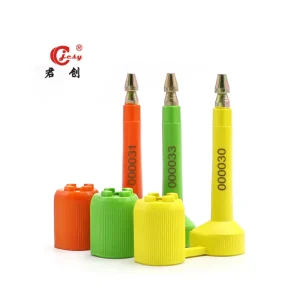
A barrier seal works as a one-piece steel locking body connected to a fixed-length metal strap or bolt. Once you push the strap into the lock chamber, it cannot be pulled back. To open the container, you have to cut the strap. This creates a visible, permanent record of entry. Bolt seals, in contrast, use a separate bolt and barrel that screw together; they are faster to apply but can sometimes be defeated with specialized tools if the locking ring tolerance is off. The barrier design’s key advantage is that it leaves zero ambiguity: if the strap is intact, the container door has not been opened.
Beyond the seal type, you should confirm the material grade and plating. Barrier seals that go onto ocean containers need corrosion resistance, usually a zinc-plated or stainless steel strap, with a body that resists salt-spray exposure. Work directly with the factory to specify the strap diameter, because a thinner strap reduces cost but also lowers cut resistance. We default to a minimum strap cross section that exceeds the typical bolt-cutter jaw gap, making forced removal slow and noisy.
Evaluating a Barrier Seal Factory’s Quality System
A valid ISO 17712 certificate is only the entry ticket. I’ve seen factories display a certificate on the wall while running production lines that cut corners on strap hardness or lock-body finish. So you must dig into the quality system that backs the certificate. Start by requesting the factory’s in-house testing records for the exact barrier seal model you plan to buy. Look for tensile test charts, tamper test documentation, and salt-spray chamber logs. Real records show variation; perfectly flat data curves hint at paperwork generated without actual testing.
How Can You Verify a Factory’s ISO 17712 Compliance?
Ask for the certificate number and the issuing lab. Then contact the lab directly to confirm it’s current and covers the product category you’re buying. Some importers also hire a third-party inspection service to witness production and pull random samples for destructive testing. Even a single on-site visit with a checklist focused on material hardness testing, strap welding quality, and locking mechanism consistency gives you a picture no PDF can capture.
The factory’s internal traceability matters too. We tag every production batch with raw-material heat numbers and testing dates. If a future problem appears, we can isolate it to a specific production run instead of guessing. Ask the factory how they link a shipped seal to its manufacturing records. If they cannot answer clearly, you’re buying a black box.
Quality Control Checklist for Barrier Seals Before Shipment
Once you’ve approved the sample, the pre-shipment inspection is your last chance to catch drift. Don’t rely on the factory’s own final check alone. A structured inspection that mirrors the seal’s real-world failure modes catches the problems that show up later at the port.
What Are the Critical Inspection Points for Barrier Seals?
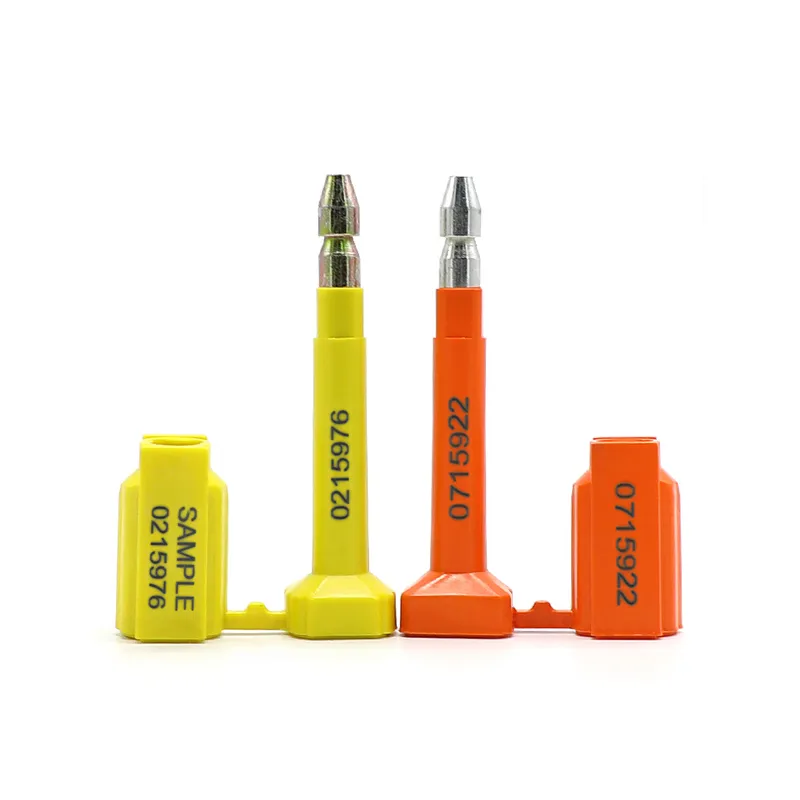
Check the locking mechanism first. Pull a sample from the production run and apply a manual pull force to confirm it locks completely with a single insertion. Any hesitation or partial engagement means the internal spring or locking tab is out of spec. Next, measure the strap length and thickness with a calibrated caliper; dimensional drift beyond 0.2 mm changes how the seal fits a container door bracket. After that, inspect the laser marking or stamping for legibility. A smudged serial number creates a paperwork mismatch at customs.
Tensile strength testing should be done on a sample from the same batch. We recommend pulling to destruction and comparing the break point against the ISO 17712 minimum. A batch that snaps below the rated load signals a material or heat-treatment problem. Finally, simulate a tampering attempt: try to pry the lock body with a small screwdriver, cut the strap with a basic hand tool, and check whether the tamper-evident features activate as designed. If the seal can be manipulated without leaving obvious damage, reject the batch.
Managing Orders, MOQ, and Logistics
Minimum order quantities become a real sticking point for first-time importers. Many factories set MOQ based on raw-material procurement and machine setup costs, but a partner that understands international trade will offer a trial order with a slightly higher unit cost before committing to volume. We run trial batches of 1,000 pieces because it lets an importer test seal fitment and customs acceptance without tying up capital.
How to Negotiate Minimum Order Quantities with a Factory?
Don’t start by asking for the lowest MOQ. Instead, explain your program timeline and ask what the factory can produce reliably within a smaller run. If they cite machine setup minimums, ask whether they can group your order with another production schedule to reduce waste. Often, a compromise on delivery timing rather than price allows both sides to step down from the MOQ.
On the logistics side, confirm that the factory provides the necessary shipping documentation: commercial invoice, packing list, and an ISO 17712 compliance letter for the seal model. Customs authorities in many countries require a compliance statement paired with the seal’s test certificate. Without it, a container can be held for inspection. We include a compressed testing summary with every shipment so the importer has it at hand.
Building a Long-Term Partnership
The goal isn’t one shipment; it’s a supply chain that doesn’t need to be fire-watched. Importers who send us feedback about seal performance on specific trade lanes help us refine strap coatings and locking geometry. That loop turns a transactional buy into a product that actually fits your operation. We also maintain a dedicated production line for repeat orders, which stabilizes lead times and material sourcing.
A long-term partnership also makes quality deviations less likely. When the factory knows your inspection criteria and your rejection standards, the production team self-corrects. You spend less time on inspection and more time managing your own logistics. That reliability is what keeps a three-dollar seal from becoming a five-thousand-dollar cargo claim.
A failed seal can turn a routine shipment into a theft loss, a customs delay, or a liability claim. That’s why we treat every order as a test of our manufacturing consistency. To discuss your barrier seal specifications, request a factory visit, or start with a sample run, contact us at [email protected] or call +86 13853189290.
Questions Importers Ask Before Choosing a Barrier Seal Factory
A barrier seal and a bolt seal look similar on paper. Does the difference actually affect security?
The difference shows up in the failure mode. We’ve seen bolt seals where the locking ring loosens after repeated vibration, letting someone unscrew the barrel slowly without visible cut marks. A well-made barrier seal removes that possibility because there is no threaded connection. Once locked, the only way to open it is to cut the steel strap, a process that leaves a jagged, obvious break. For container doors that stay sealed across long ocean transits, that certainty is worth the slightly longer application time.
How can I be sure the factory won’t substitute cheaper material after the first order?
This is where batch-level traceability matters. Ask whether the factory assigns material heat numbers to production runs and whether those numbers appear on your inspection report. At our plant, every strap lot is traceable back to the mill certificate. If you ever doubt a shipment, you can cross-check a random sample’s hardness against the original data. Consistent documentation makes it unprofitable for a factory to switch to inferior stock because the discrepancy shows up in the numbers.
We import multiple seal types. Does it make sense to source them all from one barrier seal factory?
It depends on the factory’s production range. A factory that excels at high-security steel seals may not run plastic indicative seals with the same consistency, and vice versa. However, a factory that has dedicated lines for both metal and plastic seals, with separate quality checkpoints, can simplify your logistics without sacrificing quality. You reduce supplier management overhead while still getting product-specific expertise. Always verify that each product line has its own testing records and not a shared generic certificate.
What’s the most overlooked factor that causes barrier seal problems in the field?
It’s the clearance between the seal strap and the container door bracket. We’ve seen importers order seals with the correct tensile rating but the wrong strap width, only to discover the seal jams during application or flops loosely, allowing it to be pried. Before committing to a large order, send the factory your container bracket dimensions and request a fitment test with a few sample pieces. It takes an extra week but prevents a full shipment from becoming unusable.
If your operation depends on high-volume container movements, confirming seal performance early avoids supply chain disruption. Share your application requirements and we’ll verify the correct barrier seal configuration for your equipment.
If you’re interested, check out these related articles:
UV Resistant Security Seals: Protecting Assets from Sun Degradation – Junchuang Lock
ISO 17712 Bolt Seals: Essential Buying Guide for Security – Junchuang Lock
Bolt Seal Quality Inspection: Safeguarding Cargo & Compliance – Junchuang Lock