
Custom meter seal manufacturing gives utility buyers more control than most realize, if the design starts from the sealing mechanism rather than the cheapest material. A seal that fails in the field, whether from brittle plastic, faded numbering, or a locking end that snaps during installation, creates exactly the audit failure it was meant to prevent. I work on the production side of these decisions at Shandong Junchuang, and the most dependable orders are always the ones where mechanism, material, and marking were settled before tooling began. The choices below follow the order that actually reduces field failures.
The Sealing Mechanism Comes First in Custom Meter Seal Design
The mechanism comes before the logo in custom meter seal design, because the locking method determines installation speed, removal tools, and how tampering is detected. I ask every buyer to describe the meter enclosure first. A seal can look right in a catalog photo and still be wrong for the door aperture or the inspector’s cutting tool.
Pull-Tight Plastic Seals Fit High-Volume Electric and Water Meters
A pull-tight body with an internal ratchet is the default for electric and water meters, where the tail passes through a small opening and is hand tightened. The tail locks after pulling, and removal requires cutting that leaves obvious damage. This is the fastest option for field crews and the most economical in volume, but the plastic grip must hold repeatable tension across temperature swings. Buyers should confirm the tail diameter and length against the actual sealing point before approving a sample. A tail that fits a spec sheet but not the meter body causes installation breakage on the first trial run.
Lead Wire Seals Hold Their Position in Gas and Legacy Utility Programs
Lead wire seals work differently. The wire threads through the meter fastening point, then a soft lead or aluminum ferrule is compressed with a sealing press or pliers. Application is slower, but the compressed seal does not creep or spring back, which is why gas utilities and older inspection programs still specify lead. The practical check is disposal, because used lead seals require regulated handling in some regions. Buyers should verify local requirements before committing to lead.
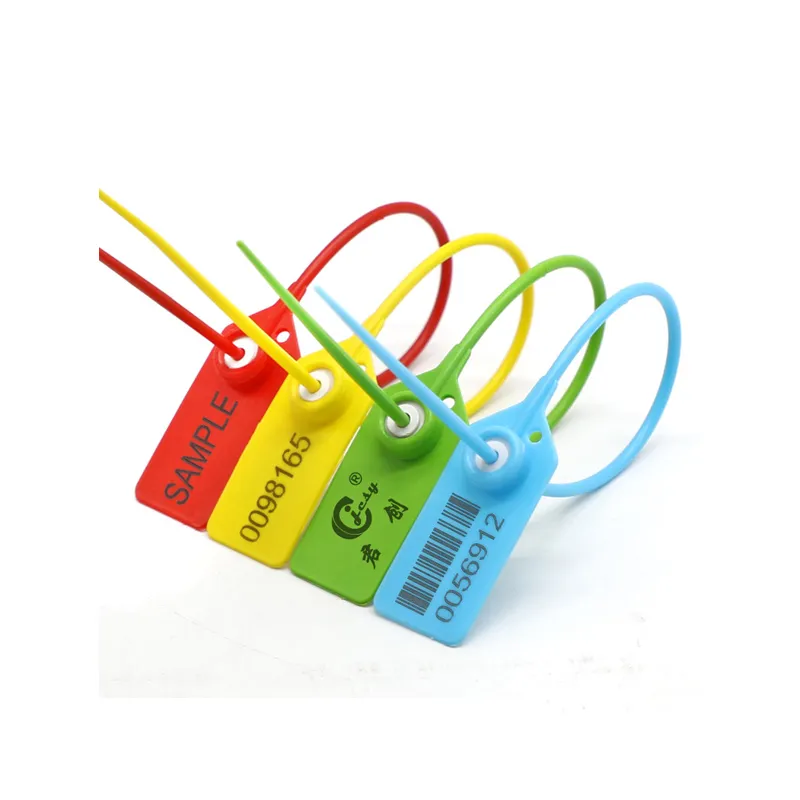
Fixed-length and adjustable bodies also differ in inspection speed. A fixed-length design removes slack during installation and leaves a predictable appearance. An adjustable wire seal fits a wider range of enclosure points but leaves more tail length, which can interfere with meter covers if crews do not trim it. The failure mode also differs. A pull-tight seal shows fracture or stress whitening when forced, while a lead ferrule shows tool marks or flattening after reopening. Utilities should match that visible signal to what inspectors are actually trained to look for. The mechanism decision drives tooling and cost before marking is discussed. If you are replacing an existing seal, send the current seal and a photo of the enclosure, and the matching mechanism can be confirmed quickly.
Custom Meter Seal Material Options Affect Cost and Tamper Evidence
Material is the second decision after mechanism, and it changes both unit cost and how tampering is detected. Utilities rarely need the strongest material available. They need a material that fails visibly when forced and survives outdoor exposure until the next inspection cycle.
Polycarbonate pull-tight seals dominate meter use because the material is strong enough for hand application but brittle enough to show tool marks. Nylon is softer and tolerates impact better, but it can stretch more under tension and therefore requires tighter dimensional control. Polypropylene costs less and suits short term or indoor metering where UV exposure is limited.
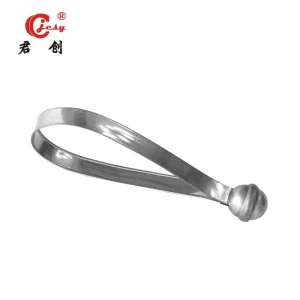
Lead remains the base material for traditional wire and ferrule seals. It presses easily, holds its shape after compression, and resists corrosion, but it is heavier and brings disposal rules in some regions. Metal strap seals with a screw locking body cover industrial metering cabinets where the door needs higher pull strength and the seal must be removed with shears.
| Material | Best Use | Tamper Evidence | Cost Consideration |
|---|---|---|---|
| Lead wire and ferrule | Gas and legacy utility meters | Compressed ferrule deformation and tool marks | Low per piece, higher disposal handling |
| Polycarbonate pull-tight | Electric and water meters | Fracture or stress whitening on forced removal | Low to moderate by volume |
| Nylon pull-tight | Impact-prone meter enclosures | Visible stretching and tool marks | Moderate |
| Metal strap | Industrial meter cabinets and higher security enclosures | Cut or deformed locking body | Higher, justified by pull strength |
Cost per piece is not the whole comparison. A cheaper material that fades or stretches can shorten inspection intervals or create false tamper alarms. The tradeoff to discuss with the factory is replacement frequency and disposal burden, not price alone.
If your program mixes indoor and outdoor meters, split the material and marking decisions instead of forcing one seal type across the fleet. Send the meter model and exposure conditions to [email protected] and I will confirm which material and marking method holds up across all of them.
Marking, Numbering, and Color Coding Build the Audit Trail
Marking is where custom meter seal manufacturing becomes a genuine identification tool rather than a generic closure. The goal is a number or code that a field inspector can read months after installation without a scanner and without guessing.
Sequential numbering is standard, but the format matters. Most utilities order fixed digit serial numbers with a prefix letter that identifies the department or year. Ask for a sample at the actual marking height, because small digits are hard to read in poor light. Barcode or QR marking adds machine readable data but demands laser engraving or high contrast printing, and it works only when the surface stays flat and clean.
Color coding carries meaning quickly. One color can mark the revenue protection team, another can mark a maintenance contractor, and a third can mark high value installations. The color choice belongs at the resin stage rather than as surface printing, because through-color holds its meaning when the surface is scuffed. On larger meter cabinets, utilities sometimes pair a wire or pull-tight seal with a padlock seal on the access door, keeping the meter seal itself focused on the metering point.
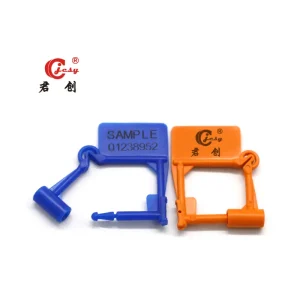
Hot stamping and pad printing are common for logos and fine text on plastic, while laser marking produces the highest contrast without added consumable tooling.
Outdoor life depends on pigment and printing method together. UV exposure fades surface inks faster than through-colored resin, and embossed or laser marked characters survive abrasion longer than printed ones. If a metering program expects seals to stay legible for several years, the marking method is a bigger factor than the font choice.
Custom Meter Seal Manufacturing Depends on Repeatable Process Control
Beyond the drawing, what separates a stable custom order from a one time success is the factory’s process control. Custom meter seal manufacturing should be evaluated by repeatability, not by the first sample. A well photographed sample can hide the variation that appears across a full production run. A utility that issues thousands of seals every month needs the same pull strength and number alignment in the final quarter as in the first.
The customer confirms the mechanism, material, and marking before anything else. Then a pre-production sample is molded from production tooling rather than a hand finished prototype, because the sample must show what the automatic line will actually produce. After sample approval, a small pilot batch verifies cycle time, marking position tolerance, and packaging count.
How Tooling and Master Samples Are Confirmed
Tooling for plastic seals is machined from the same profile used in volume production, so the sample and the bulk order carry identical cavity marks. For lead seals, the die profile is cut once and checked for flash. The approved master sample is kept sealed and dated, and every production batch is compared against it for color, numbering alignment, and pull strength.
Why In-House Tensile and Marking Checks Matter
On the production floor, we pull-test a set number of pieces per batch and check the marking against the approved drawing under shop lighting. That catches drift before shipment. Buyers should ask a factory what it checks in-line, because a supplier that only inspects at final packing sees problems after the batch is complete. The right questions are about specific checks and the sampling plan for each lot, not about blanket guarantees.
Confirming the Right Details Turns Custom Meter Seal Needs Into a Workable Order
The most common source of delay in custom meter seal inquiries is missing specification detail. A request that says only ‘need meter seals’ leaves material, tail length, printing, and quantity open. A request that includes the existing seal photo, meter model or aperture size, required marking, and annual quantity can be quoted accurately and move to sample within days.
Shandong Junchuang Lock Industry Co., Ltd manufactures plastic, lead, metal strap, and wire meter seals with in-house tooling, sequential numbering, and batch testing. Send the drawing or a photo of your current seal, your marking format, and your target annual quantity to [email protected], or call and WhatsApp +86 13853189290. Share the installation and inspection conditions, and we will confirm the matching mechanism, material, and documentation before you commit.
Utility Buyers Ask These Questions About Custom Meter Seals
How do I choose between a lead seal and a plastic meter seal?
Choose lead when the inspection program requires a compressed ferrule that cannot be loosened without visible damage, and choose plastic when speed and volume matter more. Lead holds its pressed shape well and suits gas and legacy utility programs, but disposal rules in some regions add handling cost. Polycarbonate pull-tight seals apply faster and mark easily with sequential numbers. The deciding question is usually removal practice. If inspectors cut plastic tails with side cutters every day, plastic fits. If the utility uses sealing pliers and repeats pressing, lead remains the safer match.
What details does the factory need to quote a custom meter seal?
The useful quote is not for a generic seal but for a specific configuration, so the factory needs five details: the meter or enclosure type, the aperture or fastening point dimensions, the material and tail length, the required numbering and marking format, and the target annual quantity. A photo of the existing seal speeds this up because it shows diameter, locking style, and marking position in one frame. Without these details, the first quote rests on assumptions and shifts after sample review. With them, the quote and sample can be aligned in the first round.
Can you get samples before a bulk meter seal order?
In the orders I manage, samples are part of the standard process, not an exception. A pre-production sample shows the actual material, color, numbering alignment, and tail tension. For a new design, I recommend approving a production sample before the pilot batch runs, because hand finished prototypes hide the variation an automatic line will show. Sample cost depends on tooling and marking complexity, but confirming the specification at sample stage costs far less than correcting a full shipment afterward. Bulk orders should never skip this step.
How long does custom meter seal manufacturing normally take?
It depends on whether the tooling already exists and whether the material is in stock. A repeat order with an existing mold, standard colors, and an approved numbering sequence moves quickly because the production variables are already fixed. A new profile or a special resin color adds tooling and sampling time, and lead seals processed with a new die require confirmation of the pressed shape. The fastest way to shorten the schedule is to approve the sample and marking format without changes, because each correction at sample stage resets the lead time.
How do serial numbers stay readable after years outdoors?
The assumption that printing method does not matter is where most legibility problems begin. Screen printed inks fade fastest under UV exposure. Hot stamping lasts longer, and laser engraving lasts longest on plastic because the mark is cut into the surface rather than applied on top. Through-color resin keeps the base color stable even when the surface is scuffed, and embossed characters survive abrasion better than flat printed ones. If you need several years of outdoor legibility, specify laser or hot stamped marking and ask for an aging sample. Share your meter environment and marking requirement at [email protected] and we will confirm the method that matches your inspection cycle.
If you’re interested, check out these related articles:
Cable Seal Factory Direct Pricing: Strategic Procurement Guide – Junchuang Lock
Custom Security Seal Manufacturing: A Comprehensive Industry Guide – Junchuang Lock
Wholesale Plastic Seals for Trucking: Secure Your Fleet – Junchuang Lock
Bulk Bolt Seal Orders MOQ and Pricing Strategies – Junchuang Lock
Bulk Plastic Seal Orders: Strategic Pricing & Supply Chain Security – Junchuang Lock