
Warehouse security seals only earn their cost when the seal type, sequential numbering, and inspection routine are specified together. Buying a tamper-evident seal without a matching log is the fastest way to build false confidence in a loading dock or high-value cage. In a warehouse, loss and access disputes rarely happen as obvious break-ins. They happen when someone opens a door, finds the seal intact but unchecked, or records a number carelessly. A seal program is a physical control and a paperwork control at the same time. If one side fails, the other gives no protection.
Warehouse Security Seals Do More Than Deter Theft
A seal will not stop a determined person with a bolt cutter, but it produces something more useful than resistance: evidence. A numbered plastic padlock seal on a dock door records that the door was closed at a specific time and that no one opened it without leaving a trace. That evidence matters as much for internal audits as it does for theft response. It shows whether the loss happened outside the building or inside a process that someone ignored.
In our factory, seals are not treated as locks. They are treated as chain-of-custody markers. Each production batch receives sequential numbers, and every container leaving dispatch is logged against the seal number. When a shipment arrives at a customer site with a mismatched number, unloading stops and we trace the route. That routine catches handling errors before they become liability disputes.
Warehouse security seals are often expected to keep dishonest people out. That expectation misses the more common risk: an employee or driver opening a door for a legitimate reason at the wrong time. A seal creates a clean decision rule. If the seal is broken and the log does not explain it, the opening becomes an incident. If the seal is intact but the number differs from the manifest, the shipment is no longer the one that left the dock.
The Right Seal Type Depends on the Access Point
Most warehouse security seal programs fail because one seal type is forced onto every opening. A dock door that handles pallets, a wire cage holding high-value SKUs, and a tote full of returnable components each need different tamper evidence and different removal tools. Matching the seal to the point of access matters more than buying the strongest seal available.
| Seal type | Best warehouse use | Tamper evidence style | Weak point |
|---|---|---|---|
| Plastic padlock seal | Dock doors, totes, cabinets | Break-to-open indication | Not for high-force attacks |
| Pull-tight plastic seal | Cartons, meter covers, light bins | Stretch or tear marks | Lower pull strength |
| Metal strap seal | Cage doors, roll-up doors, lashing | Deformation and cut marks | Needs a cutting tool to remove |
| Cable seal | High-value cages, irregular closures | Severed cable visible | Higher unit cost |
Fixed Length Plastic Seals for One-Way Doors
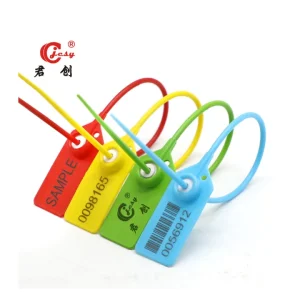
Fixed length plastic padlock seals and pull-tight seals work well on standard doors and totes because they produce an unambiguous break. They are disposable, numbered, and quick to check. A missing or snapped seal is visible from across the room. We supply warehouse customers with two or three standard colors matched to zones so a supervisor can see immediately whether a green east dock seal has been replaced by a red spare.
Adjustable Seals for Irregular Closure Points
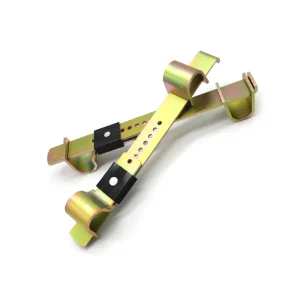
Adjustable cable seals and metal strap seals solve a different problem. They close around irregular points such as cage doors, lashing points, and roll-up door handles. A cable seal can be pulled tight against the frame, which removes slack that would otherwise hide a bypass. For high-value cages, we usually suggest a numbered cable seal or a metal strap seal rather than a plastic tag, because the failure mode is more obvious and the seal cannot be reattached after cutting.
A Working Seal Log Needs Three Fields Before Anything Else
The seal log is not an administrative form. It is the evidence record that makes warehouse security seals work as a system and turns a broken piece of plastic into a security event. Three fields matter before any others: seal number, person, and time. Without all three, the record is not enough for an investigation. A log that says “dock door sealed” but does not say which seal or who closed it is nearly useless.
The seal number is the primary key. Pre-numbered seals with barcodes eliminate transcription mistakes. We print sequential numbers and optional barcodes on the seal body so the warehouse team can scan the seal and record the SKU, door, and handler together. If a number enters the database twice, the system catches the duplicate immediately.
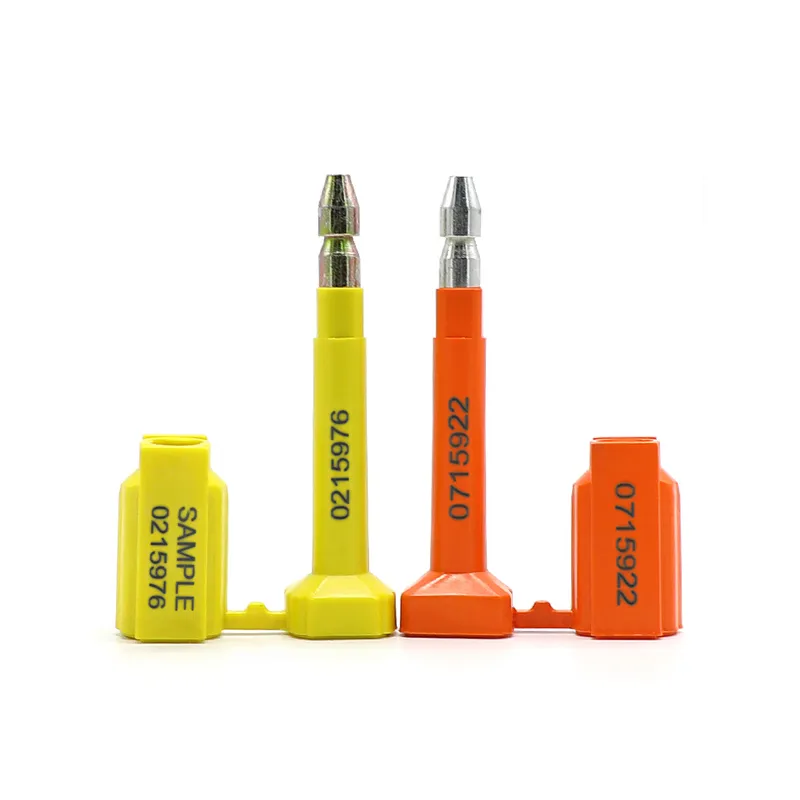
If your warehouse mix includes dock doors, cages, and returnable totes, the seal specification is rarely one product. Send your access point list to [email protected] and we can match each point to a numbered seal type before you commit to a purchase.
Installation Mistakes Undo Most Warehouse Seal Programs
The most expensive seal in a warehouse is the one that is installed without being checked. A receiving team that cuts the seal first and reads the number later has already destroyed the evidence. The check must happen before removal: confirm the number, inspect the body for stretching or cuts, photograph the seal if the shipment is high value, and only then cut it.
Another common failure is treating disposable seals as reusable hardware. A plastic padlock seal that has been snapped and pushed back together will not hold. Warehouse teams should issue seals in small batches from a locked cabinet and reconcile the issued count at shift end. Seals left in an open box near the dock become indistinguishable from scrap.
I have seen more losses from a missing log entry than from a cut seal. A driver claims the seal was already broken when he picked up the load, the dock supervisor has no photo, and the number was never written down. By the time the investigation starts, there is no way to know whether the trailer was opened at the warehouse or somewhere down the road. A five-second photograph and a two-line log entry would have closed the case.
Factory Direct Supply Fits Warehouse Seal Programs
Warehouse security seals are easier to maintain when the supplier can hold the numbering sequence across orders. Warehouse teams often settle for importers and distributors because the immediate quantity is low. That creates a quiet problem: the numbering sequence changes between orders, the printing format drifts, and no one at the supplier can explain how a specific seal is tooled. Factory direct supply removes those gaps. At Shandong Qingyun Junchuang Lock Industrial Co., Ltd., we specify the seal material, locking mechanism, numbering sequence, and marking layout before production starts. That means the green east dock seal from the first order matches the green east dock seal in the next order.
If you are replacing a mismatched seal program or setting one up for the first time, send the access point count, closure type, and a sample of your current seal to [email protected] or WhatsApp +86 13853189290. We will confirm the right seal type, marking layout, and numbering format before you commit to a purchase.
Warehouse Teams Ask These Questions Before Ordering Seals
Do warehouse security seals stop theft or only show evidence?
They do both, but their main value is evidence. A seal will slow an opportunistic thief and force a more visible method, but it cannot stop a determined person with tools. The security comes when the number and condition are checked at every handoff. If a seal is broken without a log entry, the incident is visible. If the seal is intact but the number differs, the shipment has been opened somewhere in the chain. That clarity is what makes warehouse security seals worth using.
What is the difference between fixed length and adjustable seals for a dock door?
It depends on what you are closing. Fixed length plastic padlock seals are right for standard dock handles because they give a single, obvious break indication. Adjustable cable seals are better when the locking point has a thick or irregular shape and you need to pull slack out of the closure. If the door can secure a short fixed seal without slack, choose fixed length. If the gap varies or the handle is too wide for a rigid strap, choose an adjustable seal.
Can warehouse security seals be custom printed with a company name?
Many buyers assume custom printing only works for very large orders, but warehouse security seals can carry company names, sequential numbers, and barcodes on standard runs. We set up marking plates per customer and produce short runs as well as bulk orders. The main specification point is the print direction, character height, and barcode position. If the seal must scan from one side or survive abrasion, the marking method changes. That detail is easier to confirm with a physical sample.
What should a receiving team do when a seal number does not match the log?
Do not cut the seal. Treat the mismatch as a shipment discrepancy, not a paperwork error. Photograph the seal and the closure, record the arrival time, and notify the dispatcher and the supplier before unloading. A mismatch usually means the trailer was opened and resealed, or the wrong container left the dock. Stopping the load is inconvenient, but cutting the seal before the mismatch is documented erases the only physical evidence. If you need help reading the trace, send the seal number and photo to [email protected] and we will review it against the factory dispatch record.
If you’re interested, check out these related articles:
Plastic Seal Manufacturer Selection: A Strategic Procurement Guide – Junchuang Lock
Why Security Seals Ensure Unbroken Logistics Integrity – Junchuang Lock
How to Choose High Security Bolt Seals: Key Criteria for Supply Chain Safety – Junchuang Lock