
A container door is only as secure as the seal on the latch. For most cross border container loads, we recommend an ISO 17712 high security bolt seal as the default, because it pairs a hardened steel locking pin with sequential marking and visible tamper evidence. That recommendation changes when the shipment moves through multiple access points that need adjustable length, or when the load stays domestic with lower risk. The specification work is about matching shipping container seals to real cargo risk, checking factory quality markers, and buying direct from a manufacturer before a weak seal enters the supply chain.
Which Container Seal Types Handle Which Shipping Risks?
Container seals fall into four groups that matter for shipping: high security bolt seals, adjustable cable seals, tamper evident plastic seals, and metal strap seals. The choice follows the access point and the value of the load, not the price alone. A standard shipping container door has a fixed hasp that works best with a fixed length bolt seal. Other openings need a seal that can pass through a narrow or irregular point.
| Seal type | Best container use | Tamper evidence | Typical risk level |
|---|---|---|---|
| Bolt seal | Cross border ocean freight on standard container door hasps | Pin breaks before opening; sequential number check | High |
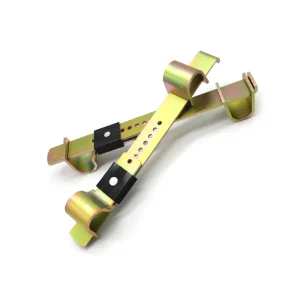
| Cable seal | Tanker valves, irregular hatches, rail cars, any point needing adjustable length | Cable must be cut; mismatch reveals substitution | High to medium |
| Plastic pull tight seal | Domestic truck doors, tote lids, internal tracking | Breakage or marking damage | Lower to medium |
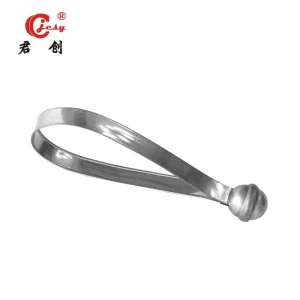
| Metal strap seal | Rail cars, truck trailer latches, groupage units | Cutting or bending marks | Medium |
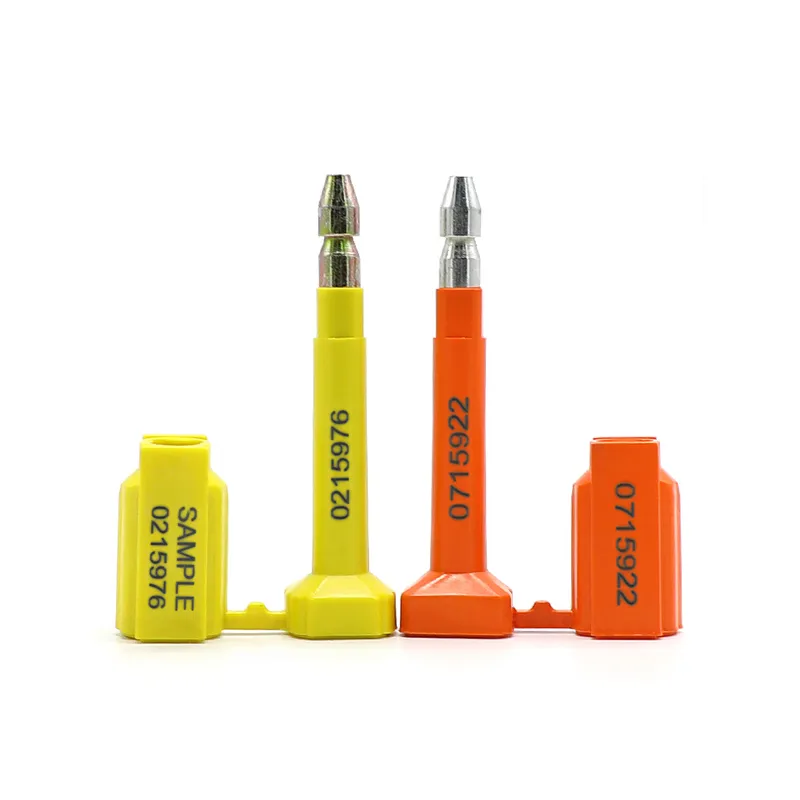
Fixed length bolt seals should be the default for standard container door hasps because there is no way to open the door without destroying the pin or the lock bush. We have seen importers use an adjustable cable seal on a standard container door and then lose time at inspection because the excess cable left enough slack for the handle to move without leaving a clear breakage mark. The correct length forces the seal to do its job.
When Does ISO 17712 Certification Change Your Seal Choice?
ISO 17712 is the standard that customs and insurers look for when a high security seal is specified. The standard sets separate classifications: “I” for indicative seals, “S” for security seals, and “H” for high security seals. For cross border container cargo, the “H” classification is the one that matters because it verifies that the finished seal passed the required strength and tamper tests, not only that the design looks strong.
What Does the ISO 17712 Marking Tell a Buyer About Strength?
The “H” marking should appear on the seal body, not only on the certificate. We put the classification and the manufacturing mark directly on the seal so an inspector can read it at the container door. A certificate that does not match the seal body marking creates the same clearance problem as a missing certificate.
Where Do Container Seal Specifications Go Wrong When Cargo Changes Hands?
Secondary access points cause most confusion. A customs bonded load may need a high security bolt seal on the door, but the tanker vent or trailer latch still needs an adjustable cable seal. Buying one seal type for the whole route leaves an opening sealed with the wrong part. The correct approach is to list every opening on the unit and assign a seal type to each one before ordering.
If your program involves mixed sea freight and inland trucking with different access points, the seal specification is not a single SKU decision. It is worth confirming the locking mechanism dimensions and marking format before you finalize the order. Send your container door type and route details to [email protected] and we will confirm the right seal configuration for the full journey.
How Do You Inspect Shipping Container Seals Before You Buy?
Start with the marking, because a seal that cannot be identified cannot be verified. On a bolt seal, the pin head and the locking bush should carry the same sequential number. If the number is marked on only one part, a swapped pin can hide an opening. On cable and plastic seals, the number or bar code must remain readable after sun, salt, and handling.
- Confirm that each bolt seal pin and bush show the same number.
- Pull the pin until it locks, then try to separate the two parts.
- Check the marking after contact with oil, water, or tape.
- Ask for the dimensional and material files for the seal body and the pin.
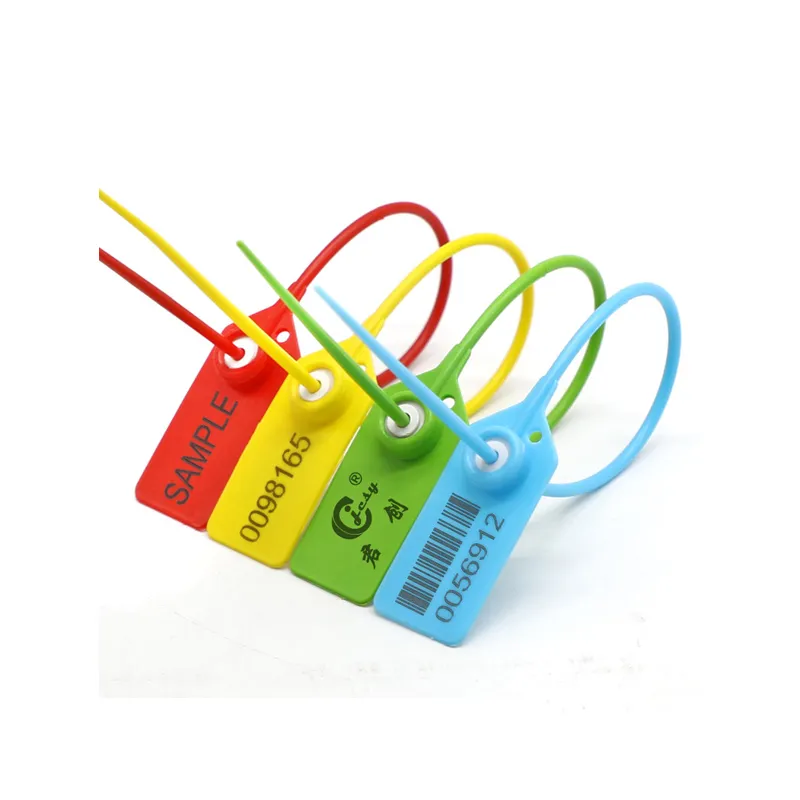
On our production line, we run a first article inspection on every custom order before mass production. For a plastic seal, that means pulling the tail through the housing until it locks, then bending the strap to look for stress whitening at the gate. For a metal strap seal, we check for sharp edges that could cut the operator during application and for a locking gap that would let the strap be pulled free.
Should You Source Container Seals Direct From the Factory?
There is a real difference between a factory that makes the seals and a trading company that moves them. When a problem appears after delivery, a factory can trace the batch, pull the tooling record, and correct the next run. A trader often cannot. That traceability matters most for high security seals because customs and insurance disputes depend on documentation, not only product quality.
We handle container seal orders from raw material check through assembly, marking, packaging, and shipping. That is why we ask buyers for the container door type, the seal count per trip, and the marking format before quoting. If the buyer sends a blank purchase order with no marking requirement, the first thing we do is ask for the number sequence. A seal without controlled numbering creates a traceability gap.
Ordering directly from Shandong Junchuang Lock Industry also removes the mismatch risk for mixed fleets. Send your part number, quantity, and the route or access point to [email protected], or reach us on WhatsApp at +86 13853189290. We will confirm the seal type, marking format, lead time, and compliance documentation before you place the order.
What Do Buyers Ask About Shipping Container Seals?
How Many Seals Does One Container Need?
One high security bolt seal is usually enough for a standard shipping container door, because the seal locks the right and left door hasps together at the cam. If the unit has a tanker vent, a separate hatch, or a reefer access panel, add one adjustable cable seal for each additional opening. Count the access points before you count the seals.
Can You Reuse a Bolt Seal If It Was Not Damaged?
A common mistake is to treat an intact bolt seal as reusable. It is not. A high security bolt seal is a single use device. Once the pin has been cut or pulled, the locking mechanism has done its job and cannot be trusted again. Reusing it removes the tamper evidence that the seal exists to create. Order one seal per container movement and treat the removed seal as a record, not as stock.
Do Plastic Seals Work for International Shipping?
It depends on the route and the cargo value. If the shipment crosses a border and the container has a standard door hasp, a plastic seal is not the right primary seal. A fixed length bolt seal should carry that role. Plastic pull tight seals are useful for domestic truck doors, tote lids, and internal tracking where the seal is a record rather than a physical barrier.
What Should You Ask a Factory Before Ordering Container Seals?
In the programs we supply, the questions that prevent most problems are about numbering, marking durability, and lead time. Ask for the number sequence format, the marking location, and a sample image before production. Ask whether the factory can keep the same number range across repeat orders without duplication. If your operation runs mixed fleets, share the route and access points at the quoting stage. Send your container door type and quantity to [email protected] and we will confirm the matching specification.
If you’re interested, check out these related articles:
Bolt Seal Factory Audit: Essential Checks for Quality Assurance – Junchuang Lock
Wholesale Bolt Seals for Shipping: Enhancing Global Logistics Security – Junchuang Lock
Security Seals: Preventing Cargo Theft in Global Supply Chains – Junchuang Lock