
White label security seal production gives importers and distributors a direct path to market under their own brand, but the difference between a smooth program and a costly delay comes down to how well the manufacturing requirements are defined upfront. I have spent over fifteen years on the factory floor managing seal production, and the most successful white label partnerships are built on clear specifications, production-level quality integration, and realistic expectations about tooling and lead times. This article outlines the manufacturing perspective on white label security seal programs, covering the specification details, quality controls, and production planning that determine whether the seals you receive meet both branding and security standards.
What White Label Security Seal Production Actually Requires
White label production means the factory manufactures seals to your brand identity, applying your logo, colors, barcodes, and serial number ranges while you purchase in bulk. This is different from OEM, where you might supply a complete design, and different from ODM, where the factory offers an existing design with your label. In white label programs, the core seal designs are already production-tested and C-TPAT compliant, which shortens the development cycle considerably.
However, production-tested does not mean zero tooling. Even for an existing bolt seal or cable seal design, applying a new logo or adjusting the cavity for a custom color insert requires mold modifications. Our factory typically allocates tooling budget of a few hundred dollars per mold cavity for logo changes, and we include that in the initial quotation. The more significant cost driver is print plate setup for pad printing or laser marking, especially if your label design uses multiple colors or fine text. I always recommend buyers keep their white label layout simple for the first order, then refine after confirming print durability on actual shipments.
Defining Seal Types and Specifications That Work in Production
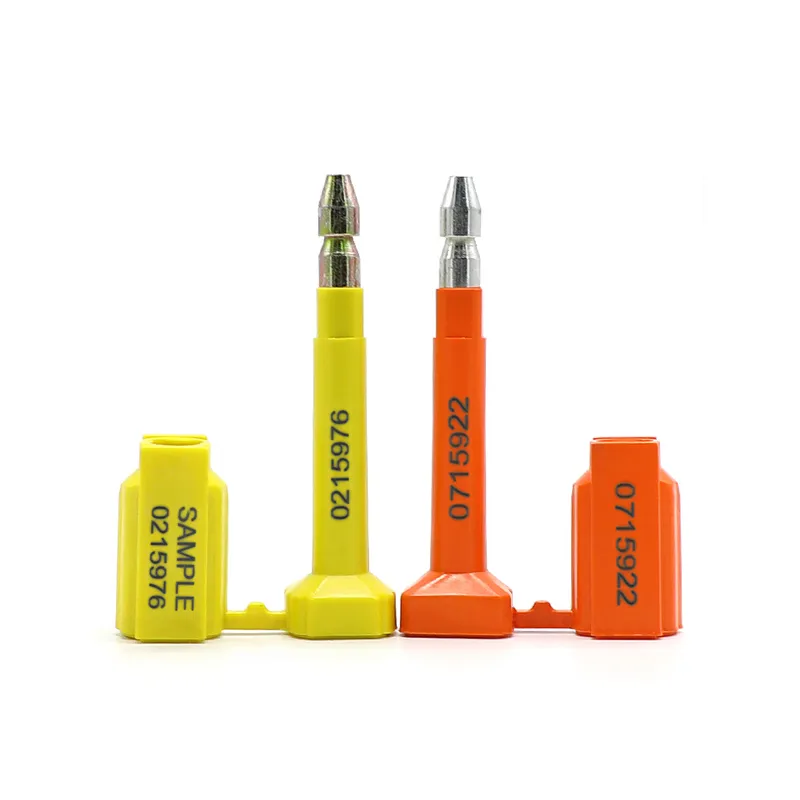
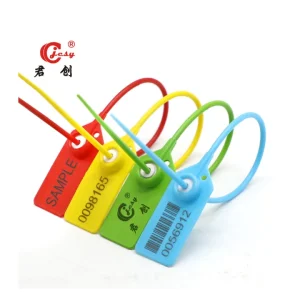
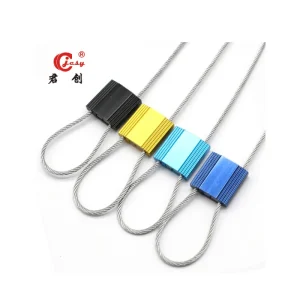
A white label order succeeds when the buyer specifies the seal type, material grade, and branding requirements in terms the production team can execute without interpretation gaps. Bolt seals for container doors need ISO 17712 high-security certification, which means the locking mechanism and barrel material are not customizable — you can change marking and color, but not the locking insert design. Cable seals offer more flexibility in cable diameter, length, and locking body material, but tamper evidence features must stay within the certified configuration. Plastic seals like pull-tight models are the most flexible for white label because the entire body can be molded in custom colors with hot-stamped logos.
We see a lot of inquiries where the buyer’s specification document lists a color as “blue” without a Pantone code, or a logo file that is low resolution. On our production line, these small omissions become a bottleneck. I always ask buyers to provide a print-ready vector file and a Pantone reference for each color, because the visual consistency of the finished seal across multiple production runs depends on that precision. Specifications for serialization — whether sequential, random, or barcode-encoded — also need to be confirmed with the printing format the factory uses, such as laser marking depth limitations on curved metal surfaces.
Quality Control Does Not Stop at Branding
One risk I see repeatedly is that a buyer focuses on getting the logo right and overlooks the need for performance testing on the branded units. After the first production run with your white label tooling, the factory should pull samples for pull-force testing on bolt seals, tensile testing on cable seals, and locking integrity checks on plastic seals. If your seals will be used in high-humidity container routes or sunlight-exposed rail yards, you also need accelerated weathering tests to confirm the print and material durability.
Our quality team will not ship a first batch until tensile values match the certified design spec within 5%, because providing a tamper-evident seal that fails under normal handling undermines your brand far more than a late shipment. Buyers should request the factory’s in-process inspection records for each batch, including the seal count, serial number range, and pass/fail data for the sampled units. This documentation also simplifies customs verification if your client’s shipments get inspected.
Production Lead Times and Minimum Order Quantity Realities
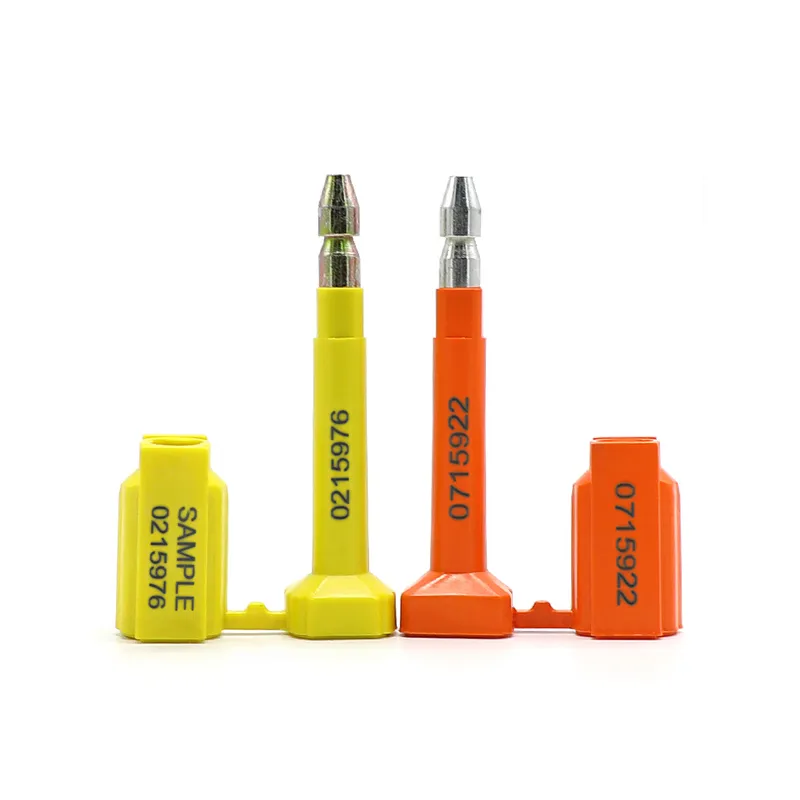
White label production lead time is essentially standard lead time plus tooling preparation, plus sampling and approval. For a bolt seal order of 20,000 pieces with a new logo insert, the total factory time from approved artwork to ready-to-ship is around 30 to 35 days. Cable seal orders with custom printing and labeling run similar timelines if the locking body is a standard shape.
Minimum order quantities for white label programs are higher than for stock products because the factory must dedicate machine time and mold inserts just for your brand. Our white label bolt seal orders start at 5,000 pieces per type, and plastic pull-tight seals at 10,000 pieces per type. Buyers who are testing a new market can negotiate a split-MOQ arrangement across multiple seal types under one brand, which spreads the tooling cost and gives you a sample assortment for your distribution channels without ordering a full container of one SKU.
| Seal Type | Typical White Label MOQ | Custom Tooling Lead Time (Additional) |
|---|---|---|
| High-Security Bolt Seal | 5,000–10,000 pcs | 7–10 days |
| ISO 17712 Cable Seal | 5,000–10,000 pcs | 7–10 days |
| Pull-Tight Plastic Seal | 10,000–20,000 pcs | 5–7 days |
| Metal Strap Seal | 5,000–10,000 pcs | 7–10 days |
| Barrier Seal | 5,000–10,000 pcs | 10–12 days |
Building a Manufacturing Partnership That Delivers Consistently
The white label seal production relationship does not end at the first shipment. The real value comes when the factory understands your supply chain rhythm and can adjust production batches to align with your shipping seasons without you having to chase each order. We have worked with importers who carry a forecast of 100,000 seals per quarter across three seal types, and because we plan the mold inserts and raw material orders months in advance, lead times drop to 15 days for repeat orders with no design changes.
A call or a factory visit before you commit to a white label program will surface things no quotation can. Ask the production manager how they handle a batch that fails pull-force testing — do they quarantine and rework, or re-run the entire batch? Do they keep spare mold inserts for your logo so a damaged mold does not stop your order? The answers to those operational questions matter more than price per piece in the long run. For any program involving multiple seal types and volume projections above 50,000 pieces annually, I recommend scheduling a video walkthrough of the production lines to see how the factory manages changeovers between different brands.
Your white label security seal program represents a significant commitment in tooling, inventory, and brand integrity. The manufacturers who handle this well are those who treat your order as a production partnership rather than a one-time transaction. If you have a seal specification in mind and need an initial tooling estimate or sample timeline, reach out at [email protected] or call +86 13853189290 to discuss your requirements with our team.
Questions Importers Ask About White Label Seal Production
Can I get samples before committing to a white label order?
Yes, we provide stock samples of the seal model you intend to brand so you can evaluate the mechanism and material quality. Samples with your actual logo and serialization require the tooling modifications to be made, so we produce pre-production branded samples after the mold inserts and print plates are ready. That sampling stage lets you approve the exact look and feel before the full production run starts, and we will not proceed without your written sign-off on the pre-production samples.
How do I know the seals will pass customs inspection?
ISO 17712 certification is the baseline for container seals, and we provide the certificate for each certified model along with the test report from an accredited lab. For other seal types, the tamper evidence design itself serves as proof of security functionality. We also include a packing list and batch inspection report with every shipment so your customs broker can reference the seal specifications and confirm compliance with C-TPAT or equivalent supply chain security requirements.
What happens if the print or color fades after shipments?
That should not happen if the factory used the correct ink grade and conducted weather resistance testing, but we have seen occasional issues when a distributor specified an unusually light color for outdoor use. If a batch shows premature color fading under documented field conditions, we will investigate the print process and, where the fault lies in production, re-run the batch at our cost. To prevent this, we always recommend dark or high-contrast colors for seals that will spend significant time in direct sunlight, and we can run a UV exposure test on the first production samples if your route includes equatorial shipping lanes.
Can I supply my own barcode sequences and numbering scheme?
Absolutely. Provide your serial number range format and the barcode symbology, and we will encode that into the print run. For bolt seals, laser marking resolution limits the minimum barcode size, so we may need to adjust the placement to maintain scannability. We also handle sequential and random numbering with your prefix, so your inventory management system can integrate the data seamlessly. If you need barcode readability verification reports, we can include them in the inspection documentation at no extra charge. Send your specifications and quantity requirements to [email protected], and we will confirm the scannability parameters before production.
If you’re interested, check out these related articles:
Comprehensive Quality Inspection Checklist for Security Seals – Junchuang Lock
Seal Numbering: Enhancing Supply Chain Traceability – Junchuang Lock
Heavy Duty Cable Seal Manufacturer Guide: Global Security Standards – Junchuang Lock