
Finding security seal manufacturers in China who deliver consistent product quality is as much about verifying factory systems as it is about comparing price lists. Having spent over fifteen years managing production of bolt seals, cable seals, plastic seals, and padlock seals at Shandong Qingyun Junchuang Lock Industrial Co., Ltd, I’ve seen good buyers get burned not by choosing the wrong seal type, but by assuming every manufacturer with a website has the same process control. This article outlines the verification steps that actually matter when evaluating a factory’s ability to meet your program’s requirements for tensile strength, tamper evidence, and on-time delivery.
What Separates a Reliable Manufacturer from a Trading Company
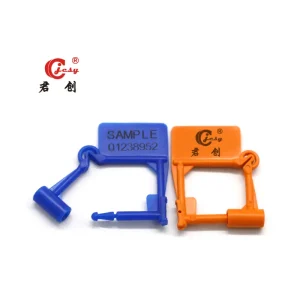
The first distinction to pin down is whether you are talking to a factory or a trading company. A manufacturer directly controls material sourcing, production scheduling, and quality inspection. A trading company coordinates these steps across multiple facilities. For standard plastic seals or padlock seals, a trading company may offer competitive pricing. But for high-security applications requiring ISO 17712 certification on bolt seals or customs-compliant barrier seals, direct factory access gives you something a middleman cannot: the ability to verify testing records against raw material lot numbers.
We require every new material batch to be tested before production begins. The tensile test for bolt seals, for instance, must confirm the locking mechanism holds above 10 kN before the lot is approved for assembly. If a factory cannot show you these batch-level records, they are likely outsourcing production to a subcontractor. That adds risk. When an order fails a third-party inspection, a trading company often has limited authority to fix the root cause before the next shipment.
| Verification Point | Factory Direct | Trading Company |
|---|---|---|
| Raw material traceability | Batch-linked records | Usually unavailable |
| Process change authority | Immediate adjustment | Dependent on subcontractor |
| ISO 17712 test records access | Direct lab reports | May require third-party approval |
| Custom tooling lead time | Typically 15-30 days | Often 25-45 days |
| After-sales quality resolution | Root cause analysis possible | Often limited to replacement |
How to Verify ISO 17712 Compliance Before Placing a Bulk Order
ISO 17712 is the baseline for high-security seals used on ocean containers and cross-border freight. But “certified” means different things depending on the certifying body. A manufacturer may hold a certificate from a local testing lab that does not perform the full mechanical testing required by the standard. When I review a supplier’s certification, I look for three specifics: the test report must name the accredited laboratory, the test must include shear and bending strength in addition to tensile pull, and the certificate must cover the exact model number you are ordering, not just a product family.
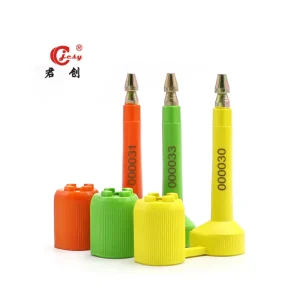
The bolt seal’s locking mechanism needs particular attention. On our production floor, every batch of bolt seals goes through a pull test on a calibrated universal testing machine. The requirement is not just that the seal body survives the rated force; the locking pin must show no deformation that would allow the seal to be opened and reclosed without leaving tamper evidence. If a manufacturer’s test report does not show the after-test condition of the locking pin, request a supplemental photo or video before confirming your order.
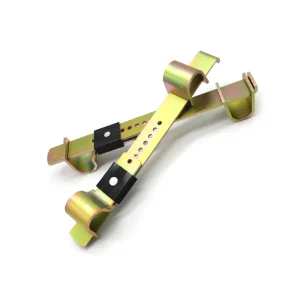
Cable seals add another layer of complexity because the cable and the locking body are often produced by different departments, sometimes different suppliers. A heavy-duty cable seal for tanker transport needs the cable to maintain its rated strength after the locking body is crimped onto it. We test the complete assembled seal, not the cable in isolation, because the crimping process itself can reduce the effective breaking strength. When evaluating a manufacturer’s cable seal data sheet, confirm whether the strength figure is for the raw cable or the finished seal. The difference can be substantial.
Evaluating Factory Quality Control Systems Without Visiting in Person
You cannot fly to every factory, but you can request process documentation that reveals the depth of a manufacturer’s quality system. I always advise importers to ask for three documents: the incoming material inspection standard, the in-process inspection checklist for the specific product line, and the final inspection sampling plan. A manufacturer with a real quality system can provide these within a day. A trading company typically cannot.
The final inspection sampling plan tells you how defects are categorized and what AQL level the factory uses. For security seals, I recommend an AQL of 0.4 for critical defects such as a locking mechanism failure, and 1.0 for major defects like printing misalignment. If the factory’s default sampling plan uses a looser standard, that is not necessarily disqualifying, but it means you need to negotiate tighter inspection terms for your first order. A factory that resists adjusting the sampling plan is signaling that their process cannot reliably meet the tighter threshold.
The in-process checklist for plastic seals should cover injection molding parameters, cooling time consistency, and the pull-tight engagement mechanism test. In our facility, every pull-tight plastic seal is checked for one-way locking integrity at a mid-production checkpoint, not just at the end. Catching a cavity wear issue mid-shift prevents a full batch from being rejected. Ask the manufacturer at what point in the production cycle their in-process checks occur. If the answer is vague, their inspection system is likely just end-of-line sorting.
How to Assess Custom Manufacturing Capabilities
Customization can be simple laser marking of serial numbers or complex OEM design of a new seal geometry. The manufacturer’s ability to handle your custom requirements depends on their tooling department, not just their assembly line. For bolt seals requiring custom logo engraving on the locking pin, the factory must have CNC engraving capability in-house. If they outsource engraving, your lead time and unit cost both increase, and quality control on the marking consistency becomes harder to enforce.
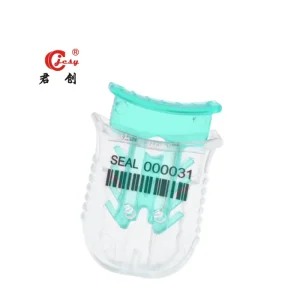
Plastic seal customization often involves mold development. A factory that owns its mold-making workshop can turn around a new mold for a padlock seal or meter seal in 15 to 20 days. That timeline extends if the mold work is outsourced. When requesting a custom seal quote, ask for the mold steel grade they will use. Standard molds use P20 steel, which is adequate for runs of 100,000 to 200,000 units. For high-volume programs, request hardened steel such as H13 to extend mold life past 500,000 cycles. A manufacturer that cannot answer this question confidently may not have direct mold design experience.
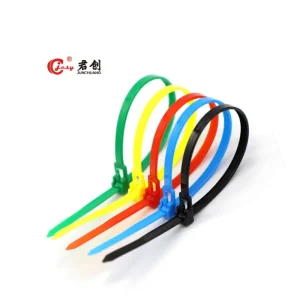
Serial number customization is another area where mistakes compound quickly. For a shipment of 100,000 plastic seals with sequential numbering, a single digit error in the middle of the run can scrap thousands of units. Our production line uses automated laser marking with a verification camera that reads back each number after marking and stops the line if a sequence break is detected. This is not standard equipment in every factory. If your security protocol depends on exact sequential numbering, ask the supplier to describe their number verification method. If they mention manual checking, plan for additional third-party inspection on the numbering sequence.
Common Questions from Buyers Who Source Security Seals from China
Does the lowest price indicate a direct factory source?
Not necessarily. Some trading companies negotiate bulk raw material contracts and can undercut smaller factories on standard items like plastic padlock seals. The price alone does not confirm factory status. Instead, request the manufacturer’s business license and check the registered business scope. If the scope lists manufacturing activities and the factory address matches the production site you have communicated with, you are dealing with a factory. If the scope shows only trading or import-export activities, the company is legally a middleman regardless of the price they offer.
What is the minimum order quantity I should expect for custom security seals?
Custom bolt seals typically require a minimum order of 5,000 to 10,000 pieces due to the tooling and testing setup involved. Plastic seals can have lower MOQs, around 5,000 to 20,000, depending on whether a new mold is required. Cable seals with custom printing often have MOQs around 10,000. If a supplier offers a custom seal with an MOQ below 2,000, verify whether the “customization” is limited to existing stock parts with laser marking, because full OEM development costs cannot be absorbed at those volumes.
How can I verify that a manufacturer owns their production facility?
Request a recent video walkthrough showing the production lines for your specific seal type, with the factory name visible on a sign or building exterior. Ask them to point the camera at a current newspaper or your email on a screen during the walkthrough to confirm the video is recent. I have seen cases where a trading company uses photos of a partner factory. A manufacturer that controls its own facility will not hesitate to show you live production. If there is resistance, that is a flag worth investigating further before transferring a deposit.
What payment terms are typical for a first order from a Chinese seal manufacturer?
Standard terms for a first order are 30% deposit with the order and 70% before shipment after inspection approval. Some manufacturers may accept a letter of credit for larger orders, though this is less common for orders under $50,000. I recommend always tying the balance payment to a third-party inspection pass report. This aligns the manufacturer’s incentive with your quality requirements. A factory that accepts payment fully after a passing inspection is demonstrating confidence in its production consistency.
How do I handle a quality dispute after receiving a shipment?
First, document the defect with clear photos showing the seal condition, batch numbers, and packaging labels. Then request the manufacturer’s root cause analysis. A factory with proper quality systems will trace the defect to a specific production shift, material lot, or process deviation. If the manufacturer only offers a discount on the next order without explaining what caused the problem, the defect is likely to recur. For programs with repeat orders, I recommend including a quality clause that specifies the corrective action process, including the manufacturer’s obligation to submit a corrective action report within 15 days. Share your requirements and we will confirm a quality assurance plan that fits your shipment schedule and inspection standards at [email protected] or by phone at +86 13853189290.
If you’re interested, check out these related articles:
How to Identify Tampered Security Seals: A Professional Guide – Junchuang Lock
How to Choose High Security Bolt Seals: Key Criteria for Supply Chain Safety – Junchuang Lock
Bolt Seal OEM Manufacturing Process: A Technical Deep Dive – Junchuang Lock
ISO 17712 Bolt Seal Manufacturer Comparison Guide – Junchuang Lock