
Metal strap seals are one of the most direct and cost‑effective tamper‑evident tools for securing cargo, yet too many logistics teams default to bolt seals without checking whether a metal strap seal would do the job better. In over fifteen years of manufacturing security seals, I have watched the same gap appear again and again: the technical strengths of metal strap seals are poorly understood, so procurement runs on habit rather than suitability. This guide walks through how metal strap seals actually work, where they outperform other seal types, and how to install them correctly so every shipment stays protected from tampering.
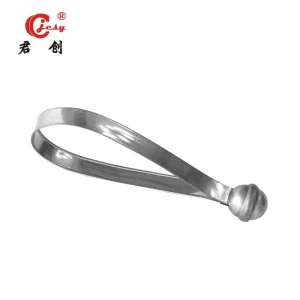
What a Metal Strap Seal Is and How It Locks
A metal strap seal looks deceptively simple. It consists of a high‑tensile steel band — usually galvanized or zinc‑plated — that passes through a locking chamber machined into a metal body. When the band is pulled tight around a closure point, a set of internal locking balls or a cam mechanism grips the strap. The harder someone tries to pull the strap back out, the tighter the lock bites. Removing the seal means cutting the band. There is no way to release the lock and re‑seal, so any tampering leaves an immediate physical sign.
That irreversible locking principle is why metal strap seals are trusted for high‑value cargo, tanker hatches, valve boxes, and drum lids. The locking mechanism is purely mechanical. No adhesive, no heat‑shrink, no plastic clip that can be softened and re‑fastened. In our production facility we test every batch by pulling seals to destruction. The band snaps before the lock lets go. That hard‑stop failure mode is exactly what a logistics security manager wants: either the seal is intact and the cargo is untouched, or the seal is broken and the event is obvious.
Where Metal Strap Seals Fit Into a Cargo Security Plan
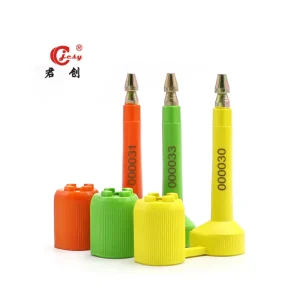
I often see buyers approach seal selection from a single specification — pulling strength — and then pick the highest number on the chart. That pushes them straight to bolt seals, which can reach 18 kN or more in shear. But cargo security is not only about brute force. What matters is whether the seal matches the access point you are protecting and how the seal behaves during transport.
Metal strap seals excel in three situations that bolt seals cannot handle well. First, when you need to secure a door latch or hasp that has a narrow opening. A bolt seal requires a hole of at least 8 mm diameter, often more. A metal strap, at 1.5 mm to 2 mm thick, slips through a gap where a bolt simply will not fit. I have seen logistics teams try to force a bolt through an undersized hasp and end up weakening the door frame — a problem the seal itself cannot fix.
Second, metal strap seals apply a compressing force across the closure. When you secure a drum lid or a valve lever, the band can be pulled tight enough that any attempt to open the lid twists the seal, leaving permanent deformation before the lock fails. A bolt seal just hangs there; it does not restrain movement.
Third, metal strap seals are significantly lighter and more compact per unit, which cuts storage volume and freight cost for bulk orders. For a shipment of a hundred thousand seals, that weight difference is real money.
Step‑by‑Step Installation and What to Check Before Sealing
Correct installation is the difference between a metal strap seal that works and one that gives a false sense of security. The steps are simple, but skipping the inspection before pulling the strap tight causes most field failures.
-
Before touching a seal, confirm the closure is clean and dry. Grease, mud, or ice on the hasp or latch will let the band slide slightly during transport. That movement looks like tampering can fool an inspector later, even if the seal is intact.
-
Pass the free end of the strap through the locking chamber first, then through the closure point. Pull the band until it is snug against the locking body. Never leave slack that can be gathered later — a loose band can be twisted and snapped with a simple lever.
-
Pull the strap tight using a firm, steady pull. Do not yank. A sharp jerk can micro‑fracture the locking balls before the seal is even in service. In our quality checks, we occasionally see seals from other manufacturers where the lock slips at 70 % of rated hold force because the user jerked the band during installation.
-
After pulling, check that the printed serial number on the strap body and the tail are aligned and intact. Document the number immediately. If the number on the tail is scratched or unreadable, discard the seal and use a new one. A compromised marking defeats the traceability chain, and no audit will accept it.
-
Cut the excess tail to about 3 cm. A tail too long can snag on cargo nets, and a tail cut flush with the body can be difficult to grip later for inspection.
Metal Strap Seal vs. Other Seals: When to Choose What
| Seal Type | Typical Holding Force | Best Use Case | Weak Point |
|---|---|---|---|
| Metal strap seal | 1.5–4 kN | Valve boxes, narrow hasps, drum lids, tankers | Lower absolute break‑force than bolt seals; needs a tensioning pull for full lock |
| Bolt seal | 18+ kN | ISO container doors, semi‑trailer doors | Requires a large hole; heavy; expensive per unit |
| Cable seal | 2–10 kN | Adjustable closures, multiple‑loop applications | Can be cut with bolt cutters more easily than a strap if the cable diameter is under 3 mm |
| Plastic pull‑tight seal | 0.2–0.8 kN | Light‑duty domestic logistics, tamper‑evident bags | Pliers can defeat it quietly; heat softens the locking mechanism |
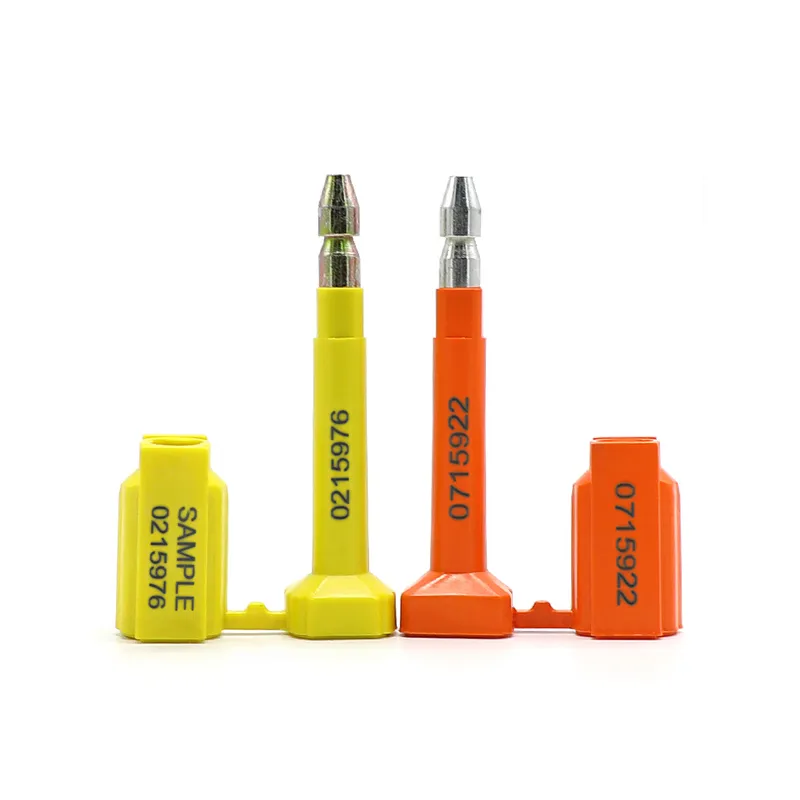
If your shipment moves through multiple inspection points where a bolt seal would be cut and replaced each time, the cost and paperwork for bolt seals add up quickly. I have worked with several cargo operators who switched to metal strap seals for inter‑terminal moves and kept bolt seals only for the main sea leg. That split approach cut seal spending by roughly 35 % without lowering the security profile because the inspection frequency already covered any tamper window.
What Specifications Tell You About Real‑World Reliability
When a buyer asks us “what is the strength of your metal strap seal,” I always ask two questions back: do you need a static holding force, or will the seal be subjected to vibration and shock? And what is the maximum temperature the seal will see?
Static pull‑force numbers on a data sheet come from laboratory tests where load is applied slowly and evenly. A cargo trailer on a rough road imposes cyclical shock loads, not steady tension. A seal that holds 4 kN in a lab may fail at 2.5 kN under repeated vibration if the locking cam material is not hardened correctly. Our production team selects through‑hardened medium‑carbon steel for locking rollers on high‑stress strap seals, which resists surface deformation after repeated micro‑impacts.
Temperature matters for strap seals because the band and locking body are typically different metals. A zinc‑plated steel strap inside an aluminum locking body will expand at different rates if the container sits in desert heat. That differential expansion can increase clearance inside the lock and lower the pull‑out force by 15–20 %. We see this regularly in accelerated environmental testing. If your route includes prolonged exposure above 50 °C, ask the manufacturer for thermal‑test data, not only ambient‑temperature test results.
Galvanizing thickness on the steel band is another practical spec that often gets ignored. In maritime environments, a strap with 10‑micron zinc plating can start showing red rust within three months of exposure. A 25‑micron coating will easily last a year. That seems like a small difference until a customs officer flags a rusty seal as “possibly tampered” and holds your shipment for secondary inspection.
Sourcing Reliable Metal Strap Seals for Your Operation
A metal strap seal looks straightforward to produce, but the tolerances inside the locking chamber decide everything. If the roller‑ball recess is 0.1 mm too large, the grip force drops sharply. If the strap’s edge burr is not removed during slitting, the band can scratch the lock body during tightening and create a weak point.
For buyers importing seals, I recommend three verification steps before placing a volume order. Ask the factory for a small batch of pre‑production samples — at least 20 pieces — and test half of them yourself by pulling to destruction on a calibrated rig. Compare the actual break force against the data sheet and reject the lot if more than one sample falls below 90 % of the rated value. The second step is to check the batch consistency of serial numbers: if the laser‑engraved characters on the strap tail are faint or offset, the marking process is not under control, and you will eventually receive seals with duplicate or missing numbers. Third, request a metallurgical certificate for the locking‑ball material. A supplier who cannot provide this has not controlled the most critical component.
From our own production experience at Shandong Junchuang Lock Industrial, we find that metal strap seals built with a closed‑chamber lock body — where the locking mechanism is encapsulated inside a formed shell rather than exposed in an open channel — survive vibration far better. The closed design prevents road dust and salt mist from accumulating inside the lock, which reduces corrosion‑induced lock‑slip after a few months. This is one of those small design choices that never appears in a product photo but separates a seal that works for a full logistics cycle from one that fails before it reaches the destination port.
Security seals are a supply chain insurance policy, and a metal strap seal is one of the most versatile tools in that policy. If your cargo closure has a narrow hasp, a drum lid, or a valve wheel that needs anti‑rotation locking, a metal strap seal is often the most practical choice. The key is to match the seal to the closure, not to the habit. Send your part number and the typical closure dimensions to [email protected], and we can confirm the right strap length and locking force for your application before you finalize your BOM.
Common Questions from Procurement Teams About Metal Strap Seals
Do metal strap seals need a special tool to install?
No special tool is required for most metal strap seals. The strap is pulled by hand, and the locking mechanism engages automatically as the strap is tensioned. A user simply threads the band, pulls tight, and cuts the excess. However, for very high‑tension applications or for operators sealing hundreds of units per shift, a simple handheld tensioning tool can speed up the process and help apply consistent pull force. I have seen logistics depots that use a small tensioning gun to standardize installation across all workers, and it cuts the rate of under‑tensioned seals to near zero.
Are metal strap seals reusable?
No. Once installed and cut, a metal strap seal cannot be released without destroying the band. That is the whole point. Disassembly always leaves visible damage, so the seal fulfills its tamper‑evident function. If your operation needs a resealable closure for repeated access, a metal strap seal is the wrong category. A high‑security padlock seal or a reusable electronic seal would fit better.
Can I print a logo or barcode on a metal strap seal?
Yes, both laser engraving and hot‑foil stamping are common methods for marking metal strap seals. Laser engraving creates a permanent, high‑contrast mark directly on the steel band and is the most durable option for outdoor and maritime use. Barcodes, sequential numbers, and company logos can all be applied. The marking area on the strap tail is limited — generally 8 mm to 12 mm wide — so the barcode must be designed for that narrow space. We recommend testing the scannability of your barcode with multiple handheld scanners before locking the artwork, because low‑contrast or heavily oxidized strap surfaces can reduce read rates.
How do I know a metal strap seal is genuine and not a copy?
The strongest anti‑counterfeiting feature on a metal strap seal is the combination of a unique serial number and a manufacturer‑controlled printing process. Genuine seals have consistently sharp, aligned engraving; copies often show fuzzy or offset markings. The second check is mechanical: counterfeit seals frequently use soft locking balls that deform under much lower tension. If you pull a sample to destruction and the lock slips at 50 % of the rated force, you are dealing with a copy. Always source directly from the manufacturer or an authorized distributor, and request a copy of the factory’s ISO 17712 certificate for high‑security seals. In programs we have supported, a simple pull‑test on incoming samples has filtered out three non‑conforming batches in the last five years. Share your requirements and we will confirm compliance documentation availability.
If you’re interested, check out these related articles:
Bolt Seal Locking Mechanism: Security & Tamper Evidence – Junchuang Lock
Meter Seal Quality Inspection: A Comprehensive Guide – Junchuang Lock
Cable Seal Technology: Understanding Its Function and Security – Junchuang Lock
Cable Tie Tensile Strength: Engineering Secure Fastening – Junchuang Lock
Why Security Seals Ensure Unbroken Logistics Integrity – Junchuang Lock