
Plastic seals for warehouse security offer a straightforward, cost-effective layer of tamper evidence when supported by daily operational routines. In more than fifteen years manufacturing security seals, I have seen how a disciplined program—relying on serial numbering and consistent inspection logs—cuts cargo theft and internal pilferage. Many warehouses still use generic, unmarked seals. A structured approach that selects the right seal characteristics and verifies supplier quality is what turns a simple plastic seal into genuine protection, not just a piece of plastic.
How Do Plastic Seals Deter Warehouse Theft?
A plastic security seal in a warehouse delivers clear, irreversible proof of unauthorized access. When properly applied to pallets, cages, or stowage areas, the seal works as both a deterrent and an alarm. Anyone intending to steal knows that breaking the seal leaves visible evidence: a cracked locking body, stretched plastic, or a separated hasp. In high-throughput facilities, this evidence is what triggers early detection. Without it, theft can go unnoticed for days until inventory reconciliation.
We test seals on our factory floor by simulating rough handling and deliberate tampering. A well-designed pull-tight plastic seal needs deliberate force to remove, and the broken remains are unmistakable. That certainty is what warehouse security supervisors rely on when conducting spot checks.
What Features Make a Plastic Seal Effective for Warehouse Use?
Not all plastic seals perform equally in a busy logistics environment. Three features separate a reliable warehouse seal from a weak one: material toughness, tamper-evident locking, and clear identification.
| Seal Type | Typical Material | Tensile Strength Range | Best Warehouse Use |
|---|---|---|---|
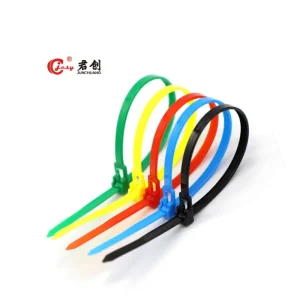
| Pull-tight | Polypropylene | 15–25 kg | Pallet and cage sealing, quick single-use application |
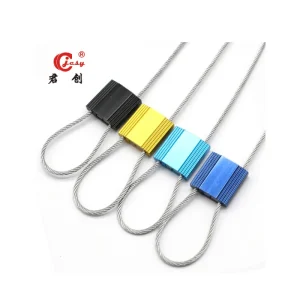
| Adjustable (cable) | Nylon-coated steel | 50–100 kg | High-value cage security where slight movement is expected |
| Fixed-length | Polypropylene | 10–20 kg | One-time audit trails with tight serial-number tracking |
Serial numbering and barcode marking are what turn a seal into a traceable tool. In our production, we print sequential numbers with laser systems to ensure they remain legible after weeks of warehouse dust and handling. A blank seal leaves no audit trail. When a numbered seal is logged against a pallet at shift start, any broken seal is immediately linked to a time window and responsible party. That traceability is often the reason a thief avoids tampering in the first place.
If your operation handles inventory across multiple shifts, a seal log that records seal number, location, and inspector name at each handover closes the visibility gap that generic seals cannot address. Contact us at [email protected] to receive numbered seal samples and a factory test report for your evaluation.
How Should Warehouses Integrate Plastic Seals into Daily Operations?
Consistent integration is what makes plastic seals effective. Without a standard procedure, even the strongest seal becomes a random afterthought. We recommend a three-point routine: before shift start, after loading, and at shift handover.
At the start of each shift, the security supervisor or warehouse lead walks through high-value storage areas and verifies that all seals applied from the previous shift are intact. Any discrepancy triggers an immediate inventory check. On our own production floor, we log every seal change—even routine ones—so that during audits we can trace movements back to an individual shift.
During loading, the seal number is recorded on the shipping manifest or internal transfer document. This links the physical seal to a paper or digital record. At shift handover, the incoming supervisor rechecks critical seals and signs off. This creates a continuous chain of custody that simple lock-and-key methods cannot match.
We keep the logging process lightweight: a paper form or a basic spreadsheet with fields for seal number, location, date, time, and inspector. Over the years, I have seen that the warehouses with the lowest loss rates are the ones where seal checks become as routine as clocking in.
How Can You Verify Supplier Quality for Plastic Seals?
A plastic seal that fails—either by snapping during rough transit or by leaving no evidence of tampering—is worse than no seal at all. Verifying supplier quality before bulk purchase is not optional. Three checks matter most: material batch consistency, printing permanence, and locking mechanism reliability.
Ask the factory for an in-house test report that includes tensile strength values for the last three production batches. Consistency across batches tells you whether the supplier controls their raw material sourcing. For printing, scratch the seal surface with a coin or key after receiving a sample. If the number smudges or fades, it will not survive a warehouse. In our plant, we use deep laser engraving to meet this requirement.
Equally important is the locking insert. A loose or brittle lock leaves a seal that can be released and refastened without evidence. A good pull-tight seal locks with an audible click and cannot be reopened without cutting.
Finally, visit the factory—or ask a local agent to do so. Observe how seals are molded, tested, and packed. A clean, orderly production floor with visible QC stations at each line is a strong indicator that you will receive the same quality as the sample.
What Are Common Plastic Seal Failures in Warehouses?
Even with good procedures, seals fail when the wrong type is chosen or the environment is overlooked. One common failure is UV degradation. Polypropylene seals left in direct sunlight for weeks become brittle and snap under finger pressure. For outdoor or sun-exposed storage, specify UV-stabilized material or choose a metal-core cable seal.
Another is using a pull-tight seal where movement is expected. If a pallet shifts during forklift handling, a brittle plastic seal can break without any tampering. An adjustable cable-type seal with some give is better for loads that flex.
The third failure mode is illegible printing. Ink-printed numbers wear off after repeated rubbing against warehouse racking. Laser marking or hot-stamped impressions hold up better. We have seen importers reject entire shipments because seal numbers could not be read during customs inspection.
Warehouse managers who match seal type to the specific storage condition and handling profile avoid most of these failures. A short trial with samples across different zones of the warehouse will reveal which seal holds up before committing to a bulk order.
Implementing plastic seals with serial tracing and daily checks reduces theft opportunities and strengthens audit trails. For a reliable supply of pull-tight and adjustable plastic seals with verified batch quality, send your part numbers and quantity requirements to [email protected] or call +86 13853189290. We will provide samples and a factory test report for your evaluation.
Common Questions About Plastic Seal Warehouse Security
Plastic seals reduce unauthorized access by providing visible proof of tampering. A properly locked seal cannot be removed without leaving clear physical damage, which makes covert theft detectable during inspections.
Is plastic seal strength enough for high-value warehouse zones?
In most warehouse settings, plastic seal strength is sufficient when the seal is applied as a tamper indicator rather than a physical barrier. For very high-value or rough-handling areas, we often recommend a nylon-core adjustable cable seal instead. If the goods are worth the extra investment, the dollar difference between a plastic seal and a cable seal per unit is negligible compared to the risk.
Can plastic seals be reused?
A genuine tamper-evident plastic seal is designed for single use. Attempting to reuse one typically leaves tool marks or cracks that are visible on inspection. For applications that require repeated access, some warehouses use adjustable cable seals with a lock and key, but they lose the one-time tamper-proof simplicity. In our experience, disposable seals fit most warehouse routines best.
How long should seal inspection records be kept?
Keep inspection logs for at least the duration of your internal audit cycle—usually one year—or longer if required by customer contracts. A well-maintained log, even in a simple notebook, becomes valuable evidence during loss investigations. One of our clients resolved a customer dispute simply because the seal number on a delivery matched the log entry and showed the seal was intact until handover.
What should a warehouse do if a seal is found broken mid-shift?
Stop all movement of the affected inventory immediately. Record the broken seal number, take photographs, and isolate the area. Then conduct a full count of the secured items. If a discrepancy appears, the narrow time window and the logged seal record will point to the shift and individual most likely responsible. Share the part number you use and we can help confirm if a different material would resist your specific handling better—reach out at [email protected].
If you’re interested, check out these related articles:
China Bolt Seal Factory Direct Purchase Maximizing Supply Chain Security – Junchuang Lock
Heavy Duty Cable Seal Manufacturer Guide: Global Security Standards – Junchuang Lock
Nylon Cable Tie Selection: A Strategic Guide for Industrial Procurement – Junchuang Lock
Bolt Seal Supplier Certification Checklist: Ensuring Supply Chain Integrity – Junchuang Lock