
When a truck door swings open at a distribution center, the first thing a security inspector checks is the seal. Plastic security seals serve as a visible, tamper-evident barrier that protects cargo from unauthorized access during transit. The problem is that not all plastic seals perform equally under vibration, weather exposure, and repeated handling. From production lines to the loading dock, I have seen how small differences in locking mechanism tolerance, material composition, and marking durability separate a seal that holds from one that fails. This article walks through what makes a plastic seal reliable for truck security, which design features matter in real-world conditions, and how to evaluate suppliers so that every seal on every door is a trustworthy link in the chain of custody.
Why Plastic Seals Are a Practical Choice for Truck Security
Plastic security seals serve a specific purpose on truck cargo doors that metal bolt seals and cable seals do not always fulfill. They are lightweight, cost-effective for high-volume daily use, and provide instant visual evidence of tampering without requiring a bolt cutter to remove. For trucking fleets that need to seal and reseal trailers multiple times on a single route, the speed and simplicity of plastic seals reduce cycle times at checkpoints.
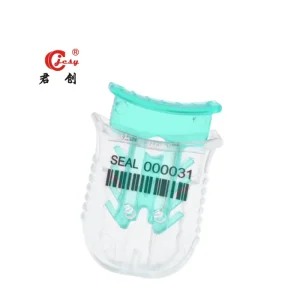
The primary value of a plastic seal on a truck is its tamper-evident design. When the locking mechanism is properly engaged, any attempt to manipulate the seal leaves visible deformation or breakage. Our production experience confirms that the failure mode must be unambiguous: a seal that stretches, cracks, or shows stress marks before breaking gives security personnel a clear signal that the load may have been compromised. This behavioral account, not just the break strength, is what makes plastic seals suitable for road transport.
Locking Mechanism and Material: What Makes a Seal Reliable on the Road
Truck environments subject seals to constant vibration, temperature swings from freezing to sun-scorched trailer surfaces, and exposure to rain, diesel fumes, and road de-icing chemicals. Two elements determine whether a plastic seal holds: the locking mechanism and the material formulation.
Most truck applications use either a pull-tight seal with an internal one-way ratchet or a plastic padlock seal with a snap-in locking bar. I have seen pull-tight seals bypassed on the road when the ratchet teeth are too shallow or when the locking jaw has excessive lateral play. In our manufacturing process, we maintain a strict tolerance of ±0.05 mm on the ratchet tooth depth and use a secondary locking tab to prevent back-slip, a detail that is easy to overlook when price is the only selection criterion.
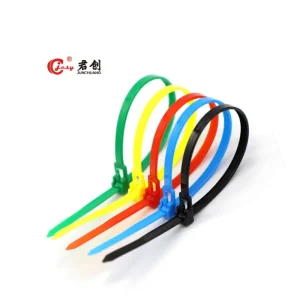
Material choice is equally critical. Polypropylene provides good flexibility and is cost-effective for standard applications, but it becomes brittle in sub-zero temperatures. ABS and polycarbonate blends offer higher impact resistance and better UV stability, which matters when seals spend weeks on a trailer roof under direct sunlight. We produce UV-stabilized seals by adding carbon black or proprietary stabilizer concentrates during the injection molding stage, a step that can add 12–15% to the material cost but doubles the effective outdoor service life.
The table below compares pull-tight and padlock-style plastic seals for common truck security scenarios.
| Feature | Pull-Tight Plastic Seal | Padlock Plastic Seal |
|---|---|---|
| Closing Method | One-way ratchet pull | Snap-in shackle |
| Tamper Evidence | Visual breakage at the locking head | Shackle separation or body fracture |
| Best For | Single-use trailer sealing, multi-stop routes | Repeat access with daily resealing, yard management |
| Weather Resistance | Depends on material; custom UV grades available | Full-body molding; better water/dust sealing |
If your trucking operation involves repeated trailer exchanges or yard storage where the same seal must be opened and re-applied by authorized personnel, I recommend moving to a mechanical seal with a documented chain of custody rather than forcing a plastic seal beyond its design intent.
Serial Numbering, Barcoding, and Print Durability for Fleet Management
A plastic seal without a legible number is a liability. Traceability depends on the mark remaining readable after the seal has been dragged across metal door hasps, splashed with road spray, and handled by personnel wearing gloves. The printing method directly affects durability.
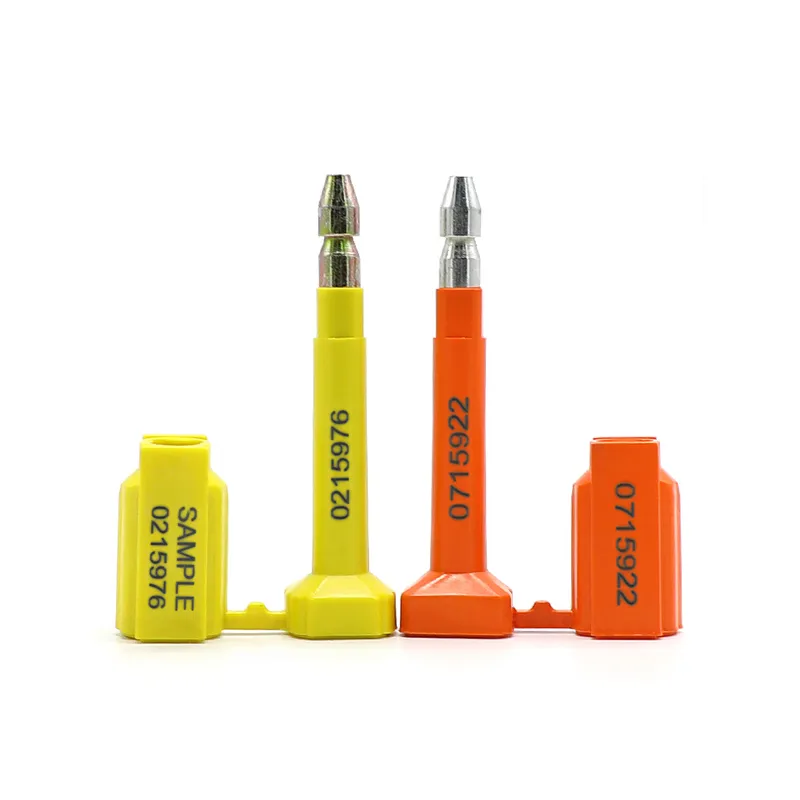
Hot stamp printing presses pigment into the surface under heat and pressure, creating a debossed mark that survives abrasion better than inkjet or thermal transfer printing. Laser marking also produces a permanent, high-contrast code but requires a different base material formulation that may affect flexibility. We have tested seals printed with standard inkjet on polypropylene that became unreadable after 72 hours of simulated container transport with vibration and salt spray. Conversely, hot-stamped barcodes and sequential numbers held integrity even after deliberate scuffing with coarse fabric.
When specifying seals for truck security, fleet managers should require a print durability test that includes mechanical abrasion and chemical resistance to diesel and common cleaning agents. The format of the barcode matters too: 1D barcodes are adequate for manual scanning, but 2D matrix codes can store more data in a smaller area and are harder to deface.
Installing Plastic Seals on Truck Doors: Steps That Prevent Tampering
Even the best seal will disappoint if it is installed incorrectly. I have observed repeated failures traced to a single misstep: a pull-tight seal that was not pulled fully tight, leaving enough slack for the hasp to be worked free without breaking the seal.
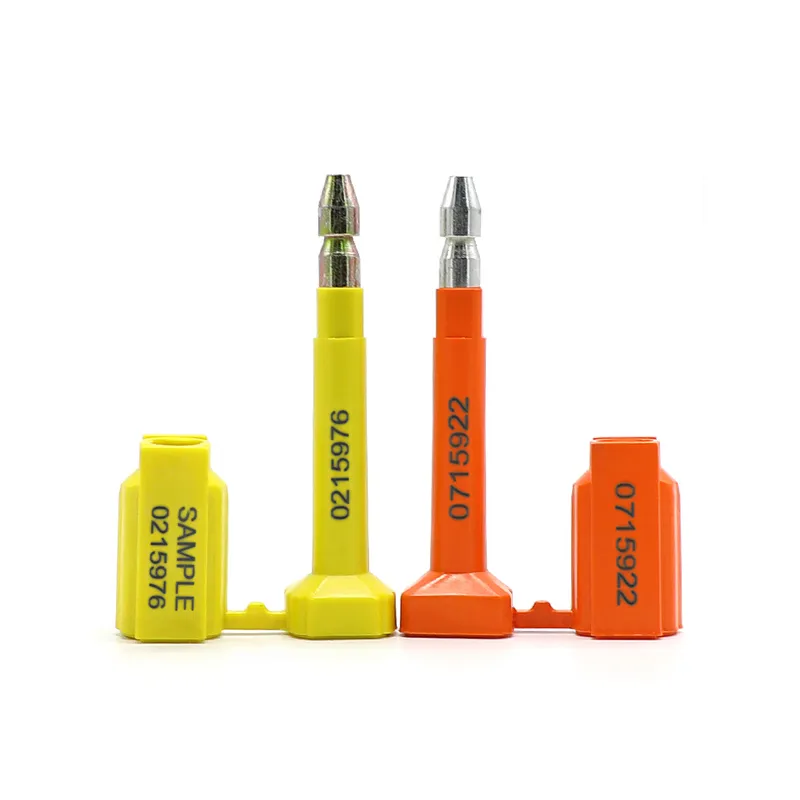
The correct installation sequence is straightforward but must become part of the driver’s standard procedure:
- Confirm that the seal number matches the cargo manifest.
- Close the door hasp and align the holes so that the seal passes through without binding.
- Insert the tail through the locking head and pull until no slack remains between the seal body and the hasp ring.
- Verify that the locking engagement is firm by attempting to back-pull the tail; any movement indicates incomplete engagement.
- Record the seal number and the time of sealing in the digital or paper chain-of-custody log.
- Photograph the installed seal showing the number clearly as documentation before departure.
A daily inspection at each stop should include a check for stress whitening, cracking, or any deformation around the locking head. These subtle indicators often appear hours before a complete failure and can prevent a load from being delivered with a compromised seal.
Procuring Truck Plastic Seals: Quality Indicators and Manufacturer Selection
When sourcing plastic security seals, the lowest unit price will cost more if failures cause customs fines, rejected loads, or cargo claims. In our supply chain interactions, I advise buyers to evaluate three dimensions beyond the invoice price: consistency, customization capability, and quality evidence.
Consistency means that every seal in a batch performs to the same mechanical specification. A factory that can provide a statistical process control report showing tensile strength variation within narrow limits across production shifts is demonstrating the kind of discipline that prevents unexpected seal failures. Customization including multi-color housings, dual numbering, and pharmaceutical-grade cleanroom packaging often becomes necessary as truck fleets integrate with larger logistics networks. A manufacturer that handles both injection molding and printing under one roof removes the finger-pointing that happens when molding and marking are split across suppliers.
Request a sample batch before committing to volume. Inspect the samples for flash around the locking mechanism, inconsistent wall thickness, and print alignment. I have walked through quality stations where a go/no-go gauge for the locking ratchet is the single most revealing checkpoint; a seal that passes that gauge but fails on printed code legibility usually points to a printing process that is rushed.
If your program involves multi-country shipments with varying customs requirements, it is worth confirming that the seal supplier can provide the documentation and traceability logs that customs officials demand before finalizing your BOM. Reach out at [email protected] or call +86 13853189290 to discuss your fleet’s specific sealing requirements and request product samples.
Common Questions About Plastic Seals for Truck Applications
Are plastic security seals strong enough for truck cargo doors?
Plastic seals are not physical barriers against forced entry. Their role is tamper evidence. When someone attempts to remove a properly installed plastic seal without cutting it, the locking head fractures or the strap breaks. A thief carrying bolt cutters can defeat any plastic seal, but the broken seal provides immediate proof of unauthorized access. For high-value freight, combining a plastic seal with a C-TPAT compliant bolt seal on the same door provides both tamper evidence and mechanical resistance.
How do I choose between pull-tight and padlock-style plastic seals?
It depends on your truck’s operational pattern. Pull-tight seals are single-use, ideal for one-way shipments where the seal stays intact until arrival. Padlock seals offer resealability and are practical for multi-stop delivery routes or yard management where the same door gets opened and sealed multiple times with controlled access. If the seal must double as a temporary lock and identification tag, a padlock version often works better.
What information should be printed on truck security seals?
The minimum is a unique sequential number that links directly to the shipping manifest. Adding a barcode speeds up scanning at checkpoints. I also recommend including the fleet identification code or company logo to prevent substitution. In programs we have supported, hot-stamp numbering with a prefix code and a QR code has reduced manual data entry errors by over two-thirds during gate-in inspections.
How long do plastic seals last on a truck exposed to weather?
Standard polypropylene seals without UV stabilizer can become brittle within a few weeks of continuous outdoor exposure, especially in high-altitude or desert routes. UV-stabilized ABS-grade seals, properly installed, typically maintain structural integrity and legibility for the duration of a domestic trucking route regardless of season. If your trailers operate in extreme temperature ranges, specify the operating environment when ordering so the manufacturer can recommend the appropriate material grade.
Share your operational details and we will help you select the right plastic seal configuration with the print durability and weather resistance your fleet requires.
If you’re interested, check out these related articles:
Bolt Seal Manufacturer Versus Distributor: A Procurement Guide – Junchuang Lock
Selecting Ear Tag Size and Color: A Strategic Guide for Livestock – Junchuang Lock
Why Security Seals Ensure Unbroken Logistics Integrity – Junchuang Lock
Meter Lead Seals: Essential Security for Utility and Measurement Devices – Junchuang Lock