
Heavy-duty cable seals sit at the intersection of physical security and operational trust. When a seal fails—or worse, when it’s compromised without detection—the consequences ripple through insurance claims, regulatory scrutiny, and customer confidence. I’ve seen operations treat seal selection as an afterthought, only to discover that their “cost-effective” choice couldn’t survive a determined attempt with basic tools. The right seal doesn’t just resist tampering; it makes tampering visible and costly enough to deter it entirely.
What Makes a Heavy-Duty Cable Seal Different from Standard Options
A heavy-duty cable seal earns its classification through measurable performance characteristics, not marketing language. The distinction comes down to breaking strength, cable construction, and mechanism complexity. Standard seals might discourage casual interference, but heavy-duty variants are engineered for scenarios where motivated actors have access to tools and time.
The cable core typically uses galvanized steel or aircraft-grade cable, with diameters ranging from 3.5mm to 5.0mm for high-security applications. This isn’t arbitrary—thicker cables require more force and better tools to cut, extending the window during which tampering becomes detectable. The seal body, usually ABS plastic, protects the locking mechanism while providing weather resistance across temperature extremes.
| Security Level (ISO 17712) | Description | Minimum Breaking Strength (kN) | Typical Cable Diameter (mm) |
|---|---|---|---|
| H (High Security) | Designed for extreme force resistance | ≥ 10.0 | 3.5 – 5.0 |
| S (Security) | Strong resistance to opportunist attacks | ≥ 5.0 | 2.5 – 3.5 |
| I (Indicative) | Visual tamper evidence only | < 5.0 | 1.0 – 2.5 |
How Material Selection Determines Real-World Performance
Material choices aren’t interchangeable, and the wrong combination can undermine an otherwise solid seal design. Galvanized steel cable resists corrosion through its zinc coating, which sacrificially protects the underlying steel—a critical feature for marine environments or outdoor storage where moisture exposure is constant.
Aircraft cable offers a different advantage: its braided construction distributes stress across multiple strands, maintaining integrity even when individual wires begin to fray. This matters for applications involving vibration or repeated flexing.
The seal body material affects impact resistance and temperature tolerance. ABS plastic maintains structural integrity from approximately -40°C to +80°C, covering most operational environments. Some designs incorporate aluminum components where weight matters without sacrificing strength. These material decisions determine whether a heavy-duty cable seal performs as specified after months of exposure to UV radiation, salt spray, or chemical vapors.
ISO 17712 Compliance and Why It Matters for Your Operations
ISO 17712 exists because the security seal market once lacked any standardized way to compare products. A seal labeled “high security” by one manufacturer might fail tests that another’s “standard” seal would pass. The standard creates three categories—H, S, and I—based on objective testing for breaking strength, tamper resistance, and evidence of manipulation.
For international shipping, ISO 17712 compliance isn’t optional. Programs like C-TPAT (Customs-Trade Partnership Against Terrorism) require certified seals for participating shippers. Using non-compliant seals can trigger inspections, delays, and potential exclusion from expedited processing lanes. The certification also provides legal defensibility—if cargo is compromised despite using properly applied certified seals, the documentation supports insurance claims and regulatory responses.
Confirming Authenticity and Evaluating Suppliers
Certification claims require verification. Request current ISO 17712 documentation directly from manufacturers, and confirm that the specific products you’re purchasing—not just the manufacturer’s facility—are covered. Certification applies to particular seal designs and production processes, not blanket approval for everything a company produces.
Supplier evaluation extends beyond certification. Consider production capacity, lead times, and consistency across batches. A heavy-duty cable seal from a reputable manufacturer like Shandong Junchuang Lock Industrial Co., Ltd integrates design and production under unified quality control, reducing variability. Look for anti-counterfeit features such as sequential serial numbers and barcoding that enable tracking throughout your supply chain. These features serve dual purposes: they deter counterfeiting and simplify your internal seal management processes.
Matching Heavy-Duty Cable Seals to Specific Applications
Security requirements vary dramatically across industries and use cases. A seal appropriate for warehouse inventory control would be inadequate for international container shipping. The selection process should start with the threat model: who might attempt tampering, what tools would they likely have, and how much time would they need?
Shipping containers face the highest scrutiny because they cross multiple jurisdictions and change hands repeatedly during transit. High-security (H-rated) seals with 3.5mm to 5.0mm cables are standard. Truck and trailer applications often prioritize flexibility—the seal must accommodate various door configurations while maintaining tamper evidence. Railcar seals need to survive vibration and temperature cycling over journeys that might span weeks.
| Application Environment | Key Requirements | Recommended Security Level | Cable Diameter (mm) |
|---|---|---|---|
| Shipping Containers | High force resistance, weather-proof | H (High Security) | 3.5 – 5.0 |
| Trucks & Trailers | Flexibility, tamper-evident, easy application | S (Security) | 2.5 – 3.5 |
| Railcars | Vibration resistance, extreme temperature range | H (High Security) | 4.0 – 5.0 |
| Marine Transport | Superior corrosion resistance | H (High Security) | 3.5 – 5.0 |
| Warehousing | Visual tamper evidence, cost-effective | I (Indicative) | 1.0 – 2.5 |
Customization That Serves Security and Operations
Custom features on a heavy-duty cable seal serve practical purposes beyond branding. Variable cable lengths allow precise fitting to specific locking points, eliminating excess cable that could be manipulated or create confusion during inspection. Color coding enables visual sorting by route, customer, or security level without requiring close examination of serial numbers.
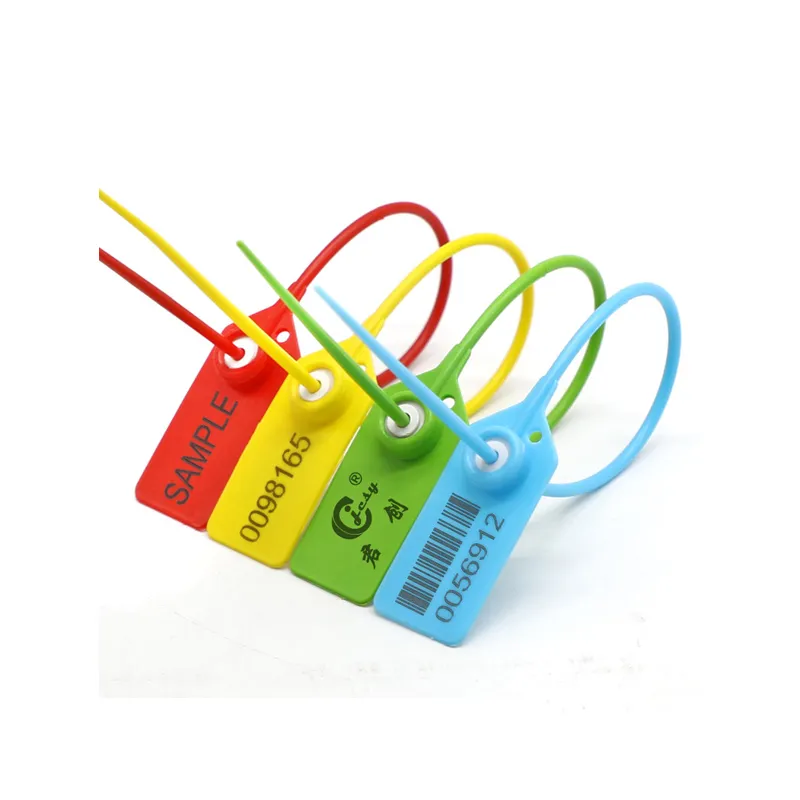
Laser-engraved serial numbers and company logos create accountability chains. Each seal becomes traceable from production through application to removal, supporting audit requirements and incident investigation. This personalization also raises the barrier for counterfeiting—reproducing a generic seal is far easier than matching specific branding, numbering sequences, and quality characteristics.
Material Science and Anti-Tamper Engineering
Longevity in security seals depends on understanding how materials behave under stress, exposure, and deliberate attack. The galvanization process on steel cables creates a zinc layer that corrodes preferentially, protecting the steel beneath. This sacrificial protection extends service life in environments where uncoated steel would rust within weeks.
Locking mechanisms represent the most vulnerable point in most seal designs. High-quality heavy-duty cable seals use hardened steel or zinc alloy internal components that resist drilling and prying. The cable entry design matters too—non-preformed cable ends and one-way locking mechanisms prevent the common attack of cutting the cable, accessing the secured area, and then reinserting the cable to simulate an intact seal.
Temperature extremes test both materials and mechanisms. Plastic bodies can become brittle in extreme cold or soft in high heat, potentially allowing manipulation that would be impossible at moderate temperatures. Seals rated for specific temperature ranges have been tested to maintain their security characteristics across that span.
Breaking Strength and What the Numbers Mean
Breaking strength quantifies the tensile force required to physically separate a seal. For high-security heavy-duty cable seals, this typically exceeds 1000kg (10kN). The practical implication: hand tools won’t suffice. Removing these seals requires bolt cutters or similar equipment, which are difficult to conceal and impossible to use without leaving obvious evidence.
ISO 17712 specifies minimum breaking strengths for each security category. H-rated seals must exceed 10kN, while S-rated seals require at least 5kN. These thresholds aren’t arbitrary—they’re calibrated against the force that common tools can apply and the time required for various attack methods. A seal that meets these standards provides quantifiable resistance, not just the appearance of security.
Building an Effective Seal Management Program
Security seals only work within a system. The best heavy-duty cable seal becomes worthless if application procedures are inconsistent, records are incomplete, or inspection protocols are lax.
-
Selection based on actual requirements: Match seal specifications to the threat environment, not to budget minimums or historical precedent.
-
Standardized installation procedures: Train all personnel who apply seals. Improper installation—loose cables, damaged mechanisms, incorrect positioning—creates vulnerabilities that undermine the seal’s design.
-
Complete documentation: Record seal serial numbers, application locations, dates, times, and responsible personnel. This information supports incident investigation and demonstrates due diligence.
-
Systematic inspection: Check seals at every transfer point. Look for signs of tampering: scratches around the mechanism, cable damage, misaligned components, or serial number discrepancies.
-
Proper removal tools: Use appropriate bolt cutters for removal. Attempting to remove high-security seals without proper tools risks injury and wastes time.
-
Secure disposal: Destroyed seals should be collected and disposed of securely. Discarded seals can be harvested for components or used to study attack methods.
-
Ongoing training: Security awareness degrades without reinforcement. Regular training keeps seal handling procedures current and maintains vigilance.
-
Periodic program review: Evaluate whether your seal program balances security requirements against operational costs. Threats evolve, and your approach should adapt.
Frequently Asked Questions About Heavy-Duty Cable Seals
What causes heavy-duty cable seals to fail before tampering occurs?
Premature failure typically stems from installation errors, environmental exposure beyond the seal’s rated conditions, or using seals with insufficient specifications for the application. Selecting ISO 17712 Cable Seal compliant products and training personnel on proper application addresses most preventable failures. Corrosion in marine environments and UV degradation during extended outdoor storage are common environmental factors.
How frequently should seals be inspected during transit?
Inspection frequency should reflect the security risk and transit complexity. For high-value cargo or multi-leg journeys, visual inspection at each transfer point is standard practice. The goal is detecting tampering before the chain of custody becomes ambiguous. Consistent inspection protocols throughout the supply chain maintain the evidentiary value of seal integrity.
Are heavy-duty cable seals reusable after removal?
No. A heavy-duty cable seal is a single-use tamper-evident device by design. Once the cable is cut or the mechanism is opened, the seal cannot provide any security assurance. Attempting to reuse seals defeats their fundamental purpose and creates liability exposure. Each application requires a new seal with a unique serial number.
How do cable seals compare to bolt seals for container security?
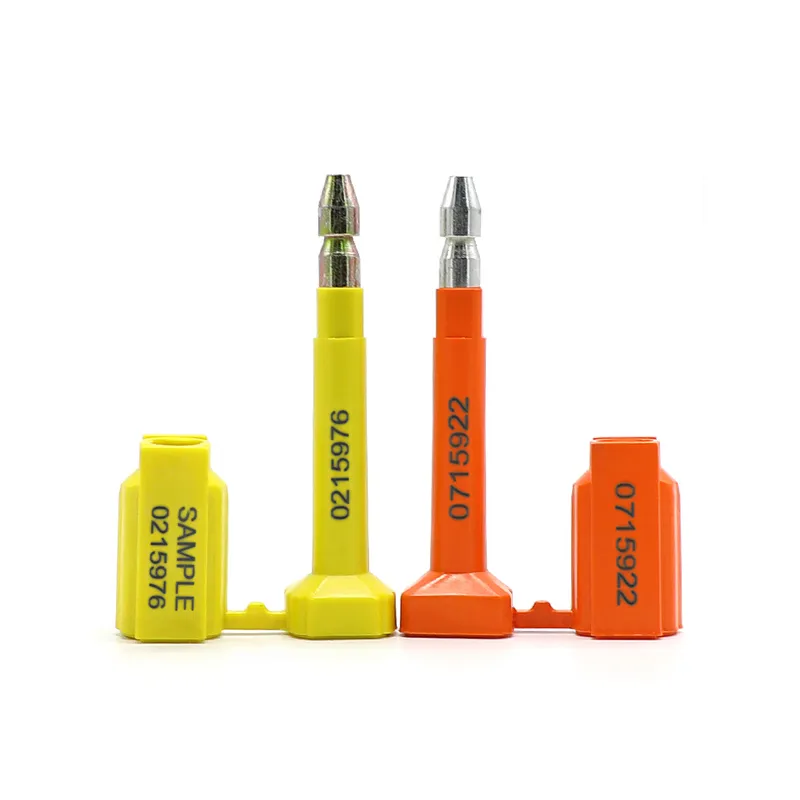
Both are high-security options with different characteristics. A Cable Security Seal offers flexibility for varying aperture sizes and works well for trucks, railcars, and drums. A Shipping Container Bolt Seal provides maximum rigidity and is the standard for shipping container doors, often representing the highest ISO 17712 security tier. The choice depends on the specific application and locking point configuration.
What equipment is needed to remove a heavy-duty cable seal safely?
Bolt cutters rated for the cable diameter are the standard removal tool. The high breaking strength of these seals makes manual removal impossible and improvised tools ineffective. Personal protective equipment—safety glasses and gloves at minimum—should be worn during removal. Attempting removal without appropriate tools creates injury risk and delays operations.
Secure Your Assets with Junchuang Lock Industrial
Shandong Junchuang Lock Industrial Co., Ltd manufactures ISO 17712 certified heavy-duty cable seals with integrated design and production capabilities. Our team can help you match seal specifications to your specific security requirements. Contact us at [email protected] or call +86 13853189290 for consultation on your seal program needs.