
A security seal that snaps under minimal pressure offers no real protection. I’ve seen shipments arrive with seals that looked intact but had clearly been compromised—the breaking point was simply too low to leave obvious evidence. That experience reinforced something fundamental: tensile strength isn’t just a number on a spec sheet. It determines whether a seal actually deters tampering or merely creates an illusion of security.
Tensile Strength Directly Determines Whether a Seal Provides Real Protection
Tensile strength measures the maximum force a security seal can withstand before it breaks or deforms. This property serves as a direct indicator of a seal’s ability to deter and detect tampering. A higher seal breaking strength means the seal requires more force to compromise, making unauthorized access more difficult and time-consuming. This increased resistance acts as a significant deterrent to cargo theft and unauthorized handling.
When a seal’s tensile strength falls short, vulnerability follows. Weak seals can be broken easily, often without leaving clear seal tampering evidence. This compromises the entire security chain, leading to potential losses and undetected breaches. Robust anti-tamper seal resistance ensures that any attempt to break the seal leaves undeniable physical proof. This evidence proves crucial for investigations and for maintaining accountability within supply chain security seals.
For logistics security solutions, seals must endure various stresses during transport and handling. These stresses include pulling, stretching, and impact. Seals with adequate tensile strength maintain their integrity under these conditions, preventing accidental breakage that could be mistaken for tampering. Proper seal failure analysis helps manufacturers understand and improve seal design, ensuring consistent performance. Shandong Junchuang Lock Industrial Co., Ltd. focuses on manufacturing seals with superior tensile strength to meet these demanding requirements, ensuring reliable protection for valuable assets.
ISO 17712 and C-TPAT Set the Benchmarks for Seal Performance
Industry standards provide a framework for evaluating and classifying security seals based on their performance, including tensile strength. Adherence to these standards ensures seals meet specific security requirements, facilitating global trade and protecting supply chains. The most prominent standard is ISO 17712. This international standard defines the criteria for mechanical security seals used on freight containers. It categorizes seals into three types based on their physical strength: “H” for High Security, “S” for Security, and “I” for Indicative.
Each ISO 17712 classification has specific minimum tensile strength requirements. High-security seals, often subject to high security bolt seals testing, must withstand substantial forces, making them suitable for international shipping and high-value cargo. Security seals offer a moderate level of protection, while indicative seals primarily serve as tamper-evident devices. These classifications help users select the appropriate seal for their specific risk level and application. Compliance with ISO 17712 is often a mandatory requirement for customs authorities and international trade agreements.
C-TPAT (Customs-Trade Partnership Against Terrorism) represents another critical guideline. C-TPAT requires the use of ISO 17712 compliant seals for securing cargo containers entering the United States. This program aims to enhance border security and streamline legitimate trade. By specifying C-TPAT security seals, the program ensures a baseline level of physical security for international shipments. Understanding these regulatory compliance seals and customs seal requirements is essential for businesses involved in global logistics. Our seals are designed to meet these stringent requirements, ensuring container seal integrity and adherence to freight security standards.
Minimum Tensile Strength for High-Security Seals
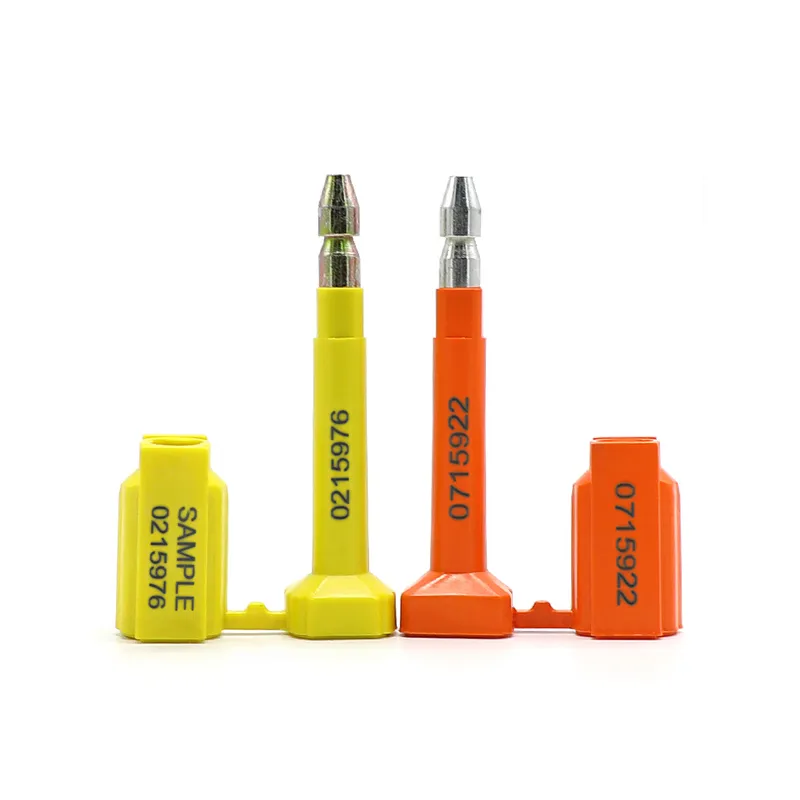
For “High Security” seals, as defined by ISO 17712, the minimum tensile strength required is 1000 kg (approximately 2200 lbs) for bolt seals and cable seals. This substantial minimum breaking force ensures that these seals, such as ISO 17712 high security seals, can resist sophisticated tampering attempts. This requirement makes them suitable for securing containers and trailers carrying high-value goods, preventing easy removal without specialized tools. These bolt seal strength requirements are critical for maintaining the integrity of international shipments.
Testing Methods That Verify Real-World Seal Performance
Testing security seals for compliance and durability involves precise methodologies and specialized equipment. This ensures that each seal performs as expected under operational stress. At Shandong Junchuang Lock Industrial Co., Ltd., we employ rigorous quality control for security seals throughout our manufacturing process.
The primary tool for measuring tensile strength is a universal testing machine seals. This equipment applies a controlled, increasing force to the seal until it breaks. Load cells within the machine accurately measure the applied force and record the maximum load the seal withstands before failure. This provides the crucial seal breaking strength data. Both destructive and non-destructive testing protocols are utilized. Destructive testing, as the name suggests, involves breaking the seal to determine its ultimate tensile strength. This is essential for validating design and material specifications.
Non-destructive testing evaluates seal integrity without causing damage. This might include visual inspections, dimensional checks, and functional tests of locking mechanisms. Product lifecycle testing subjects seals to simulated environmental conditions and repeated stresses to assess their long-term durability. This ensures that plastic seal tensile properties, cable seal breaking force, meter seal durability, and metal strap seal performance remain consistent over time and under various operational conditions. We apply these methods to all our products, including lead seals, plastic seals, cable seals, meter seals, metal strap seals, and high security bolt seals, ensuring their reliability.
Environmental Factors That Degrade Seal Strength Over Time
Environmental exposure significantly impacts security seal tensile strength. Factors like extreme temperatures, prolonged UV radiation, and chemical exposure can degrade seal materials. High temperatures can soften polymers, reducing their resistance to pulling forces. Low temperatures can make materials brittle, leading to premature failure. UV radiation can break down polymer chains, weakening the seal’s structure. Exposure to certain chemicals can also compromise polymer seal strength. These conditions necessitate careful seal design considerations and material selection to ensure seals maintain their integrity in diverse environments. This is crucial for environmental resistance seals.
For further insights into securing your assets, consider reading our article on 《Meter Lead Seals: Essential Security for Utility and Measurement Devices》.
Material Selection and Design Features Matter as Much as Breaking Force
While tensile strength is a primary factor, selecting the appropriate security seal requires a comprehensive approach. It involves considering various elements beyond just the breaking force. The interplay of material science, design features, and application-specific needs is crucial for effective security.
Material science dictates a seal’s inherent properties. Different materials offer varying levels of resistance to cutting, impact, and environmental degradation. Steel provides high tensile strength for bolt and cable seals, while high-grade plastics offer flexibility and tamper-evident features for plastic seals and meter seals. The seal manufacturing processes directly influence the quality and consistency of these material properties.
Design features also play a vital role. Locking mechanisms must be robust and difficult to bypass without leaving clear evidence. Unique numbering and barcoding provide traceability and prevent unauthorized replication. Shandong Junchuang Lock Industrial Co., Ltd. incorporates these features into our diverse range of products, including lead seals, plastic seals, Cable Seals, meter seals, Metal Strap Seals, and high security bolt seals.
The specific application determines the type of seal required. A Container Bolt Seal for international shipping demands high security, while an Electric Meter Seal might prioritize tamper-evidence over brute force resistance. Seal application best practices involve assessing the threat level, environmental conditions, and operational requirements. This holistic approach ensures that the chosen seal provides optimal protection.
| Seal Type | Primary Material | Typical Tensile Strength | Key Application |
|---|---|---|---|
| High Security Bolt Seal | Steel, ABS Plastic | >1000 kg | Shipping Containers, Trailers |
| Cable Seal | Steel Cable, Aluminum/ABS Body | 200-1200 kg (variable) | Tankers, Rail Cars, Valves |
| Metal Strap Seal | Tinplate, Steel | 50-200 kg | Drums, Totes, Utility Meters |
| Plastic Seal | Polypropylene, Nylon | 10-50 kg | Bags, Doors, Fire Extinguishers |
| Meter Seal | Polycarbonate, Wire | 5-20 kg | Utility Meters, Cash Boxes |
Non-Compliant Seals Create Risks That Extend Far Beyond Theft
Using non-compliant security seals carries significant risks, impacting operations, finances, and reputation. Seals that fail to meet established tensile strength standards or other regulatory requirements can lead to severe consequences. These range from direct cargo losses to legal and financial penalties.
Substandard seals are easily compromised, increasing the likelihood of cargo theft, pilferage, and unauthorized access. This results in direct financial losses from stolen goods. Beyond the immediate loss, businesses may face costly insurance claims, supply chain disruptions, and delays. Customs authorities can levy substantial fines for non-compliant seals, particularly within programs like C-TPAT. Such penalties can quickly accumulate, affecting profitability.
The use of inadequate seals can severely damage a company’s reputation. Incidents of theft or tampering due to poor security measures erode customer trust and can lead to long-term business repercussions. Risk management supply chain strategies must include robust auditing security seals and strict seal procurement best practices.
Penalties and Disruptions from Using Substandard Seals
Using non-compliant security seals can lead to severe repercussions. Businesses may face significant customs penalties and fines for failing to meet international standards like ISO 17712. This can cause considerable supply chain disruptions, including delays and rerouting of shipments. It risks substantial brand reputation damage due to cargo theft or tampering, eroding customer trust and leading to financial losses.
Partner with Junchuang Lock Industrial for Reliable Security Solutions
Ensure the absolute integrity of your supply chain with security seals engineered for unmatched tensile strength and compliance. Shandong Province Qingyun County Junchuang Lock Industrial Co., Ltd. offers a comprehensive range of ISO 17712 certified lead seals, plastic seals, Cable Seals, meter seals, Metal Strap Seals, and high security bolt seals, designed and tested to meet the most stringent global standards. Partner with us for reliable, robust security solutions that protect your assets and uphold your reputation. Contact our experts today to discuss your specific security seal requirements and discover how our advanced products can enhance your operational security. Mobile: +86 13853189290 | Email: [email protected] | Whatsapp: +86 13853189290
What is the primary purpose of security seal tensile strength testing?
Security seal tensile strength testing measures the maximum force a seal can withstand before breaking. This verification confirms the seal’s ability to resist unauthorized tampering and ensures the integrity of the supply chain, especially for high security bolt seals and ISO 17712 compliant seals. The testing confirms that the seal will provide reliable tamper evidence when it matters.
How does Junchuang Lock Industrial ensure the tensile strength of its security seals?
Shandong Junchuang Lock Industrial Co., Ltd. ensures the tensile strength of its security seals through rigorous quality control and comprehensive destructive testing methods using advanced universal testing machines. We adhere strictly to international standards like ISO 17712 for all our plastic seals, Cable Seals, meter seals, and metal strap seals, guaranteeing their breaking force meets specified requirements. Our commitment to quality ensures reliable product performance.
Are there different tensile strength requirements for various types of security seals?
Yes, different types of security seals have varying tensile strength requirements based on their classification and intended application. High security bolt seals designed for containers have significantly higher breaking strength mandates under ISO 17712 compared to indicative plastic seals or meter seals. The specific seal design considerations and materials dictate these differences, ensuring seals are fit for purpose.