
Padlock seal quality standards directly determine whether cargo arrives intact or exposed to tampering, because consistent factory-level controls prevent the kind of failures that post-production sorting never catches. I’ve spent over fifteen years managing production lines where every batch of plastic padlock seals undergoes tensile testing, dimensional inspection, and tamper-evidence verification, and the difference between a reliable seal and one that fails in the field almost always traces back to in-process discipline, not a final certificate. Buyers evaluating padlock seal suppliers should demand documented manufacturing controls, not just a clean inspection report.
Factory Quality Standards Directly Prevent Field Failures
When a padlock seal fails during transport, the root cause is rarely a single defect visible in a final check. More often, it’s a gradual drift in injection pressure, mold temperature, or raw material melt flow that produces seals with inconsistent locking tab engagement, weakened fracture points, or pull-tight teeth that strip under load. In our factory, we track cavity-by-cavity shot weights and cycle times every hour, because a deviation of just a few grams in a molded seal body changes the break force by enough to compromise a shipment without any visual cue.
Seals that look identical on a table can perform very differently if the plastic formulation varies. For polypropylene padlock seals, we specify a minimum tensile strength at the locking pawl of 180 N, measured on a motorized test stand at 50 mm/min crosshead speed. That number is meaningless unless the factory runs tests on every production lot and keeps records tied to batch numbers. Too many supplier quality claims fall apart when you ask to see those daily test logs.
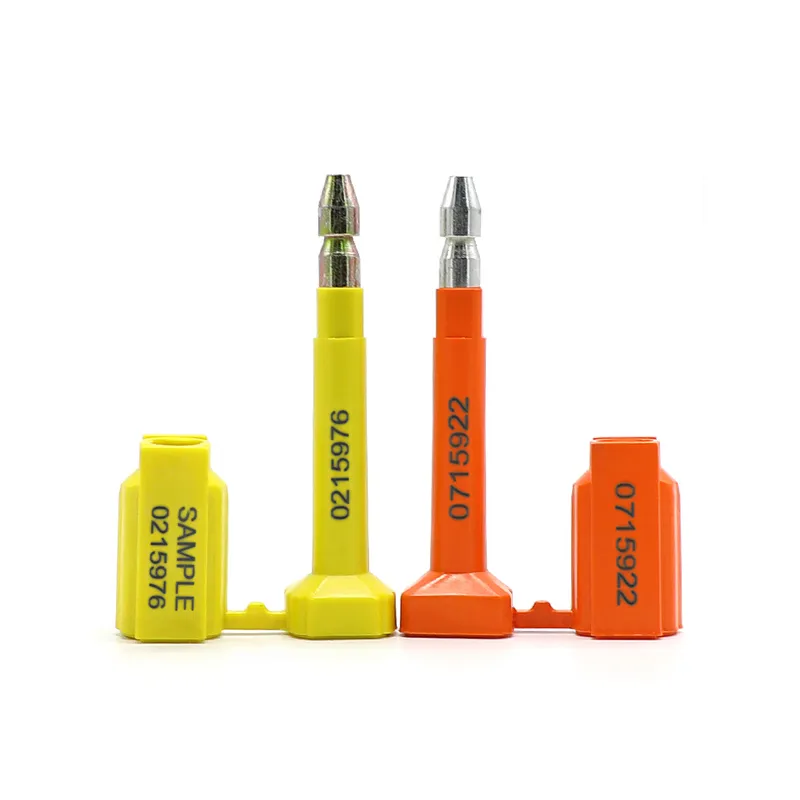
Key In-Process Checks for Padlock Seal Reliability
A well-structured quality control plan for padlock seals covers at least five checkpoints before the product ever reaches final inspection. The first is material verification: incoming polypropylene or nylon pellets should come with melt flow index certificates, and the factory should run a quick melt flow test on each lot to confirm it matches the injection machine’s parameters. Skipping this step leads to short shots or flash, and those defects create seals that either won’t lock or break during normal handling.
The second checkpoint is mold condition monitoring. We replace worn cavities before flash exceeds 0.15 mm on the parting line, because flash around the locking mechanism can prevent the hasp from seating fully and give a false closed reading. Third is pull-tight tooth formation: the teeth are the active locking feature on adjustable padlock seals, and tooth depth below 0.8 mm reduces pull-out resistance by 30% or more. Optical inspection under magnification catches worn cutters before they ruin a shift’s worth of production.
Fourth is locking mechanism assembly torque measurement for seals with metal locking inserts. If the insert isn’t pressed to the correct depth, the hasp won’t bottom out and the seal will appear locked when it can actually be slipped open. Fifth is laser marking readability: serial numbers, barcodes, and company logos must survive abrasion and UV exposure. We run a cross-hatch tape test on 5 samples per batch to confirm marking adhesion meets ISO 2409 class 1.
| Checkpoint | Measurement | Failure Effect |
|---|---|---|
| Material melt flow | MFI per supplier spec ±10% | Short shots, inconsistent lock strength |
| Flash on parting line | Max 0.15 mm | Hasp won’t seat, false closed reading |
| Pull-tight tooth depth | Min 0.8 mm | Reduced pull-out resistance, easy removal |
| Locking insert depth | Per engineering drawing ±0.1 mm | Incomplete engagement, slip-open risk |
| Laser mark adhesion | ISO 2409 class 1 | Illegible numbers, traceability loss |
If your procurement team is managing a program that involves containerized shipments where padlock seals must pass customs inspections or chain-of-custody verification, confirming that the factory runs these exact checks before finalizing your supplier shortlist is worth a direct email. At Shandong Junchuang, we share sample test records during the evaluation phase so buyers can see the level of detail they’ll receive with every order: [email protected].
Certifications That Validate Quality Standards
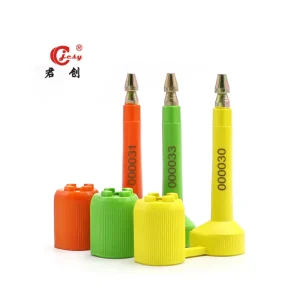
ISO 17712 is the baseline for high-security padlock seals, but the standard has a specific structure that not every buyer examines. The standard separates security levels into indicative, security, and high-security, and only the high-security classification requires testing according to ISO/IEC 17025 by an accredited laboratory. A factory that holds an ISO 17712 certificate for high-security seals must submit product samples for tensile, shear, bend, and impact tests every two years at minimum, and the laboratory issues a test report with load-at-failure values.
What gets overlooked is that ISO 17712 certification applies to a specific seal model with specific dimensions and materials. A factory’s certificate for a 3.5 mm wire cable seal does not automatically cover a plastic padlock seal of a different design. We maintain separate certification documentation for each product family and make the laboratory report numbers available to customers during factory audits, because legitimate certifications are traceable back to the issuing lab.
Supply chain security programs like C-TPAT and AEO require importers to use seals that meet certain standards, and many buyers accept an ISO 17712 certificate at face value. I’ve seen cases where a supplier’s certificate had expired six months earlier but the customer didn’t catch it until a cargo inspection flagged the seal type as noncompliant. Asking for the certificate’s validity date and the testing lab’s name before placing a container order prevents that kind of compliance gap.
Documentation You Should Expect from a Padlock Seal Factory
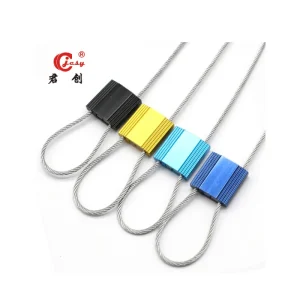
Beyond certification, a padlock seal supplier committed to quality will provide at least four categories of production documentation for every order: material certificates for the lot of plastic used, in-process inspection reports for the shift during which your seals were molded, final inspection records showing accepted quantity and defect rate per AQL sampling, and a packing list with serial number ranges. When we ship bulk orders to logistics companies in Western Europe, the documentation package travels with the commercial invoice so the buyer can present it at customs or share it with their own quality team.
The most revealing document is the in-process inspection report, not the final certificate. A factory that tracks mold temperature, injection pressure, and cycle time by cavity hour by hour is controlling the variables that actually determine consistent quality. If a factory pushes back on sharing in-process data and only offers a final pass/fail statement, I would treat that as a red flag. Manufacturing without process control means the factory is sorting good from bad at the end, and that only catches visual defects.
On-Site Audit: Verifying Production Quality Firsthand
When you walk into a padlock seal factory, the first thing I would check isn’t the finished goods area but the injection molding floor. Look at the log sheets posted on each machine. They should show actual process parameters written down at regular intervals, not just target values. At Junchuang, every injection machine has a shift log that records barrel temperature zones, clamp tonnage, and mold protection settings, and the quality team reviews those logs at the end of each day for drift patterns.
The second item to inspect is the gauge and tester calibration schedule. Tensile testers, micrometers, and weighing scales should carry calibration stickers dated within the last twelve months, and the factory should be able to produce the certificate from an external metrology lab. In-house calibration records are acceptable for go/no-go gauges if the procedure is documented, but the primary test equipment needs third-party verification. If you see a factory that cannot produce calibration records on the spot, I would question whether their test data is valid.
The third area is the retained sample room. Good factories keep reference samples from every production batch for at least three years, and each sample should be marked with the batch number, production date, and material lot. These retained samples let both the factory and the buyer resolve disputes by comparing current production to an agreed reference. In our facility, we pull retained samples whenever a customer reports a field issue, and about half the time the problem traces back to misuse rather than a manufacturing defect.
Common Quality Shortcuts in Padlock Seal Manufacturing
One of the most frequent shortcuts I encounter is blending regrind plastic into virgin material at ratios that exceed the resin supplier’s recommendation. Some factories run 30% or more regrind to reduce raw material cost, but polypropylene degrades with each heat cycle, losing tensile strength and impact resistance. The seals may pass visual inspection but fail at half the rated break force. Buyers can guard against this by requiring the factory to state the regrind percentage in writing and provide melt flow test results for the actual material batch used on their order.
Another shortcut is reducing cooling time in the mold to increase cycle speed. When a padlock seal body is ejected before the plastic has fully crystallized, the locking hasp can warp as it cools in the bin, and those warped seals either won’t close or sit slightly open. The operator might catch obvious warpage, but subtle dimensional errors pass visual screening and show up only when the end user tries to secure a container door. We set minimum cooling time based on part weight and monitor mold temperature with thermocouples to prevent short cycles.
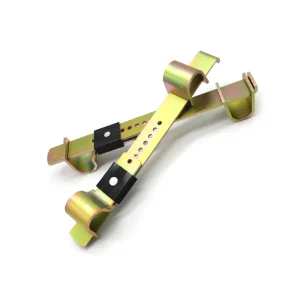
A third area where corners get cut is skip-lot testing. Factories that test only the first and last shots of a batch skip the middle 90% of production, and process shifts during the run go undetected. For padlock seals with serial numbering, a mid-batch test pull on 5 seals per 500 units catches most process drifts. I recommend buyers require that the inspection report shows sample pulls at the beginning, middle, and end of the production run, not just one set at final inspection.
Questions Buyers Ask About Padlock Seal Quality
What is the difference between ISO 17712 high-security and indicative seals?
ISO 17712 high-security seals must pass independent laboratory testing for tensile strength, shear strength, bend, and impact, while indicative seals only need to meet manufacturer-declared values and show evidence of tampering. High-security padlock seals are required for containerized cargo crossing international borders under C-TPAT, whereas indicative seals might be acceptable for domestic trucking where the seal’s role is tamper evidence rather than forced-entry resistance. The laboratory that issues the test report must be ISO/IEC 17025 accredited, and the buyer should verify the report covers the specific seal model they are purchasing, not a different product in the factory’s catalog.
Can I trust a factory that has ISO 9001 but not ISO 17712?
ISO 9001 certifies that the factory has a documented quality management system, but it does not validate the tamper resistance or mechanical strength of the seals themselves. Many well-run injection molding factories hold ISO 9001 because it covers overall operations, but if the seals will be used on container doors or high-value cargo, you need the product-specific testing that ISO 17712 provides. In practice, a factory with ISO 9001 and documented in-process controls is a solid candidate, but I would still request independent test reports for the specific seal model before approving it for international freight.
How do I verify that the seals I receive match the certified sample?
Ask the factory to provide a first-article inspection report for your order that compares dimensions, weight, and pull-test results against the certified reference sample retained from the qualification batch. During receiving inspection, you can conduct a quick pull-to-break test on a few samples using a handheld force gauge—if the break force falls more than 15% below the certified value, the batch should be quarantined. Also compare serial number ranges and barcode readability against the packing list, because mismatched numbering suggests the order was picked from mixed production runs with unknown process conditions.
Should I require the factory to retain samples of my order?
Retained samples are one of the most underused quality tools in seal procurement. A factory that keeps year-marked reference samples from every order can resolve disputes quickly by sending photographs or pulling the samples for physical comparison. I recommend writing retained samples into the purchase agreement: one sealed pair of seals per serial number range, kept for two years from the ship date. If a field complaint arises eighteen months later, that sample becomes the standard for measuring whether a manufacturing defect or handling damage caused the failure. If your operation depends on seal integrity across long supply chains, confirming the factory’s sample retention policy before committing to a purchase order is a practical step—reach out at [email protected] or call +86 13853189290, and we can share our sample retention documentation as part of your evaluation.
If you’re interested, check out these related articles:
Ear Tag Installation: Precision Techniques for Animal Identification – Junchuang Lock
High Security Bolt Seals: Critical Applications for Supply Chain Integrity – Junchuang Lock