
In logistics, securing cargo with reliable tamper-evident seals is not just a regulatory requirement—it’s a frontline defense against theft and supply chain disruption. Plastic seals, when properly chosen and manufactured, provide a cost-effective solution for container and truck security. Yet, not all plastic seals perform equally. Their effectiveness depends on material quality, design, and manufacturing consistency. This guide examines what procurement and logistics teams need to know about selecting plastic seals for secure logistics operations, drawing on over fifteen years of hands-on manufacturing experience.
Types of Plastic Seals Used in Logistics
Logistics operations rely on several plastic seal types, each suited to specific applications. Understanding the differences helps match the right seal to the right cargo flow.
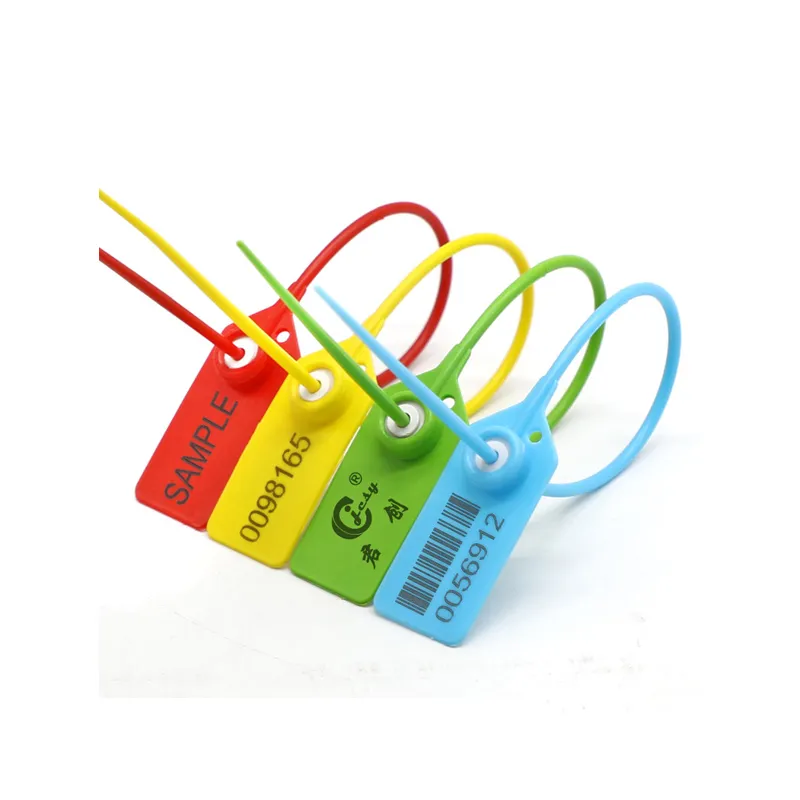
Pull-Tight Seals
These one-piece seals tighten by pulling the tail through a locking chamber, providing adjustable length. They are commonly used on truck doors, tankers, and railcars. The serrated strap makes tampering immediately visible because cutting is irreversible. For high-volume trucking, pull-tight seals for trucks are a staple.
Fixed-Length Seals
Pre-set length seals with numbered heads and locking sockets cannot be adjusted, which simplifies inventory management and ensures consistent application. I have found these especially useful in closed-loop distribution where uniform sealing speeds up dock procedures.
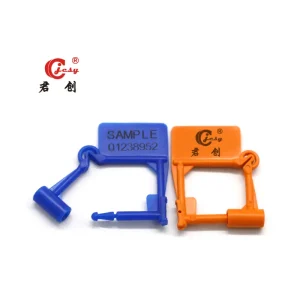
Plastic Padlock Seals
Combining a plastic body with a steel locking core, these seals function like a padlock but are disposable. They offer higher tamper resistance and are often selected for intermodal containers and ISO tankers. We produce high-quality [plastic padlock seal](https://jcsealsfactory.com/product/plastic-padlock-seal/)s with sharp, permanent markings.
Below is a quick reference table.
| Seal Type | Adjustable | Typical Application | Tamper Evidence Level |
|---|---|---|---|
| Pull-Tight | Yes | Truck doors, pouches | High – cut strap is visible |
| Fixed-Length | No | Railcars, totes | High – broken seal indentation |
| Plastic Padlock | No | Containers, tankers | Highest – steel core and body break |
Critical Quality Factors for Plastic Logistics Seals
Plastic seal performance in the field is determined long before the seal leaves the factory. Without rigorous quality controls, even a well-designed seal can fail under real-world stress. I have seen shipments where seals snapped during transit because the manufacturer used regrind plastic instead of virgin material. That cost the consignee a claim denial and an entire audit review.
Material Composition
Polypropylene (PP) and polyethylene (PE) are standard, but high-quality seals use virgin grades with controlled melt flow. Recycled or low-grade material can become brittle in cold temperatures or soften in heat. At our plant, we perform density and melt flow index tests on every resin lot before production begins. This upfront check eliminates variances that only show up after trucks hit the road.
Tensile Strength and Locking Mechanism
A seal’s locking chamber must grip the strap under tension without slipping. A pull-tight seal should withstand at least 20 kg of pull force before the lock fails. We test a random sample from each batch using a digital force gauge. If the lock slips at a lower force, the entire batch is rejected. That consistency is what logistics coordinators actually need—not a catalog number, but a dependable result.
Environmental Resistance
Seals used outdoors need UV stabilizers to prevent degradation from sunlight. For cold chain logistics, the material must remain flexible below -20°C. We offer UV-resistant compounds and have validated seals in actual cold storage environments. Ask your supplier for cold-weather performance data if your route crosses temperature extremes.
How to Verify a Plastic Seal Supplier
Selecting a supplier involves more than comparing spec sheets. A factory visit or a well-executed sample inspection reveals far more about production consistency. Over the years, I have assessed dozens of manufacturers; the ones that consistently deliver quality share a few patterns.
Sample Inspection Protocol
Request samples with your required markings and test them yourself. Check the locking chamber for flash—excess plastic that could cause jamming. Pull the strap to the claimed tensile limit and observe if the lock slips before the material tears. For numbered seals, verify that the printing is sharp, permanent, and resistant to solvent wiping. We provide free customization samples for evaluation; an actual seal in hand tells you more than a dozen datasheets.
Factory Audit Checklist
When visiting or remotely auditing, confirm that the manufacturer maintains in-house mold making and maintenance capability. Incoming resin quality documentation—certificates of analysis—should be standard. A batch traceability system must link raw material to finished seal. Post-production random testing records and relevant certifications like ISO 9001 for quality management further separate consistent suppliers from transactional ones.
If your logistics operation involves high-value cargo or international shipping, confirming that the plastic seal meets the relevant tamper-evidence requirements is not optional. Reach out at [email protected] with your locking requirements, and we will help you verify the right seal specifications before you commit to a purchase.
Cost vs. Reliability: The True Economics of Plastic Seals
Procurement often focuses on unit price, but a plastic seal’s total cost includes the risk of cargo theft or lost time from seal failures. A seal that costs $0.05 less per unit but fails once in 1,000 applications can nullify any savings when a single claim runs into thousands of dollars.
From a production perspective, the differences in cost and quality come down to:
– Raw material: virgin resin is more expensive than recycled but ensures consistency across temperature and stress conditions.
– Tooling precision: injection molds must be maintained and replaced periodically to prevent dimensional drift that weakens the locking chamber.
– Inspection overhead: automated vision systems and manual checks add cost but catch defects before seals reach the logistics chain.
Trying to cut corners on seal quality is a false economy. We have worked with logistics firms that switched back to higher-grade seals after a single incident of tampering went undetected because of a poorly locking mechanism.
Customization and Traceability in Logistics Seals
Serialization and barcoding turn a plastic seal into an active data point in your supply chain. A clearly legible serial number recorded at loading and unloading creates an unbroken chain of custody. We laser-mark serial numbers and barcodes directly onto the seal surface or onto insert labels. The marking is durable and resists smudging from fuel, oil, or rain.
Color coding adds another layer of visual verification: different colors for different routes, depots, or cargo types. We stock several standard colors and can match custom Pantone shades for larger orders. When traceability needs to feed into a warehouse management system, we often produce seals with serialization schemes provided by the client. For programs that require permanent identification, plastic seals with serial numbers integrate directly into scanning workflows.
Secure Your Logistics with Verified Plastic Seals
Every logistics operation has unique requirements: some need seals that withstand monsoon rains, others require tamper evidence under extreme cold. The common thread is that seal failure is preventable when you start with a manufacturer who treats quality as a production discipline, not a marketing phrase.
We have invested in in-house mold fabrication, resin testing, and batch traceability precisely to ensure that each plastic seal performs when it counts. From sample evaluation to full production, we deliver consistency that logistics professionals can rely on.
To discuss your specific requirements or request free samples, contact us:
Email: [email protected]
Mobile/WhatsApp: +86 13853189290
Common Questions About Plastic Seals in Logistics
Are plastic seals as secure as bolt seals for container shipping?
Plastic seals provide a different level of security. Bolt seals are high-security devices with steel construction, typically meeting ISO 17712 high-security requirements. Plastic seals offer tamper evidence rather than high physical barrier; they suit domestic trucking, less-than-container loads, and applications where visual tamper evidence is sufficient. For cross-border container seals, bolt seals are the standard, while plastic seals excel in overland freight where quick visual checks are prioritized.
Can plastic seals be reused?
No. By design, plastic seals are single-use. Once locked, they cannot be removed without cutting or breaking the locking mechanism. Attempting to reuse a plastic seal defeats its tamper-evident purpose and may violate supply chain protocols.
What should I check when I receive a plastic seal shipment?
Inspect the packaging for damage and verify that the received quantity matches your order. Pull a sample from different boxes and perform a spot check: apply tension to confirm the lock holds, verify that serial numbers are sequential and legible, and check for any molding defects like incomplete filling or sharp edges. If the defect rate exceeds 1-2% in your sample, request a full inspection from the supplier.
How do I know if a plastic seal meets international shipping standards?
Plastic seals are not typically certifiable to the ISO 17712 high-security level, but they can comply with the standard’s indicative seal category. Ask your supplier for a declaration of conformity and test reports covering tensile strength and tamper evidence. Some customs authorities accept plastic seals on less-than-container loads; verify local acceptance with your freight forwarder.
What is the minimum order quantity for custom printed seals?
It depends on the marking method and color, but for laser-marked or printed plastic seals our typical minimum starts at 1,000 pieces per design. Setup costs for engraving templates or printing plates are amortized over the batch. If your logistics program requires a specific marking scheme, share your part number and quantity with us and we’ll provide a quote tailored to your volume—email [email protected] with your requirements.
If you’re interested, check out these related articles:
Nylon Cable Tie Selection: A Strategic Guide for Industrial Procurement – Junchuang Lock
High-Security Seals: ISO 17712 Compliance & Tamper-Evident Design – Junchuang Lock