
Finding a supplier you can trust for bolt seals matters more than most people realize until something goes wrong. A compromised seal doesn’t just mean lost product. It opens the door to regulatory headaches, insurance disputes, and the kind of reputation damage that takes years to rebuild. After working through enough supplier relationships to know what separates the reliable from the risky, the certification checklist becomes second nature. This piece walks through what actually matters when vetting suppliers, from compliance documentation to the partnership dynamics that determine whether a relationship holds up under pressure.
What High Security Bolt Seal Standards Actually Require
Supply chain integrity starts with understanding what regulators actually demand from security seals. International shipping rules don’t leave much room for interpretation here. Certified seals are mandatory for protecting goods in transit, and the primary benchmark is ISO 17712 Certification.
ISO 17712 defines requirements for tamper-evident mechanical seals. It establishes a globally recognized standard for strength and security performance. Compliance isn’t optional for international freight. It’s the baseline expectation.
C-TPAT requirements add another layer for companies moving goods into the United States. The Customs-Trade Partnership Against Terrorism is a voluntary program run by U.S. Customs and Border Protection, but “voluntary” understates its practical importance. Partners must implement specific security measures throughout their operations. For bolt seal suppliers, this means demonstrating rigorous security protocols from manufacturing through distribution. A supplier’s C-TPAT alignment signals genuine commitment to preventing unauthorized access and tampering.
Different applications call for different security levels. ISO 17712 breaks seals into three grades: Indicative, Security, and High Security. High security seals are built specifically for containers and trailers, offering substantial resistance to tampering and unauthorized entry. Knowing these distinctions matters when selecting seal types and verifying what a supplier can actually deliver. Suppliers need to prove their seals consistently meet specified grade requirements through independent testing.
| ISO 17712 Grade | Description | Typical Application | Minimum Tensile Strength |
|---|---|---|---|
| Indicative | Minimal resistance to tampering, visual deterrent | Internal logistics, inventory control | 50 kg |
| Security | Moderate resistance, requires simple tools | Domestic shipments, cross-border road freight | 200 kg |
| High Security | Substantial resistance, requires heavy tools | International container shipping, high-value cargo | 1000 kg |
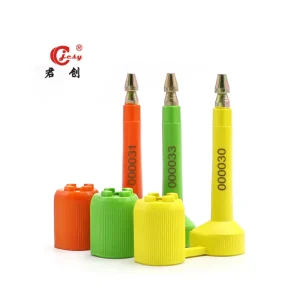
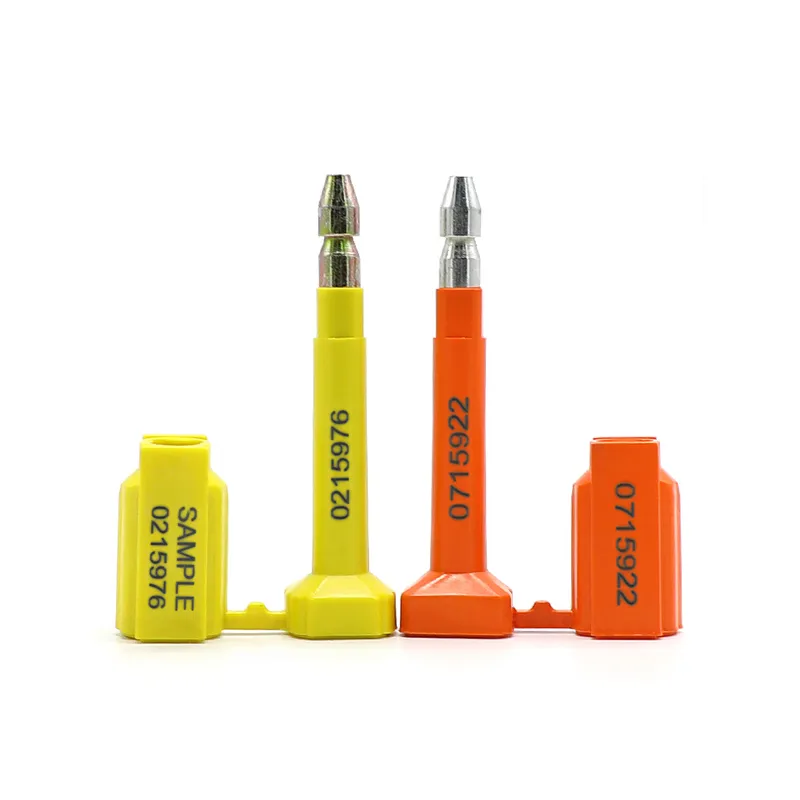
A Cargo Container Bolt Seal must meet the High Security grade for international compliance. Products like the Security Container Bolt Seal go through stringent testing to surpass ISO 17712 high security standards. That level of certification gives clients real confidence in their supply chain security.
How to Actually Evaluate and Select a Bolt Seal Supplier
Evaluating suppliers takes more than comparing price sheets. A proper supplier audit protocol examines manufacturing capabilities, quality control processes, and adherence to security standards. The vetting process needs multiple angles to catch what a surface-level review misses.
Start with manufacturing standards. This means examining production facilities for cleanliness, organization, and equipment quality. A supplier’s ability to produce consistent, high-quality seals depends heavily on their manufacturing environment. Evidence of continuous improvement and technology investment tells you something about their trajectory.
Quality assurance processes deserve close scrutiny. Review internal testing procedures, defect rates, and corrective action plans. A solid quality assurance system ensures every bolt seal meets design and performance specifications. This covers material integrity, locking mechanism functionality, and proper marking.
Security protocols matter throughout operations, not just in the final product. Physical security at facilities, employee background checks, and data protection measures all factor in. Supply chain risk management recognizes that vulnerabilities anywhere in the chain can compromise everything downstream. A supplier should demonstrate clear understanding of and commitment to these protocols.
On-site inspections and documentation reviews reveal what claims alone cannot. Examining certifications, test reports, and internal audit records verifies that supplier statements hold up against evidence. The goal is establishing clear chain of custody for materials and products, minimizing opportunities for counterfeiting or unauthorized alterations.
Customization capacity and responsiveness also matter. Can they provide Customized Barrier Seal options or specific numbering sequences when needed? Flexibility and willingness to collaborate on unique security challenges indicate partnership potential. Suppliers who adapt to evolving security needs and offer tailored solutions tend to be worth the investment.
Quality Control and Tamper Evident Features That Actually Work
Effective supply chain security depends on bolt seals with robust quality control and advanced tamper evident features. These features serve as the first line of defense against unauthorized access and manipulation. Specific design elements and rigorous testing guarantee seal integrity verification.
Material strength testing sits at the core of quality control. Bolt seals must withstand significant force without premature breakage or compromise. Testing the steel pin and ABS plastic body for tensile strength, shear resistance, and impact durability happens regularly. Both destructive and non-destructive tests confirm material specifications are consistently met.
Tamper evident technology gets built into high-security bolt seal design. This technology ensures any attempt to open, remove, or manipulate the seal leaves visible and irreversible evidence. Common features include unique serial numbering, laser etching, and anti-spin mechanisms. The ISO 17712 High Security Seal uses a non-pre-spinning design specifically to prevent manipulation.
| Feature | Description | Tamper Detection Method | Benefit |
|---|---|---|---|
| Unique Serial Numbering | Laser-etched, non-repeating numbers on both parts | Mismatching numbers, altered markings | Prevents seal substitution |
| Anti-Spin Mechanism | Design prevents pin and barrel from rotating freely | Evidence of forced rotation | Deters “spin-off” tampering |
| Material Brittleness | Engineered to fracture rather than bend under stress | Visible breaks, stress marks | Clear evidence of attempted removal |
| High-Contrast Markings | Clear, indelible markings for easy inspection | Faded or altered markings | Facilitates quick visual checks |
| Crimp Marks/Indents | Permanent deformation upon proper sealing | Lack of deformation, improper crimping | Confirms correct application |
| Barcode/QR Code | Scannable codes for electronic tracking and verification | Unscannable codes, altered data | Enhances traceability and data integrity |
Unique serial numbering on each bolt seal is paramount for traceability. Each seal should have a distinct identifier, often laser-etched or hot-stamped, that cannot be easily replicated or altered. This allows precise tracking of goods and immediate identification of seal discrepancies. Sequential numbering and robust marking processes prevent duplication.
Regular audits of manufacturing processes remain vital. This includes verifying calibration of testing equipment, adherence to production protocols, and proper handling of raw materials. Internal quality control teams perform continuous checks to uphold standards for every Container Bolt Seal produced. This proactive approach minimizes defects and ensures consistent product integrity.
Working Through Certification Processes and Documentation Requirements
Certification processes and documentation requirements form a critical step in compliant procurement of bolt seals. Understanding these pathways ensures suppliers meet all necessary regulatory and industry standards.
Suppliers must possess valid ISO 17712 Certification. Accredited testing laboratories issue this certification after seals undergo rigorous testing for tensile strength, impact resistance, and tamper evidence. The certification document should clearly state the seal’s classification and the testing body. Requesting copies of these certificates and verifying their authenticity is standard practice.
Documentation proving C-TPAT compliance is often required, especially for suppliers involved in U.S. bound shipments. While C-TPAT is a program for importers, carriers, and manufacturers, suppliers of security devices like bolt seals must align their practices with C-TPAT security criteria. This includes documentation of physical security measures, personnel security, process security, and information technology security.
Suppliers should provide detailed audit trails for their manufacturing processes. These trails include records of raw material sourcing, production dates, quality control checks, and batch numbers. An effective audit trail allows complete traceability of each bolt seal from origin to deployment. This transparency proves valuable for identifying and resolving potential security breaches.
| Document Type | Purpose | Issuing Body/Source | Verification Method |
|---|---|---|---|
| ISO 17712 Certificate | Confirms seal meets international security standards | Accredited Testing Laboratory | Cross-reference with lab database |
| C-TPAT Compliance Letter | Demonstrates alignment with U.S. supply chain security | U.S. Customs and Border Protection | CBP portal verification |
| Test Reports (Internal/3rd Party) | Details specific performance metrics and material tests | Supplier QC Dept. / Independent Lab | Review data against standards |
| Quality Management System Certificate | Verifies adherence to quality processes (e.g., ISO 9001) | Accredited Certification Body | Check certificate validity |
| Manufacturing Process Documentation | Outlines production steps, controls, and equipment | Supplier Internal Documentation | On-site audit, document review |
| Material Safety Data Sheets (MSDS) | Provides information on material composition and hazards | Material Supplier | Review for compliance and safety |
Regulatory compliance extends to environmental and ethical standards. Suppliers should provide documentation related to environmental management systems and social responsibility certifications. This demonstrates a holistic approach to responsible manufacturing. A supplier’s commitment to these broader standards reflects their overall reliability.
Supplier transparency in providing requested documentation is a key indicator of trustworthiness. Any hesitation or inability to produce relevant certificates and records should raise a red flag. Suppliers should maintain meticulous records and readily share them during procurement and auditing phases. This ensures clear understanding of their processes and guarantees product integrity. For related security applications, see Meter Lead Seals: Essential Security for Utility and Measurement Devices.
Building Strategic Partnerships for Long-Term Supply Chain Security
Strategic partnership with a bolt seal supplier goes beyond transactional procurement. It forms the foundation for enhanced supply chain resilience. A long term supplier relationship with a certified and reliable partner offers continuous security improvement and proactive risk mitigation. Suppliers function as integral components of the broader security strategy.
A strategic partner actively contributes to security best practices. They don’t merely supply products but offer insights into evolving threats and new security technologies. This collaborative approach allows development of custom security solutions tailored to specific operational challenges. A partner might suggest advanced tamper evident technology or specialized marking techniques for high-value cargo.
This partnership fosters supply chain resilience. When unforeseen disruptions occur, a trusted supplier can respond quickly, ensuring continuity of supply and minimizing operational impacts. This includes providing alternative solutions or expediting orders during peak demand. Strong relationships lead to greater flexibility and reliability.
Regular communication and performance reviews characterize strategic partnerships. Ongoing dialogue with suppliers assesses their performance, discusses future needs, and identifies areas for improvement. This continuous feedback loop ensures security measures remain effective and adaptable. It also allows prompt attention to emerging concerns.
A strategic partner aligns with commitment to quality and innovation. They invest in research and development to produce more secure and efficient bolt seals. This shared vision for continuous improvement translates into tangible benefits, providing access to cutting-edge security solutions. Partners who lead their field drive advancements in seal technology.
Partnering with a certified and reliable bolt seal supplier like Shandong Junchuang Lock Industrial Co., Ltd. means securing supply chains with confidence. A comprehensive approach to supplier evaluation and dedication to international standards ensures products meet the highest security requirements. This strategic alignment protects assets, maintains compliance, and safeguards reputation.
What are the critical ISO 17712 certification requirements for bolt seal suppliers?
ISO 17712 certification for bolt seal suppliers mandates rigorous testing for tensile strength, impact resistance, and tamper evidence. Suppliers must demonstrate adherence to specific manufacturing processes, quality control, and documentation standards to ensure their high security bolt seals meet international freight security requirements. This includes independent laboratory testing to verify the seal’s structural integrity and resistance to various forms of manipulation.
How does C-TPAT compliance impact the selection of a high-security bolt seal vendor?
C-TPAT compliance matters when selecting a high-security bolt seal vendor because it signals commitment to robust supply chain security. C-TPAT certified partners, like Shandong Junchuang, ensure their bolt seals and manufacturing processes align with U.S. Customs and Border Protection security criteria, minimizing risks of tampering and unauthorized access throughout the logistics chain. This enhances trust and reduces the likelihood of cargo theft or contraband introduction.
What audit procedures ensure a bolt seal supplier meets international security standards?
Effective audit procedures for bolt seal suppliers involve comprehensive assessments of production facilities, quality management systems, and security protocols. This includes verifying material sourcing, manufacturing precision, tamper evident features, and adherence to ISO 17712 and C-TPAT guidelines, ensuring consistent product integrity and compliance with global security standards. These audits often include both announced and unannounced inspections.
Partner with Shandong Junchuang Lock Industrial Co., Ltd. for Unrivaled Security
Ensure the highest level of security and compliance for your global supply chain. Partner with Shandong Junchuang Lock Industrial Co., Ltd. for ISO 17712 certified high-security bolt seals, Plastic Seals, Cable Seals, and more. Contact us today to discuss your specific security needs and receive a tailored solution from a trusted industry leader. Email: [email protected] | Mobile/Whatsapp: +86 13853189290